
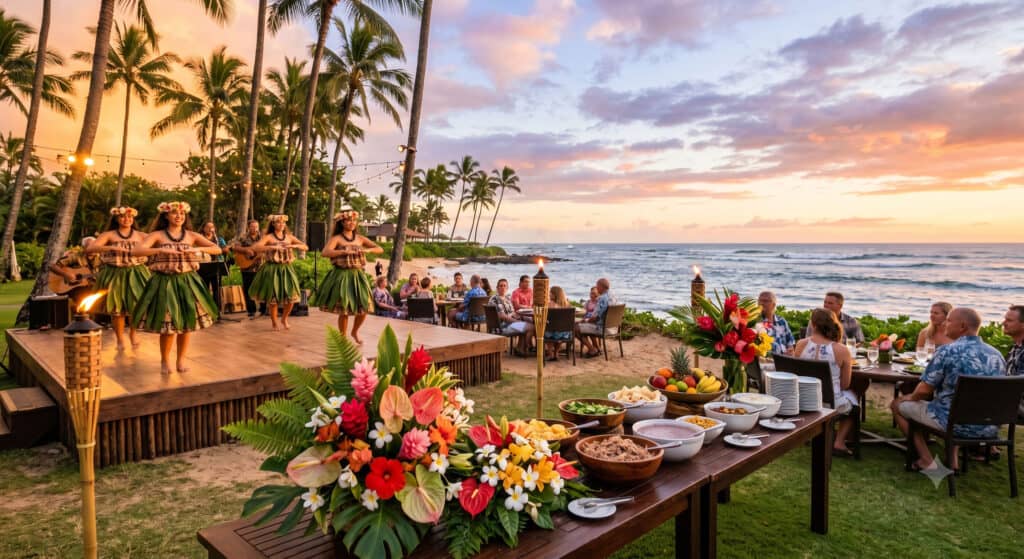
A Hawaiian vacation without a luau is like going to Rome and skipping the Colosseum — technically fine, but you’ll spend the flight home wondering. Here’s the thing though: not all luaus near Waikiki are the same experience, and picking the wrong one for your travel style makes a real difference. A Waikiki beachfront dinner under Diamond Head is a totally different evening than a botanical valley adventure on the North Shore. Pricing varies widely, some shows run only certain nights, and a couple of options have eligibility requirements worth knowing before you build your evening around them. This guide breaks down the nine best picks — with enough detail to book the right one for your crew.
Best Luaus Right in Waikiki (No Car Required)
These four options are all walkable or a short rideshare ride from most Waikiki hotels. No evening road trip, no surge pricing, no navigating a dark parking lot after the show. If convenience is your priority, start here.
Ahaʻaina — A Royal Hawaiian Lūʻau
When people say “beachfront luau in Waikiki,” they usually mean this one. Ahaʻaina is held on the Ocean Lawn at The Royal Hawaiian Hotel, with Diamond Head framed behind the stage and the Pacific Ocean just past the grass. It’s one of those settings that makes you put your phone down — briefly.
The evening typically begins around 5:15 p.m. with a welcome and pre-show cultural activities, moves into dinner from 6–7 p.m., and then the main cultural show runs through about 7:50 p.m. Adult tickets (ages 13+) run $240–$265, children ages 5–12 are $150, and a premium seating upgrade adds $25 and includes an upgraded lei greeting. Three drink tickets are included with most ticket types. Because popular nights — especially Mondays and Thursdays — sell out weeks in advance during summer, your Waikiki itinerary should have this locked in before you land.
Best for: couples, families who want a polished “special occasion” evening, anyone staying in central Waikiki who doesn’t want to give up half their night to transit.
Diamond Head Beach Lūʻau
This one is held on the oceanfront lawn at the Waikiki Aquarium — which sounds modest until you’re actually standing there watching fire dancers with Diamond Head in the background. For guests staying on the Kapahulu or eastern stretch of Waikiki, it’s genuinely walkable, and the setting punches well above its “no-drive-required” convenience category.
Pre-show activities run before dinner and are where the best family moments happen — craft stations, photo opportunities, mini cultural lessons. Kids connect with the hands-on parts far more than the sit-and-watch show, so plan to arrive at the start time rather than just in time for dinner. Check the booking calendar for current operating nights; the luau typically runs select evenings each week.
Best for: families with young kids, first-time Oʻahu visitors, anyone staying in the eastern end of Waikiki who wants maximum convenience with a genuinely scenic backdrop.
Rock-A-Hula — Theater Energy in the Heart of Waikiki
Rock-A-Hula is a different animal from a traditional luau. It’s a 750-seat theater production in Waikiki that traces the evolution of Hawaiian music and dance — from traditional hula through to modern performance — with fire knife dancing and a full cast. The luau buffet portion happens first, and then the group moves into the theater for the main show.
If your group has one person who’s lukewarm on “dinner theater,” Rock-A-Hula’s production values tend to flip them. Same-day bookings are welcome, packages range from show-only to full dinner + show, and the Waikiki location means you’re back at your hotel without any transit drama. A military and kama’āina discount is available with advance booking and promo code.
Best for: mixed groups with varying enthusiasm, rainy evenings when an indoor show sounds right, anyone who wants big-venue energy over intimate-gathering vibes.
Hale Koa Lūʻau (Eligibility Required)
The Hale Koa Luau is a Waikiki tradition — but access is restricted to active/retired U.S. military, DoD civilians, and qualifying guests. If you’re eligible, it’s a strong value with a classic format: imu ceremony, Polynesian storytelling, hula, and fire knife dancing, all held right in Waikiki. Confirm eligibility requirements directly with the Hale Koa before making plans around it.
Best for: military and DoD travelers looking for a well-priced, tradition-forward luau without leaving Waikiki.
Chief’s Lūʻau — High Energy in Kapolei
Chief’s Luau is about 30 minutes west of Waikiki in Kapolei, and the audience interaction, comedic hosting, and fire-knife finale make the drive worth it. If you’ve sat through a luau where everything felt slightly too polished and rehearsed, Chief’s is the corrective experience. The host works the room, the crowd gets involved, and the fire segment ends with the kind of collective “WHOA!” that’s impossible to fake.
A Waikiki shuttle runs from seven pickup locations for an extra fee — worth it if you’d rather not drive back after an evening show. Kids four and under get in free with their own seat and plate of food. The luau operates Sundays through Fridays (closed most Saturdays), so check the calendar when choosing your date. Google and Apple Maps can misroute you on arrival — the Chief’s website has specific parking lot directions worth bookmarking.
Best for: friend groups, families with teens, anyone who wants “WOW” moments and big crowd energy over cultural depth.
Polynesian Cultural Center — Aliʻi Lūʻau
The PCC is the only option on this list where the luau is the finale of a full-day cultural experience rather than the main event itself. The campus in Lāʻie features multiple Polynesian village exhibits — Hawaii, Samoa, Tonga, Fiji, Tahiti, and more — with hands-on demonstrations, cultural activities, and mini performances throughout the day. Then the evening brings the Aliʻi Lūʻau, with upgrade packages available for premium seating and additional perks.
The drive from Waikiki takes roughly an hour each way (longer during traffic), so transportation packages are worth considering so nobody is navigating H-1 in the dark post-show. The PCC has specific operating days and holiday closures — verify the schedule when booking, especially around major holidays. Our guide to day trips from Waikiki has more ways to plan the full North Shore stretch alongside this visit.
Best for: families, first-time Oʻahu visitors who want context and cultural depth, groups who enjoy a theme-park-style structure with serious educational value.
Toa Lūʻau at Waimea Valley — North Shore Day-Trip Combo
Toa Luau earns its own section because the format is genuinely different from every other option here. Admission typically includes daytime access to Waimea Valley’s botanical gardens and the waterfall trail, meaning you can spend the afternoon exploring before the evening luau begins. By the time the cultural demonstrations and fire knife finale wrap up, you’ve had a complete Oʻahu day without touching a tourist-trail itinerary.
The North Shore setting is beautiful — this is not a parking-lot luau — and the production features hands-on cultural demos before dinner, strong Polynesian dance, and a fire knife finale. Arrive early, walk the valley, and treat the luau as the natural end of the day rather than a standalone evening event. A note worth checking: garden hours and waterfall access can vary seasonally, especially on Mondays. Confirm the details for your specific date. The drive from Waikiki is about an hour each way.
Best for: nature lovers, North Shore day-trippers, and anyone who wants to combine a waterfall hike with a culturally rich evening in a single trip.
Ka Moana Lūʻau and Experience Nutridge — Two More Worth Knowing
Ka Moana Lūʻau at Aloha Tower Marketplace is the solid middle-of-the-road pick — a classic luau format with pre-show cultural activities, buffet dinner, Polynesian performance, and fire finale, at a convenient Honolulu location that’s a straightforward ride from Waikiki. It’s a reliable choice when the Royal Hawaiian dates don’t line up with your schedule and you want the classic luau formula without a North Shore commitment. Always confirm current operating nights and check-in details directly with the venue before booking, since schedules can shift.
Experience Nutridge at Nutridge Estate on Mount Tantalus is the most intimate option on the list. Small group sizes, hands-on cultural learning, and hosting that often feels like a genuine family gathering rather than a ticketed show. If you’ve attended a large-venue luau before and left feeling more like an audience member than a guest, Nutridge is the specific corrective for that. It’s close enough to Waikiki to be easy, and the estate setting feels like a different world despite the short distance.
Best for Ka Moana: Waikiki visitors who want a convenient classic experience on a schedule that works for them. Best for Nutridge: couples, small groups, or anyone who values cultural connection over production scale.
Booking Tips and What to Wear
Book your luau before you land — especially if you’re traveling in summer (June–August) or around Thanksgiving and Christmas. Ahaʻaina and Chief’s Luau sell out weeks ahead on popular nights, and the North Shore options have limited capacity. Treating your luau like a restaurant reservation rather than a walk-up attraction is the single biggest improvement most Waikiki visitors can make to their trip planning. Our guide to the best things to do in Waikiki notes luau booking as one of the time-sensitive reservations to handle pre-arrival.
Arrive for the pre-show — always. The hour before dinner is where the best moments stack up: lei greetings, craft stations, imu ceremonies (at select venues), ukulele basics, hula steps. Showing up “just in time” for the buffet means skipping the most interactive and memorable part of the whole evening. Families with kids especially will not regret the early arrival.
What to wear: resort casual is perfect across the board. Aloha shirts, sundresses, nice shorts — nothing too formal, nothing you’d mind sitting on grass in. Comfortable sandals or shoes work better than flip-flops if the venue has uneven paths or lawn seating. Pack a light layer; outdoor luaus after sunset can get surprisingly cool once the trade winds pick up, and you will be there for at least two to three hours. For families planning their full Waikiki schedule, our Waikiki with kids guide covers everything from hotel picks to the best age-appropriate activities alongside the luau.
Frequently Asked Questions About Luaus Near Waikiki
How much do luaus near Waikiki cost?
Prices vary significantly by venue and seating tier. The most upscale beachfront option — Ahaʻaina at the Royal Hawaiian — runs $240–$265 per adult and $150 for children ages 5–12. Other luaus typically fall in the $100–$200 per adult range, with show-only packages on the lower end and premium-seating dinner packages at the top. Children’s rates are usually meaningfully discounted, and some venues (like Chief’s Luau) admit kids four and under for free. Always check the official site for current pricing, as rates can shift seasonally.
Which luau is best for families with young kids?
The Diamond Head Beach Lūʻau and the Polynesian Cultural Center are the top family picks. Both have strong pre-show activities — crafts, cultural mini-lessons, interactive demos — that kids engage with far more than the sit-and-watch portion of the show. Chief’s Luau is great for families with older kids and teens who want energy and humor. For toddlers and very young children, prioritize venues with earlier start times and easy exit options.
Do I need a rental car to go to a luau near Waikiki?
Not always. The Waikiki-based options — Ahaʻaina, Diamond Head Beach Lūʻau, Rock-A-Hula, and Hale Koa — are all walkable or a short rideshare ride from most hotels. For Chief’s Luau in Kapolei, a Waikiki shuttle is available for an extra fee. For the North Shore options (PCC and Toa Luau), transportation packages are worth adding so nobody drives back after dark. If you’re renting a car anyway, all nine venues are drivable — just account for return traffic timing on North Shore evenings.
What is the difference between a luau and a dinner show?
A traditional luau centers on a feast with Hawaiian and Polynesian foods alongside cultural performance — hula, music, and storytelling that reflects the history and traditions of the Pacific Islands. A dinner show prioritizes entertainment with dining as a complement. Rock-A-Hula leans toward the dinner show end of the spectrum, while Ahaʻaina, Chief’s, and the PCC sit closer to a traditional luau format. In practice, most Waikiki luaus blend both — expect a buffet dinner and a polished performance regardless of which you choose.
How far in advance should I book a luau in Waikiki?
As early as possible — ideally before you land. Popular luaus like Ahaʻaina at the Royal Hawaiian and Chief’s Luau can sell out several weeks ahead during summer (June–August) and major holidays. For North Shore options like Toa Luau and the PCC, capacity is limited and specific dates go quickly. Booking two to four weeks out is a safe minimum; booking the same week you arrive is a gamble during peak season. Most venues offer full refunds for cancellations made 24–48 hours in advance, so there’s little downside to booking early.
Do luaus near Waikiki accommodate dietary restrictions?
Most do, and vegetarian options are common across the major luaus. The smartest approach is to note any dietary restrictions or allergies in the comments field when booking, then confirm them again at check-in with your server. For serious allergies (shellfish, tree nuts, gluten), call the venue directly before booking rather than relying on an online comment box. Don’t assume — a buffet-format meal in a high-volume setting requires clear communication to be handled safely.
For the full picture of what to do while you’re in Waikiki, the Waikiki activities guide covers everything from beach days to bucket-list hikes — all with the same honest, no-fluff approach. A well-chosen luau is one of those evenings you’ll talk about for years. Pick the right one for your group, book it early, and show up ready for the pre-show. The rest takes care of itself.