
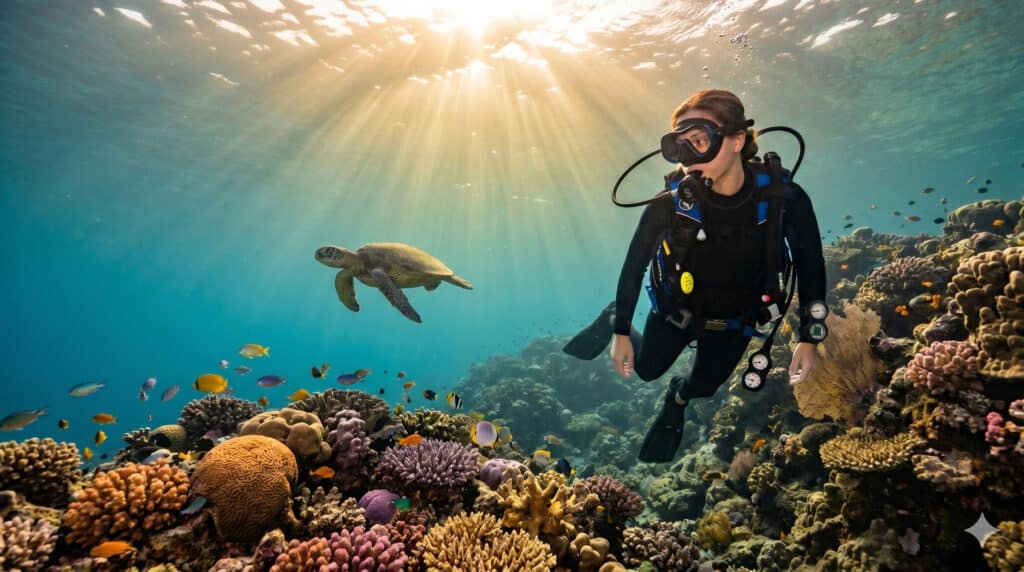
Scuba diving in Hawaii has a way of completely rewriting your vacation priorities. You show up planning to lie on the beach, and then someone mentions the Sea Tiger wreck or a bioluminescent night dive, and suddenly you’re researching dive shops at 11 p.m. from your hotel bed. If you’re based in Waikiki, you’re in a solid position — there are dive centers right in the neighborhood, plus easy access to some of Oahu’s most iconic underwater sites. This guide covers the best options for scuba diving in Waikiki, with honest notes on what each shop does best, verified 2026 pricing where available, and a quick breakdown to help you pick the right one for your experience level.
Why Waikiki Is a Great Home Base for Diving
Oahu’s South Shore — the stretch of ocean directly off Waikiki — holds some genuinely impressive dive sites. The water sits in the 75–80°F range year-round, visibility frequently reaches 60–80 feet on calm days, and the seafloor mixes coral reef systems, lava formations, and a couple of famous man-made wrecks that have transformed into artificial reefs packed with marine life. Two names you’ll hear constantly are the YO-257, a decommissioned Navy fuel barge, and the Sea Tiger, a 185-foot Chinese freighter deliberately sunk in 1999 that now shelters everything from eels to whitetip reef sharks.
Beyond wrecks, South Shore diving offers reliable turtle encounters, open-reef dives with 400-plus species of tropical fish, and — for certified divers looking for something genuinely unusual — a pelagic bioluminescent night dive in open water above the deep. Most shops also offer complimentary hotel pickup from Waikiki, which means getting to the boat doesn’t require figuring out parking at a harbor before sunrise. If you’re still building out your broader trip, our guide to the best things to do in Waikiki is a useful companion piece.
Waikiki Dive Center — The Only Full-Service Shop in the Heart of Waikiki
If you want one shop that handles everything — gear rentals, PADI certification, boat tours, repairs — and is physically located in Waikiki rather than a quick drive away, this is the default answer. Waikiki Dive Center describes itself as the only full-service dive shop in Waikiki, and their operation backs that claim up. They run multiple charter departures throughout the day: morning, mid-morning, afternoon, and evening slots for night dives. For many of their tours, they include complimentary round-trip transportation from Waikiki hotels, which is a real convenience when you’re hauling a wetsuit and fins across town.
What They Offer
Waikiki Dive Center runs tours for both certified and uncertified divers, which means families or groups where not everyone is certified can often book together on the same boat. Their catalog covers two-tank wreck and reef trips to classic South Shore sites, beginner-friendly boat dives with in-water instruction, a pelagic bioluminescent night dive, and the full PADI training pathway from Open Water through specialty courses and instructor certification. They also run a Veterans GI Bill scuba instructor program for eligible service members.
2026 Tour Prices
- 2-Tank Wreck and Reef (certified divers) — from $169
- 2-Tank Coral Reef Boat Dive (certified + beginners welcome) — certified from $169 / beginners from $219
- Pelagic Bioluminescent Night Dive — from $229
Always confirm what’s included at booking time — tank and wetsuit inclusions can vary by package. Best for: visitors who want full-service convenience, wreck diving, mixed-group bookings where certified and beginner divers join the same trip, or a PADI course they can complete without renting a car.
Kaimana Divers — Small Groups and Transparent Pricing
Kaimana Divers caps groups at six divers — which is the detail that immediately separates them if you’ve ever been on an overcrowded dive boat where you’re waiting eight minutes at the surface for everyone to sort their gear. Smaller groups mean more personal attention from the divemaster, fewer delays, and a more relaxed pace underwater. Their shop is Honolulu-based and serves the same South Shore dive sites as Waikiki Dive Center, with daily departures to the wrecks and reefs of Oahu. What sets them apart is how clearly they post their pricing — no mystery quote forms, no “contact us for rates.”
2026 Pricing at a Glance
- 2-Tank Boat Charter — $159 (tanks and weights included)
- Intro Dive or Refresher (no certification needed) — $195 (all gear + 2-tank boat dive)
- Standard Open Water PADI Course — $695 (3 days; all gear, books, certification fees, four boat dives)
- Private Open Water PADI Course — $795 (1:1 or private group up to 4; same inclusions as standard)
- Advanced Open Water Course — $575 (5 boat dives, gear, books, certification fees)
- Gear Rental — $5 per piece or $20 for a full set
If you’re diving multiple days, ask about the multi-day discount ($10 off per day for boat dives). The 10-Dive Aloha Package ($745 with all gear) is worth a look for longer stays. Best for: divers who want a personal, uncrowded experience; budget-conscious travelers who want upfront pricing; and anyone who wants PADI training in a small-group environment.
Aqua Zone Scuba — Gear Rentals and Mixed Ocean Experiences
Aqua Zone is a familiar Waikiki name for visitors who want a water sports hub more than a boutique dive operation. Their setup works well for groups with mixed interests — some people want to snorkel, some want to try scuba, and you’d rather not coordinate across multiple operators for one day on the water. They offer PADI courses, gear rentals, guided scuba and snorkel experiences, and additional ocean activities including shark-related adventures — which is a niche add-on, but memorable for the right traveler.
Worth noting: Aqua Zone’s specific tour inclusions and pricing aren’t as prominently published online as the other shops in this guide, so I’d recommend contacting them directly before booking to get current rates and confirm availability. Don’t rely on third-party listing prices — Waikiki water sport pricing changes more than you’d expect. Best for: groups with mixed interests, visitors who want one shop for snorkel and scuba, and anyone drawn to the shark experience add-on.
Oahu Diving — Built for First-Timers Who Want Extra Support
Oahu Diving positions itself specifically as Oahu’s first-time diving specialists, which is a meaningful distinction. Plenty of shops technically accept beginners — but a shop that builds its entire operation around nervous first-timers will put more time into pre-water briefings, spend more effort getting your buoyancy right in shallow water before heading to the reef, and generally run a slower, more reassuring experience overall. That matters a lot when it’s your first time breathing underwater and everything feels simultaneously exciting and slightly terrifying.
If you’re in the camp of “I’ve always wanted to try scuba but I’m a little anxious about it,” this style of operator is almost always the better fit over a shop that prioritizes certified divers and treats the intro dive as a logistical footnote. When evaluating any first-timer-focused operator, look for small group sizes on intro dives, shallow-water practice before the open ocean, and a clear gear walkthrough as part of the experience — not just a quick briefing on the dock. Contact Oahu Diving directly for current pricing and availability. Best for: absolute beginners, nervous divers, and anyone who wants extra coaching and pacing on their first underwater experience.
Hanauma Bay and Snorkel Add-Ons: What to Know
Important clarification before you plan: Hanauma Bay is a snorkel-only preserve — scuba diving is not permitted inside the bay. If your group is splitting between divers and non-divers, the non-divers aren’t missing out — the snorkeling at Hanauma Bay is spectacular on its own terms — but it’s a different outing than a South Shore dive charter. Our complete Hanauma Bay guide covers entry fees, hours, transportation from Waikiki, and what to expect on the reef. And if you’re hoping to secure a reservation, read the Hanauma Bay reservation guide before your trip — peak-season spots sell out fast.
For a turtle-focused ocean day that works for non-divers in your group, Living Ocean runs snorkel tours out of Waikiki to turtle canyon-style sites in open ocean. This pairs well with a dive day: the certified divers do a two-tank morning charter while the rest of the group sleeps in, then everyone meets up for an afternoon snorkel tour. It’s an easy way to keep the whole group in the water without anyone spending the day on the beach watching bags.
How to Pick the Right Waikiki Dive Center for Your Trip
Want the most comprehensive setup with easy all-in logistics? Waikiki Dive Center is the default. They have the broadest tour menu, multiple daily departures, hotel transport, and the deepest PADI training ladder. If you’re not sure exactly what you want to book, start by browsing their site.
Want small groups and clear pricing from day one? Kaimana Divers. Their six-diver cap is a real operational advantage, their rates are posted publicly, and the multi-day discount adds up. Useful for both serious divers and first-timers who want personal attention.
Completely new to scuba and nervous about it? Look at first-timer-focused operators like Oahu Diving. The extra patience early in the experience makes a meaningful difference in whether you finish the day wanting certification or wanting to stick to the beach.
Want to mix scuba with other water sports for a group with varying interests? Aqua Zone handles more ground. If you’re building out a full trip schedule, our 5-day Waikiki itinerary shows how to slot a dive day into a broader week without overloading your calendar.
Frequently Asked Questions About Scuba Diving in Waikiki
Do I need to be certified to scuba dive in Waikiki?
No — you don’t need a PADI certification to try scuba diving in Waikiki. Most dive centers offer intro or “discover scuba” experiences designed for complete beginners. You’ll go through an equipment briefing and basic skills practice before entering the water, and a certified instructor stays with you in the water at all times during the dive. These experiences are shallower than certified dives. If you enjoy it, most shops can start you on Open Water certification during the same trip.
How much does scuba diving in Waikiki cost?
For certified divers, a two-tank boat charter runs roughly $159–$169, with gear often included or available at low rental cost. Beginner or intro dive experiences typically run $195–$219 with full gear included. Night dives and specialty experiences like bioluminescent dives start around $229. PADI Open Water certification courses generally run $695–$795 for a full three-day program covering gear, course materials, and boat dives. Prices can shift by season and package, so confirm current rates directly with the shop before booking.
What dive sites are near Waikiki?
The South Shore of Oahu — accessible by boat from Waikiki — has several well-known sites. The YO-257 and Sea Tiger are the most famous wrecks, both hosting eels, reef fish, and occasional shark sightings. The area also features coral reef systems with hundreds of tropical fish species and reliable sea turtle encounters. Most two-tank charters combine a wreck with a reef site in the same outing. For diving beyond the South Shore, Shark’s Cove on the North Shore is popular during calm summer months. Our guide to day trips from Waikiki covers how to plan a North Shore outing.
What is the best time of year to dive in Oahu?
Year-round, honestly. The water temperature stays in the 75–80°F range regardless of season, and visibility is generally solid throughout the year. The South Shore near Waikiki is sheltered from the trade winds and winter swells that close down North Shore diving, so it’s accessible for boat charters in every season. The North Shore’s calm season runs roughly May through September, opening up sites like Shark’s Cove. If flat conditions and maximum flexibility matter to you, summer (May–September) offers the best overall dive conditions across the island.
Can I get PADI certified during a short trip to Waikiki?
Yes — a standard PADI Open Water course takes about three days and fits comfortably into a week-long trip. Both Waikiki Dive Center and Kaimana Divers offer the full certification including confined-water practice, knowledge development, and your required open-water dives. If your schedule is tight, look into the PADI Referral option: complete the classroom and pool work at home before your trip, then finish just your open-water dives in Oahu. It’s a smart way to maximize your in-water time without spending half your vacation in a classroom.
Is scuba diving in Waikiki safe for beginners?
Yes, with the right operator. South Shore intro dive sites are calmer and shallower than advanced wreck dives, and certified instructors are required to be in the water with uncertified divers at all times. The key is choosing a shop that handles beginners well — not just one that technically permits them on a boat. Look for operators that emphasize pre-dive instruction, clear gear orientation, and a paced entry into the water for first-timers. Standard diving safety applies: communicate clearly with your instructor, never hold your breath while ascending, and never dive beyond your certification level.
Scuba diving off Waikiki is one of those experiences that sticks long after the tan fades. Pick the operator that matches your comfort level, confirm pricing directly before booking, and give yourself enough time to actually enjoy the boat ride out — the anticipation is half the fun.