
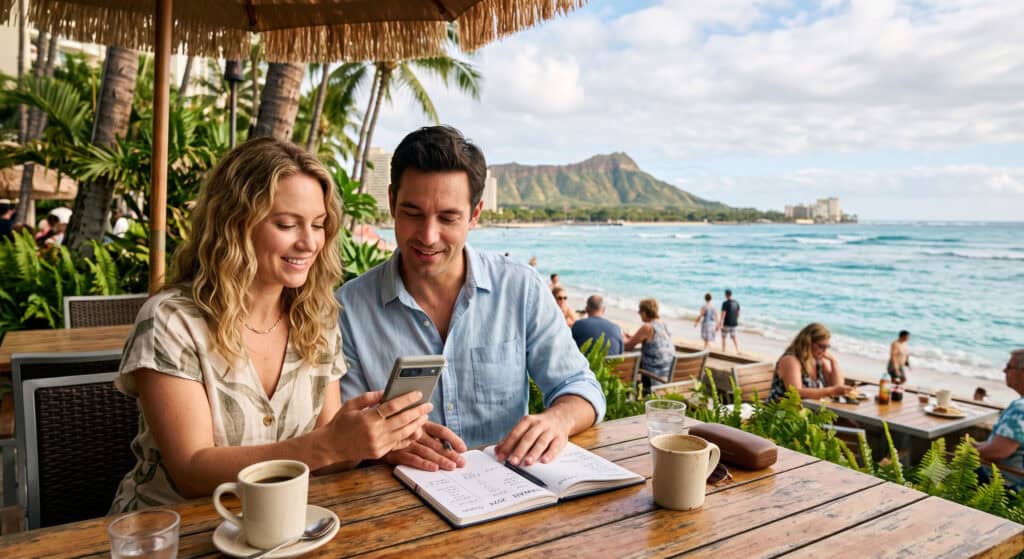
You find a hotel rate that looks reasonable. The beach photos check out. You’re about to hit confirm — then the actual checkout total loads, with taxes and fees, and it’s suddenly 25% higher than you expected. Waikiki does this to first-timers more than almost anywhere else. The listed nightly rate is just the opening number.
This guide gives you the real 2026 numbers for every major cost category: hotels, flights, food, rental cars, and activities. It also covers two things most travel sites still gloss over — the new Hawaii Green Fee that kicked in January 1, 2026, and the resort fee math that can quietly add hundreds of dollars to a week-long stay. Build the budget right from the start and there are no surprises at checkout.
What Waikiki Actually Costs Per Day in 2026
Here’s a realistic starting point for planning — per-person, per-day figures that exclude airfare and assume two people sharing a hotel room:
- Budget traveler: $125–$225/day — hostel or budget hotel, riding TheBus or biking, grocery-store breakfasts, plate lunch spots, mostly free beach and hiking days.
- Mid-range traveler: $250–$425/day — solid hotel, mix of rideshare and a rental car for day trips, sit-down meals balanced with some grocery runs, one or two paid activities during the full trip.
- Splurge traveler: $500–$900+/day — oceanfront resort, daily rental car with hotel parking, cocktails and dinners out every night, a luau, premium experiences like a helicopter tour or spa day.
Use these as anchors, not targets. What you actually spend depends heavily on the season, how many rounds you order, and whether you eat at a restaurant with an ocean view or a plate lunch window. Both are genuinely good choices. They’re just different ones.
The 2026 Tax Surprise: Hawaii’s New Green Fee
If you’ve looked at Waikiki hotel rates and noticed the taxes running steeper than expected, you’re not imagining it. Starting January 1, 2026, Hawaii raised its Transient Accommodations Tax (TAT) from 10.25% to 11% under Act 96 — the law commonly referred to as the Hawaii Green Fee. Revenue from the increase goes toward conservation and climate resilience projects across the islands.
But the Green Fee is only part of the stack. Layer that state TAT on top of Honolulu County’s accommodation surcharge and Hawaii’s General Excise Tax, and the total tax rate on a Waikiki hotel room runs roughly 18–19%. On a $300/night room, you’re looking at $54–$57 in taxes alone — before resort fees. Always look at the total checkout price before you book, not just the headline nightly rate. That number is the only one worth comparing across properties.
The same tax stack applies to vacation rentals and Airbnb stays. Platforms are required to collect and remit these taxes, so what you see at booking should reflect the full rate. If anything looks off, clarify before you confirm — and keep in mind that any deal on base rate gets partially erased by taxes on both sides of the comparison.
Hotels and Lodging: Your Biggest Budget Lever
Where you sleep moves the trip budget more than any other single decision. Waikiki has real options at every price point — the trick is knowing what each tier actually delivers and what it costs once taxes and fees land on top of the base rate.
Budget properties (older hotels, no-view rooms, simple studios, hostels): Starting around $80–$150/night before taxes. You’re trading amenities and views for savings. If you’re spending most of your time at the beach anyway, that trade makes a lot of sense — the ocean is free to everyone.
Mid-range hotels (modern chains, solid locations, standard amenities): Roughly $175–$350/night before taxes and fees. Most travelers land here. Good walkability, reliable service, pool access, and enough comfort to not think about the room much.
Luxury and beachfront resorts (oceanfront rooms, premium service, full resort grounds): $400–$800+/night before taxes and fees, often significantly more during peak periods like summer and the holidays.
Resort Fees: The Second Bill
Most major Waikiki hotels charge a daily resort fee on top of your room rate — typically $45–$65 per night at larger properties, and those fees are taxed at the same 18–19% rate. At the Sheraton Waikiki it runs around $61/night; Hilton Hawaiian Village comes in near $59/night. Hotel parking can stack on considerably more: the Hilton charges roughly $75/night for self-parking, meaning a guest with a car could face over $130/day in fees before they’ve ordered a single drink. A handful of boutique hotels and non-chain properties skip resort fees entirely — some of those are genuinely excellent value for travelers who won’t use resort programming. Our Waikiki resort fees guide breaks down exactly which hotels charge the most, what you get for it, and six strategies to reduce or eliminate the charges before you book.
Vacation Rentals vs. Hotels
For families, groups, and stays of a week or longer, a kitchen-equipped vacation rental cuts food spend significantly. Handling even one meal a day yourself — breakfast especially — can save $15–$25 per person per day, which adds up fast over a week. Watch for cleaning fees and service charges though: those add-ons can close the price gap with hotels faster than you’d expect. And as of 2026, Hawaii’s full accommodation tax stack applies to vacation rentals, so the tax math doesn’t change just because you’re in a condo instead of a hotel room.
Flights to Honolulu: What to Expect
Flights are the most variable line item in any Waikiki budget. Your departure airport, travel dates, and how early you book all shift the number significantly. West Coast travelers — Los Angeles, San Francisco, Seattle — have the most nonstop options and typically see lower fares. East Coast and Midwest travelers usually pay more and may have a connection. As a broad planning range, mainland round-trip fares run anywhere from the low-to-mid hundreds on a good deal to $1,500–$2,000+ during peak periods or from smaller regional airports.
A few things that actually move the number: flying Tuesday or Wednesday instead of the weekend, checking airports within a two-hour drive for better pricing, and comparing multiple booking platforms before committing. One underrated tip — lock in a price you like. Waiting for it to drop is a gamble that doesn’t consistently pay off, especially once you’re inside 60 days of a summer or holiday departure.
Better-value travel windows: April–May (after spring break, before summer crowds), September–October (quieter, families back in school, hotel rates soften), and early December before holiday travel kicks in. Hotel rates in particular can jump 30–50% over shoulder-season pricing during summer, Thanksgiving week, Christmas through New Year’s, and major long weekends. If your dates are flexible by even a few days, running a date-grid search on flight and hotel booking sites can surface real savings.
Getting Around Waikiki
Waikiki itself is walkable — most hotels, restaurants, and beach access points are within a 15-minute walk of each other. The bigger question is whether you want to explore the rest of Oahu. If you do, how you get around makes a real difference to both your budget and your experience.
Rental Cars and Parking
A rental car makes the North Shore, Kailua, Hanauma Bay, and Pearl Harbor dramatically easier and unlocks parts of the island that are genuinely hard to reach otherwise. Budget $50–$130/day depending on vehicle, season, and how far in advance you book. Rates rarely drop closer to your trip — book early and choose free cancellation so you can rebook if pricing improves.
Parking is where first-timers consistently get surprised. Hotel parking at major Waikiki properties runs $30–$75+/night. Street parking in Waikiki costs around $4–$5/hour where available. One strategy worth knowing: rideshare from the airport and pick up a rental car in Waikiki for just the days you plan to explore — airport car rental rates carry heavier surcharges than in-town pickup locations. If you’re weighing whether a car makes sense for your specific itinerary, our guide on whether you need a rental car in Waikiki walks through the real tradeoffs.
TheBus and Rideshare
TheBus covers most of Oahu at $3 per ride through June 30, 2026. Starting July 1, cash fares increase to $3.25 — riders with a HOLO card stay at $3. It’s reliable for key visitor routes: Diamond Head, Hanauma Bay, Ala Moana Center, and the airport corridor are all well-served. The trade-off is time; a 20-minute drive can take 45 minutes or more by bus, especially during peak hours. Rideshare fills the gap nicely for in-Waikiki trips where bus timing doesn’t work. Most travelers end up using a combination — TheBus or rideshare for beach days in the neighborhood, a rental car for the day trips that need it.
Food and Drink: Where the Budget Gets Away from You
Food in Waikiki runs higher than most mainland cities. Fresh seafood, island-grown produce, and everything-shipped-in costs all factor in. The range between eating strategically and eating without thinking about it, though, is enormous — probably $50–$80 per person per day on the conservative end versus $150+/day if you’re sitting down for every meal with drinks.
Practical meal ranges to budget around: breakfast at a sit-down spot is $15–$25/person; a casual lunch runs $18–$30/person; dinner at a mid-range restaurant is $35–$75/person before drinks; upscale oceanfront dining starts at $80–$150+/person. The fastest food budget win: start mornings at a grocery store instead of a hotel restaurant. The $15–$20 per person you save on breakfast adds up to $100+ over a week without sacrificing anything you’ll notice.
Drinks are where the budget can quietly disappear. Cocktails at most Waikiki bars run $14–$25 each, and you’re in a beautiful place in the heat — rounds are going to happen. Grabbing pre-drinks from a grocery store, taking advantage of early happy hours before heading out, and choosing spots that offer honest value can easily save $30–$50 per person per night. Our guide to the best happy hours in Waikiki has current times and strong picks across the neighborhood. And when you want a proper meal without the resort markup, our cheap eats in Waikiki guide covers the spots locals actually use.
Activities: From Free to Worth Every Dollar
This is where Waikiki consistently surprises people. The beach — the whole point of coming — is free. So is the sunset. You can fill a full day without spending a dollar and have a better time than some travelers who spent $200. The trick is knowing which paid experiences are genuinely worth it and which ones you can skip.
Free and Low-Cost
Waikiki Beach costs nothing. The Kuhio Beach Hula Show is a free outdoor performance near the Duke Kahanamoku statue — check the current schedule when you arrive, as showtimes shift seasonally. Diamond Head State Monument charges around $5/person for non-residents plus $10/vehicle to park, though taking TheBus avoids the parking cost entirely. The Pearl Harbor Visitor Center is free to enter; the USS Arizona Memorial boat program requires a $1 reservation fee through Recreation.gov, and slots sell out weeks in advance during peak periods.
Mid-Range Paid Experiences
Hanauma Bay snorkeling costs $25/person for non-residents, plus a small online booking fee. The bay is closed Mondays and Tuesdays, and reservations sell out on a rolling two-day window that moves fast. Don’t assume you’ll sort it out after you land — read our Hanauma Bay reservation guide before you go. Surf lessons on Waikiki Beach run $60–$90/person for a group session — they’re worth it even if you’ve never stood on a board.
Splurge-Worthy Experiences
A helicopter tour, sunset catamaran cruise, deep-sea fishing charter, spa day, or a full luau — these are the things people talk about for years after. Luaus typically run $100–$185+ per adult and include dinner, making them one of the more value-dense paid experiences on the island. They are not all the same: some are large-scale productions with stadium seating, others are intimate and genuinely cultural. Our guide to the best luaus near Waikiki breaks down nine options by format, price, and who each one is best for, so you can book with confidence rather than just picking whatever the hotel concierge recommends.
Build Your Actual Waikiki Budget
Stop trying to calculate every possible expense line by line. This five-step method takes about ten minutes and gives you a real number to work with:
- Lodging: Choose your tier, multiply the nightly rate by your number of nights, add 18–19% for taxes, and check whether resort fees apply. If they do, add $45–$65/night on top, plus parking if you’ll have a car.
- Flights: Research your specific departure airport and target travel window. Get an actual quote rather than a “typically” number — the range is too wide to estimate.
- Transportation: Decide your approach — mostly walking and TheBus, a rideshare mix with a rental car for one or two day-trip days, or a car for the whole trip. Each option has a very different daily cost.
- Food: Set a daily food budget per person: $60–$80 if you’ll mix grocery stops with eating out; $120–$180 if you’re doing three restaurant meals a day with drinks.
- Activities: Budget one big paid experience per trip (luau, helicopter tour, boat excursion), one mid-range experience (Hanauma Bay, surf lesson), and plan on free activities for the rest of your days.
Then add two things most budget guides skip. First: tips. Hawaii follows standard mainland conventions — 18–20% at restaurants, $2–$5 per day for housekeeping (leave daily, not just at checkout), similar for tour guides and shuttle drivers. On a 7-day trip with daily dining, budget at least $75–$150 extra for tips alone. Second: travel insurance. Hawaii is expensive to reach and expensive to stay in. If a medical issue, job change, or family emergency forces you to cancel or shorten the trip, you can be out thousands. Trip cancellation, trip interruption, and travel medical coverage are all worth pricing before you book, especially for families and longer stays. Add a 10–15% cushion on top of everything for shopping, incidentals, and the things you didn’t plan for.
Frequently Asked Questions About Waikiki Vacation Costs
What’s a reasonable daily budget for Waikiki?
Plan for $150–$250 per person per day (not counting flights) for a comfortable mix of value and comfort. That covers a mid-range hotel split between two people, a couple of restaurant meals balanced with some grocery stops, and occasional paid activities. Budget travelers with hostel lodging and disciplined food choices can reach $100–$125/day. Travelers going full resort mode with cocktails and premium experiences can easily hit $600+/day.
What is the Hawaii Green Fee and how much does it add to my bill?
The Hawaii Green Fee is an increase to the state’s Transient Accommodations Tax (TAT) under Act 96, effective January 1, 2026. The rate rose from 10.25% to 11%. Combined with Honolulu County’s surcharge and Hawaii’s General Excise Tax, total accommodation taxes in Waikiki run about 18–19%. For most travelers, the Green Fee itself adds only $10–$25 to a week-long stay — but the full tax stack is what makes your final hotel bill look noticeably higher than the nightly rate suggested.
Do all Waikiki hotels charge resort fees?
No, but many of the major ones do. Larger properties typically charge $45–$65 per night, and those fees are taxed on top of your room rate. Some boutique hotels and non-chain properties skip resort fees entirely — and a few of those are genuinely excellent options for travelers who won’t use resort-specific amenities. Always look at the total nightly cost before booking, not just the base room rate. A hotel that looks cheaper often isn’t once fees hit.
Is Waikiki cheaper in certain months?
Yes. April–May, September–October, and early December generally offer lower hotel rates and airfare compared to summer, holiday weeks, and spring break. Hotel prices in particular spike hard during peak periods and soften quickly once the crowds thin out — even shifting your travel by a week or two can yield meaningful savings, especially on lodging.
Can you do Waikiki on a tight budget?
More than most people expect. The beach is free. Hikes and scenic drives often cost nothing beyond a parking fee. Plate lunch spots and food trucks serve filling local meals for $12–$18. TheBus covers most of Oahu for $3 per ride (rising to $3.25 for cash payers starting July 1, 2026). The biggest cost is lodging — but even there, hostels and budget hotels make the island accessible. Being strategic about one or two bucket-list paid experiences and eating selectively the rest of the time goes a long way.
How much should I budget for tipping in Waikiki?
Standard tipping conventions apply: 18–20% at restaurants, $2–$5 per day for housekeeping (leave it daily, not just at checkout), and similar amounts for tour guides, shuttle drivers, and activity staff. On a 7-day trip with daily restaurant meals, budget at least $75–$150 extra for tips alone. Carrying some cash makes this easier — not every vendor handles card tips smoothly, and some don’t accept them at all.
Waikiki is expensive — that’s not a secret, and there’s no version of this guide that changes it. What it is, though, is a place where the free days (beach, sunrise walk, evening hula show, a shave ice) genuinely compete with the expensive ones. Build the budget honestly, include a cushion, and spend whatever’s left figuring out which sunset you want to be watching when the sky goes gold over Diamond Head.