
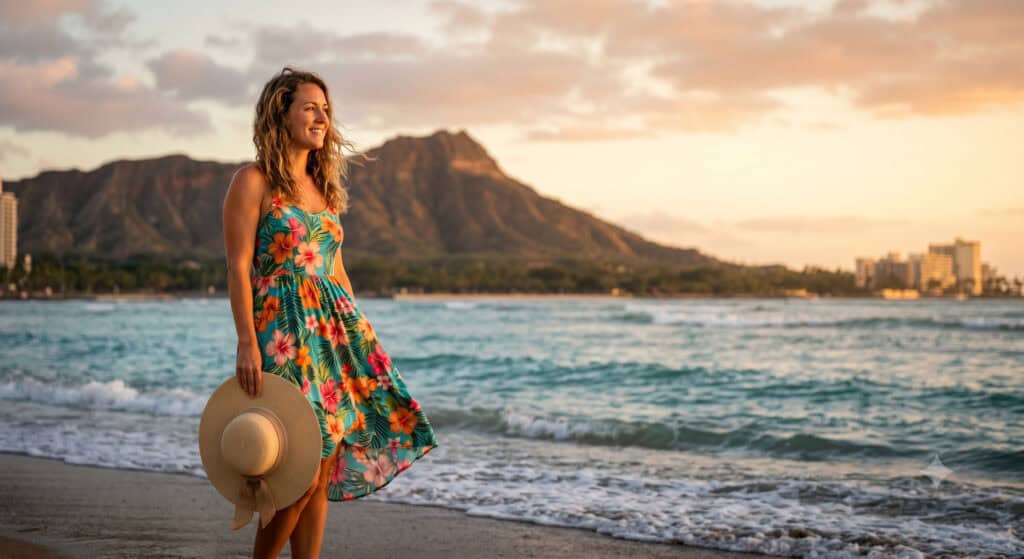
Most first-time visitors to Waikiki pack the wrong things — not because they didn’t try, but because they Googled “Hawaii packing tips” and got advice written for a generic tropical vacation. Waikiki isn’t generic. It’s a walkable neighborhood where a single day can take you from a beach sunrise to a Diamond Head hike to a sit-down dinner with an ocean view, often without going back to the hotel more than once. Your outfits have to do real work here.
The good news: Waikiki’s dress code is refreshingly flexible. You don’t need a suitcase full of resort wear or a bag dedicated just to “nice shoes.” What you need is range — a small collection of pieces that move easily from sand to sunset dinner without making you feel out of place at either end. This guide covers exactly what to wear in Waikiki for every situation you’ll actually face: beach mornings, Diamond Head hikes, luau nights, casual dinners, and the occasional upscale splurge.
Waikiki’s Dress Code: The Four-Level Framework
Waikiki doesn’t run on one dress code — it runs on a sliding scale that shifts based on time of day and venue. Knowing the four levels makes packing significantly easier:
- Beach Casual: Swimwear, rash guards, cover-ups, sandals. Waikiki’s default daytime mode.
- Island Casual: Linen shorts, sundresses, aloha shirts, clean sandals. The “works anywhere” category — right for coffee shops, shopping, and most casual lunch spots.
- Resort Casual: Collared shirt or elevated blouse, nicer shorts or light slacks, dressy sandals or loafers. Expected at most sit-down dinner spots.
- Upscale Dining: Elevated eveningwear. A few restaurants — La Mer at Halekulani being the prime example — require closed-toe shoes and long pants for men.
One thing that surprises many visitors: aloha wear isn’t a tourist costume. Aloha shirts, floral dresses, and muʻumuʻu are genuinely worn by locals at everything from casual lunches to dinner reservations. Lean into it — you’ll fit in better than you’d expect.
The Waikiki Capsule Wardrobe: Pack Once, Wear Everywhere
If you want maximum outfit range with minimum luggage, this core list covers most trips without overpacking. Think of it as building blocks you remix across different days and settings.
Swim and beach (4–6 items):
- 2 swimsuits — rotate while one dries; Waikiki’s humidity is real and one suit won’t dry overnight
- Rash guard or swim tee — sun protection and snorkel-friendly
- Lightweight cover-up — a sarong, linen button-down, or breezy top that gets you from beach to lunch without a wardrobe change
- Beach sandals — the island term is slippahs, and everyone has them
Day outfits (6–8 items):
- 2–3 breathable tops — cotton or moisture-wicking performance fabric; avoid anything heavy
- 1–2 airy sundresses or a linen set (top and shorts)
- 1 pair of comfortable walking sandals or clean sneakers
- 1–2 pairs of lightweight shorts
- 1 pair of linen pants — an instant dinner upgrade that also doubles as a sun cover on windy days
- An aloha shirt (men) or printed sundress (women) — the versatile Waikiki daily uniform
Evening (3–5 items):
- Collared shirt or elevated blouse
- Dress shorts or slacks
- Dressy sandals, loafers, or closed-toe shoes depending on the venue
- Light layer — a thin cardigan or overshirt — because restaurant A/C is reliably aggressive
Accessories that earn their suitcase space:
- Wide-brim hat and polarized sunglasses — non-negotiable on full beach days
- Reef-safe sunscreen — Hawaiʻi restricts the sale of sunscreens containing oxybenzone and octinoxate, so bring a compliant mineral formula or pick one up when you land
- Small crossbody or sling bag — hands-free, secure in crowds, beach-friendly
For everything else — toiletries, gear, and the beach-bag items most people forget until day two — the Waikiki packing guide has the full breakdown.
What to Wear in Waikiki During the Day
Daytime in Waikiki is easy. The neighborhood runs on a natural rotation: beach, coffee, shopping, lunch, repeat. You’ll see swimwear, rash guards, linen sets, and everything in between — almost none of it looks out of place as long as it’s clean and covers the basics.
The mistake people consistently make: forgetting that Waikiki is a walking neighborhood. You’ll cover real miles on foot — hotel to coffee to beach to shopping to lunch to shave ice — and cheap flip-flops will have your feet begging for mercy by day three. Sandals with actual arch support are worth every dollar. If you’re prone to blisters, throw a few blister patches and a small tube of anti-chafe balm into your bag. Both take up almost no space and save significant grief later.
The classic beach morning formula: swimsuit under a lightweight cover-up, sandals you can kick off in ten seconds, hat and sunglasses, sunscreen applied before you leave the hotel. If you’re skipping the ocean that day and just exploring, linen pants with a tank top or a thin cotton sundress covers almost anything on Kalākaua Avenue — breezy, sun-smart, and polished enough for any shop or café. Aloha prints work especially well here. Waikiki embraces them fully, and you’ll look more like a regular than a tourist when you lean in.
What to Wear Hiking Diamond Head and Other Active Days
Diamond Head is one of Waikiki’s biggest bucket-list moments, and the sun exposure at the top will make you genuinely grateful you dressed for it. This is not the place for a beach cover-up and sandals.
Diamond Head hiking checklist:
- Lightweight athletic top — moisture-wicking fabric over cotton; cotton soaks through and stays damp on a hot climb
- Shorts or leggings you can move in freely
- Supportive closed-toe shoes — sneakers or light hiking shoes; the terrain is uneven and some sections are steep
- Hat with a brim — or a cap plus sunscreen applied to your neck and ears
- Sunscreen reapplied before the hike — there is very little shade on the trail
- A water bottle you’ll refill before heading out
The Hawaii DLNR specifically recommends good walking shoes, plenty of water, and sun protection — and if you’ve done the hike in midday heat, you understand exactly why. Note that entry and parking reservations are required for non-residents and time slots can sell out. Our complete Diamond Head guide covers reservation links, current entry fees, and everything else you need before you go.
The same active-day principles apply across other outings: rash guard and board shorts for snorkeling or catamaran trips; quick-dry top and swimsuit underneath for SUP or outrigger canoe; and a packable rain layer on any afternoon when the trade winds bring an unexpected shower. That last item takes up almost no space and turns a soggy afternoon into a perfectly manageable one.
What to Wear in Waikiki at Night: Dinners, Bars & Sunset Hours
After sunset, Waikiki shifts — but not dramatically. The overall vibe is polished-casual, not formal. You’re dressing for warm trade-wind evenings, open-air restaurants, and dinners where the sound of waves is part of the ambiance. Think of it as resort casual with some taste behind it, not business formal in a tropical setting.
Resort casual for women looks like:
- Maxi dress or midi sundress
- Dress shorts paired with an airy blouse
- Linen pants with a fitted tank and a light cardigan
- Dressy flat sandals or a low heel
Resort casual for men looks like:
- An aloha shirt — almost always the right call in Waikiki; it reads polished, not casual
- Clean shorts or lightweight slacks
- Loafers or closed-toe casual shoes; clean leather sandals work at many places
What to avoid at most sit-down spots: bare feet or sandy flip-flops, wet swimwear under a cover-up, cutoff shorts or gym tanks, and baseball caps at upscale venues. Coming straight from the beach isn’t a problem if you allow ten minutes for a quick rinse, dry hair, and a change into linen. Waikiki is forgiving that way.
For planning where those outfits are going, the guide to the best restaurants in Waikiki covers everything from casual beachfront spots to white-tablecloth tasting menus, with dress code context at each level. If a drink before dinner sounds good, the best happy hours in Waikiki are worth knowing — great views, reasonable prices, resort casual welcome.
Fine dining note: A handful of Waikiki restaurants hold to stricter dress codes. La Mer at Halekulani is the most well-known. Their published attire policy requires women to wear elegant evening attire, and men must wear a collared dress shirt or aloha shirt, dress slacks or long pants, and closed-toe shoes — no t-shirts, shorts, ripped denim, or baseball caps. If a fine dining reservation is on your itinerary, pack one outfit that clears this bar, especially the shoes. For men, one pair of loafers or leather shoes plus a pair of slacks handles virtually every upscale Waikiki situation without much suitcase sacrifice.
What to Wear to a Luau in Waikiki
A luau is part feast, part cultural performance, and part “you might end up learning a hula move in front of strangers” — which means comfort matters as much as style. This is also the one night where going bold with color and tropical prints is completely appropriate, not just tolerated.
- Men: Aloha shirt with tailored shorts or light pants, comfortable sandals
- Women: Sundress, maxi dress, or a muʻumuʻu — all fully at home at a luau
- Comfortable sandals you don’t mind standing and walking in for a few hours
- A light layer for evening breezes if you tend to run cold
Luaus are festive and photo-heavy — pick something that photographs well in warm evening light. Jewel tones and tropical prints look great in luau lighting, and the mood is celebratory enough to justify leaning in. One practical note: skip anything too tight, because luau dinners are not the occasion to eat politely.
If you haven’t settled on a luau yet, the best luaus near Waikiki guide breaks down all nine options — from intimate North Shore experiences to big walkable productions right in Waikiki — with notes on format, pricing, and which ones work best for families versus couples.
Packing for Waikiki by Season
Hawaiʻi runs on two seasons, and what you pack shifts slightly between them.
Summer (May–October): Daytime highs hover around 85°F, drier and sunnier than the winter months. Quick-dry fabrics are your best friends. Pack an extra swimsuit since one will always be damp, and bring a hat you’ll genuinely wear every day — UV intensity peaks during summer and the sun on a full beach day is more relentless than most mainland destinations.
Winter (November–April): Daytime temps around 78°F — still warm by most standards, but noticeably cooler at night and on breezy days. Budget suitcase space for a light rain layer, since trade-wind showers are common. One slightly warmer option — a thin long-sleeve or lightweight overshirt — earns its place for chilly restaurant A/C and brisk evening walks along the waterfront.
In both seasons: Waikiki nights run roughly 10°F cooler than the daytime beach, and the gap feels larger when the trade winds kick up. That thin cardigan isn’t just for restaurant A/C — it earns its keep on the walk home from dinner too.
Frequently Asked Questions About What to Wear in Waikiki
What is the dress code in Waikiki restaurants?
Most Waikiki restaurants operate on a resort casual dress code — aloha shirts, sundresses, linen shorts, clean sandals, and elevated blouses all work well. A small number of fine dining establishments, like La Mer at Halekulani, require long pants and closed-toe shoes for men and elegant evening attire for women. Always check a restaurant’s website before a special reservation if you’re unsure about the policy.
Can I wear flip-flops in Waikiki?
For the beach and casual daytime spots, absolutely. For nicer dinner venues, bring something more polished — at minimum, a clean pair of sandals that don’t look like they just came off the sand. Upscale restaurants often prefer or require closed-toe shoes for men. The safe move: pack one versatile pair of dressy sandals or loafers alongside your beach flip-flops.
Do I need closed-toe shoes for hiking Diamond Head?
Yes — strongly recommended. The Diamond Head trail has uneven terrain, steep switchbacks, and a tunnel section. Sandals and flip-flops make the climb uncomfortable and the descent genuinely risky. Sneakers or light hiking shoes are the right call. The Hawaii DLNR specifically advises good walking shoes for this hike.
Is aloha wear appropriate, or does it look too touristy?
Genuinely appropriate — locals wear it regularly. Aloha shirts and floral dresses aren’t a tourist costume in Waikiki; they’re the local equivalent of smart casual. An aloha shirt is often the right call for everything from a casual lunch to a nicer dinner reservation. If you’ve been on the fence about wearing one, stop being on the fence.
What should I wear in Waikiki if I run hot?
Stick to lightweight, breathable fabrics: linen, cotton jersey, performance blends, or quick-dry synthetics. Avoid dark colors that absorb heat and heavy denim. Loose, airy cuts work better than anything fitted. A wide-brim hat does more for your overall comfort than almost anything else you can pack — UV rays and heat together are relentless on full beach days.
Do I need to pack warm clothes for Waikiki?
Not exactly — but one light layer is worth including. Restaurant A/C can be surprisingly cold, and Waikiki evenings with trade winds feel noticeably cooler than the beach at noon. A thin cardigan, light overshirt, or packable rain jacket handles evening walks, chilly restaurants, and the occasional winter drizzle. Leave the heavy sweaters at home.
Getting dressed for Waikiki doesn’t have to be complicated. The goal is range, not volume — a handful of versatile pieces that cover beach days, active adventures, and dinner outings without requiring a second suitcase. Lean into linen, pack one pair of shoes that can handle a nicer restaurant, and don’t overthink the aloha shirt. It belongs here more than anything in your closet. Once the outfits are sorted, the 5-day Waikiki itinerary is a great next step — it’s built around exactly the kind of mix-and-match days where your packing choices really matter.