
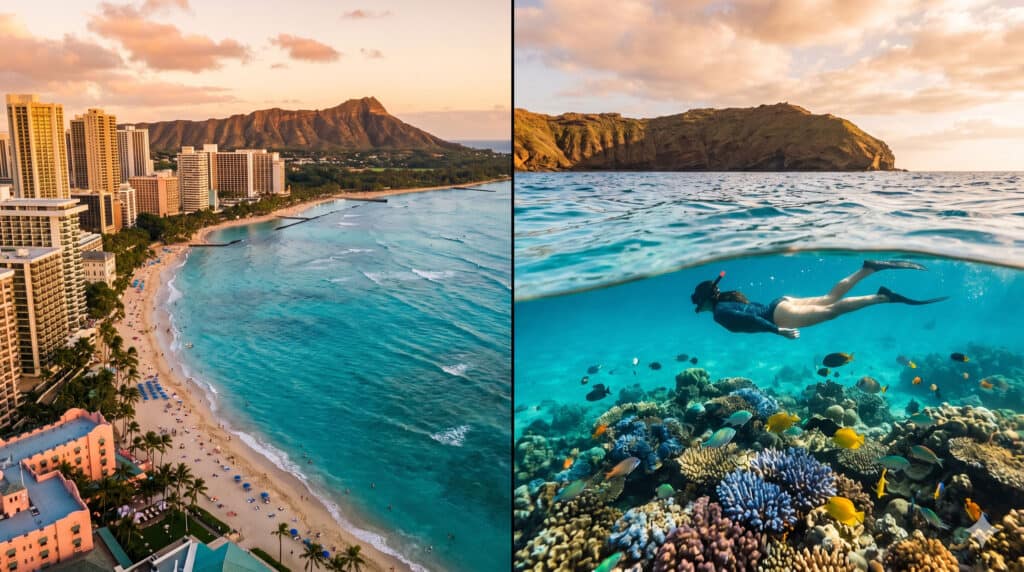
Both are Hawaii. Both have that kind of light — the way it sits on the water at 7 a.m. — that makes you want to call in sick and never come back. But Waikiki and Maui are genuinely different vacations. Picking the wrong one for your travel style doesn’t ruin a trip, exactly. It just leaves a nagging feeling that you missed something. And at Hawaii prices, that stings.
First-timers gravitate toward whichever name sounds more familiar. Couples assume Maui automatically. Families freeze. The right answer depends almost entirely on what you actually want from a week in the Pacific — and that’s exactly what this guide sorts out. We go travel-style by travel-style: first-timers, families, couples, solo travelers, and adventure seekers. By the end, you’ll know which island is yours.
Waikiki vs Maui at a Glance
The honest shorthand: Waikiki is a city beach that happens to be in Hawaii. Maui is a nature escape that happens to have world-class resorts. Both are spectacular. They scratch completely different itches.
Waikiki packs an enormous amount into a small footprint — surf breaks, shopping, nightlife, Pearl Harbor, Diamond Head, a restaurant scene that runs from $12 plate lunches to oceanfront fine dining, and more historic sites than you can reasonably fit into a week. You can do all of it without ever getting in a car. Maui is the opposite in nearly every way: slower, more spread out, car-dependent, and oriented around dramatic natural landscapes. The Road to Hāna, Haleakalā at sunrise, snorkeling at Molokini Crater — these are experiences you can’t replicate anywhere else. The luxury resorts in Wailea are some of the finest in the entire state.
One practical note before we dive in: Maui tends to be pricier overall, particularly in resort-heavy areas, and a rental car is nearly essential and adds meaningful daily cost. Waikiki gives you more price range across lodging and dining, and skipping the car is a real option if you stay in the core neighborhood. Neither island is cheap. Both are worth it. Now let’s figure out which one is worth it for you.
Best for First-Time Visitors to Hawaii
If this is your first trip to Hawaii, Waikiki wins without much debate. The logistics are simpler, the variety is unmatched, and you’ll leave having actually experienced Hawaii — not just one narrow slice of it.
You’ll fly into Honolulu International (HNL), which has more nonstop routes and generally better fares than Maui’s Kahului Airport (OGG). The ride from HNL to Waikiki is about 20 minutes. No inter-island connection, no mandatory rental car, no setup stress. Once you’re in Waikiki, nearly everything worth doing on Oahu is walkable, via rideshare, or a short bus ride away.
The real first-timer advantage is variety without decision fatigue. You can take a surf lesson on Kuhio Beach in the morning, grab shave ice on the walk back, spend the afternoon at Pearl Harbor, and watch Diamond Head glow at sunset from a rooftop bar — all without planning much beyond showing up. Maui is beautiful, but you’ll spend a significant portion of your day in the car connecting experiences. For most first-timers, that’s a different kind of trip than they were imagining.
Pearl Harbor and the USS Arizona Memorial are about 30 minutes from Waikiki — and genuinely one of the most powerful experiences in the state. Diamond Head is doable in a morning, with panoramic views that absolutely earn the hike. Hanauma Bay is world-class snorkeling in a protected marine reserve (open Wednesday–Sunday only, reservations required and usually claimed within minutes of the booking window opening two days prior). The North Shore — sea turtles at Laniakea, shrimp trucks, legendary surf culture — is a full-day adventure just 45 minutes away. Our 5-day Waikiki itinerary walks through the best sequence for all of it, including timing tips for the spots that fill up fast.
First-timer verdict: Waikiki.
Best for Couples and Honeymooners
This is where Maui earns its reputation — and honestly, it deserves every bit of it. If your ideal Hawaii trip involves a slower pace, oceanfront dinners, spa days, and scenery that makes a regular Tuesday feel like an anniversary, Maui is the move.
The Wailea resort corridor is purpose-built for couples. High-end hotels, uncrowded beaches, impeccable service, and an ambiance that’s genuinely hard to manufacture elsewhere. The Four Seasons Resort Maui at Wailea consistently ranks among the best resort experiences in the United States. Hotel Wailea, which is adults-only, has a hillside setting and a quieter, more secluded feel that works beautifully for honeymooners who actually want to exhale. Even mid-range resorts in the Wailea area benefit from the same spectacular setting.
Maui’s signature romantic experiences are hard to replicate anywhere else. Watching the sunrise from the summit of Haleakalā — at 10,023 feet, above the cloud line, in temperatures that regularly drop below 40°F at the top — is surreal in the best way. It requires advance reservations via Recreation.gov, separate from park entry, and sunrise slots sell out weeks ahead. Book the moment your dates are confirmed. Snorkeling at Molokini Crater, a crescent-shaped volcanic islet with exceptional water clarity, is a half-day boat trip that sits at the top of most visitors’ Maui lists. And the Road to Hāna, done at a relaxed pace with an overnight in Hāna, is one of the great road trips in the country.
Waikiki isn’t romance-free — couples love The Royal Hawaiian for its iconic pink-palace atmosphere, and the spa programs at the Moana Surfrider are genuinely excellent. But if romance is the primary goal, Maui’s pace and scenery create an atmosphere Waikiki’s energy doesn’t quite match.
Couples verdict: Maui.
Best for Families with Kids
Families can have a great time on either island. But Waikiki wins on logistics — and with kids, logistics are everything.
The biggest practical advantage is proximity. The Waikiki Aquarium, Honolulu Zoo, and Kapiʻolani Park are all within easy walking distance of most Waikiki hotels. Kuhio Beach has lifeguards on duty and calmer inshore water — two things that matter a lot with younger swimmers. When someone inevitably needs a bathroom, a snack, or an emergency nap, your hotel is minutes away. There’s no 25-minute drive back in traffic with a seven-year-old who’s hit the wall.
Surf lessons in Waikiki are a standout family activity. The waves here are among the most forgiving for beginners in all of Hawaii, instructors are practiced at working with all ages, and most kids catch a wave their first time out. It’s the kind of thing that becomes the trip story everyone tells when they get home. The Waikiki Aquarium is smaller than you might expect but legitimately excellent for younger kids. Honolulu Zoo is right in the neighborhood — a reliable half-day for the under-12 crowd. Kapiʻolani Park gives everyone the unstructured outdoor time that vacation needs and schedules rarely leave room for.
For families wanting to venture beyond Waikiki, our guide to the 20 best day trips from Waikiki covers everything from the North Shore to Kailua Beach to Pearl Harbor, with family-friendly picks and practical tips throughout — including which ones work with young kids and which are better saved for older ones.
Maui is family-friendly too, but it requires a rental car, more advance planning, and longer drives between activities. Molokini snorkeling is harder with very young children. None of it is prohibitive — but the logistics require more effort, and Waikiki simply removes those friction points.
Family verdict: Waikiki.
Best for Solo Travelers
Solo travel in Hawaii is genuinely great, and Waikiki is the stronger fit for most solo visitors. It’s social, safe, walkable, and built for people who want to meet others or do their own thing — without the car-dependent isolation that Maui can create.
The social infrastructure in Waikiki is real. Surf lessons create instant camaraderie — there’s something about falling off a board repeatedly that breaks down social walls fast. Catamaran tours, snorkeling trips, and group hikes work as natural icebreakers. Waikiki even has hostel-style lodging options with communal common areas, which is genuinely rare in Hawaii and makes solo travel feel less solitary if you want the company.
The happy hour scene is one of Waikiki’s real pleasures for solo travelers — oceanfront views, good tropical cocktails, and prices that don’t require committing to a full dinner. Our rundown of the best happy hours in Waikiki highlights the spots worth planning around. And when you want a bigger evening out, our guide to the best luaus near Waikiki is a good starting point — luaus are a great solo option since the experience is communal by design.
Maui can feel more isolating for solo travelers. Without a car you’re fairly limited; with one, you’re doing a lot of activities alone. The resorts are gorgeous but don’t generate the same kind of social atmosphere as Waikiki’s neighborhood energy. If solo travel with options for connection is what you’re after, Waikiki is the easier, more rewarding choice.
Solo traveler verdict: Waikiki.
Best for Adventure Seekers
Adventure exists on every Hawaiian island. But if your ideal day involves something genuinely epic rather than just beautiful, Maui pulls ahead.
Molokini Crater is among the best snorkel and dive sites in the United States — visibility regularly reaches 100 feet or more, and the reef diversity holds up against top sites worldwide. Beyond the water, Maui has ziplining through lush valleys, sea cave kayaking, horseback rides through mountain terrain, and a Road to Hāna that packs black sand beaches, bamboo forests, and waterfall swims into one extraordinary coastal drive. Doing Hāna right takes a full day minimum; most people who try to rush it wish they hadn’t.
Then there’s Haleakalā. The dormant volcano’s summit rises to 10,023 feet, and the landscape up there looks borrowed from another planet — cinder cones, alien terrain, and a sunrise that most visitors describe as one of the most memorable experiences of their lives. The crater also has challenging hiking trails ranging from a few hours to multi-day backcountry routes for serious hikers.
Oahu holds its own for adventure. Diamond Head is one of the most satisfying hikes on any Hawaiian island — our guide on everything you need to know about Diamond Head covers the history, trail tips, and how to nail the reservations. Oahu also has excellent surfing, multiple ridge hikes, and the Koko Head stairs for anyone who wants to truly earn their beach day. But if adventure is the primary reason for the trip, Maui’s geography wins.
Adventure verdict: Maui — but Waikiki holds its own.
Waikiki vs Maui: The Real Cost Difference
Both islands are Hawaii — neither is budget-friendly in any absolute sense. But Waikiki offers considerably more price range, and travelers working with a flexible budget will generally find it much easier to control costs there.
The main reasons Waikiki skews more accessible: more lodging inventory means more competition and more deals; the dining scene runs from $12 plate lunches to $80 tasting menus; and you can genuinely skip renting a car if you stay in the core neighborhood. Mid-range hotels in Waikiki can run $180–$280 per night in shoulder season, with budget options available. You won’t feel like you’re missing the island by staying in them.
Maui, especially in Wailea and Kapalua, has a higher price floor. A rental car is essentially mandatory to see the island properly, adding roughly $60–120 per day depending on season — and Maui rental prices spike significantly during peak periods. Dining is more limited outside resort corridors, which means fewer cheap options when you’re hungry and far from base. That said, Maui’s shoulder seasons — late April through early June, and September through mid-November — offer real value on accommodations, sometimes dramatically so.
For dining in Waikiki at every budget level, our guide to the best restaurants in Waikiki covers everything from quick local spots to oceanfront splurge dinners — including a few that punish you financially in the best possible way.
What to Reserve Before You Go
Hawaii’s most popular natural sites now require advance reservations — a change that mostly benefits visitors who plan ahead, since it keeps crowds manageable at places that used to be genuinely overwhelming. Here’s what to lock in as soon as your dates are confirmed:
On Oahu: Diamond Head requires paid reservations for non-residents ($5 per person entry, $10 for parking) — book via the Hawaii DLNR site up to 30 days ahead. Hanauma Bay is open Wednesday through Sunday only, with reservations opening two days in advance at 7:00 AM Hawaii time. Set an alarm for that; slots disappear within minutes. The USS Arizona Memorial at Pearl Harbor is free but uses timed tickets — reserve online to skip the day-of scramble.
On Maui: Haleakalā sunrise reservations are required and entirely separate from park entry — book through Recreation.gov the moment your dates are set. Slots sell out weeks ahead during peak periods. Most Molokini snorkel tours fill up days to weeks in advance as well; morning departures offer calmer water and better visibility, so book early and aim for an early slot.
One note for Maui visitors: the island is actively welcoming visitors as it continues to recover from the 2023 Lahaina wildfire. Travel to Maui is encouraged — tourism is essential to the local economy — but some areas near Lahaina remain off-limits. Check current guidance before your trip and travel with awareness and respect.
Frequently Asked Questions About Waikiki vs Maui
Is Waikiki or Maui better for a first trip to Hawaii?
Waikiki is almost always the better first trip. You’ll have more variety, simpler logistics, and easy access to Hawaii’s biggest historic and cultural sites — all without needing a rental car. Maui is spectacular, but it rewards travelers who already know they want a slower, resort-focused, nature-forward experience and are prepared for a car-dependent itinerary. Save Maui for your second trip.
Is Maui more expensive than Waikiki?
Generally yes. Maui skews pricier — especially in Wailea — and a rental car is nearly essential, which adds meaningful daily cost. Waikiki has more lodging competition, more dining options at every price point, and you can skip the car if you stay centrally. Both islands have deals, particularly in shoulder seasons, but for overall budget flexibility, Waikiki wins.
Can you visit both Waikiki and Maui on the same trip?
Absolutely — it’s a popular and satisfying combination. The usual approach is to start in Waikiki for the first few nights to cover history, surf, and city energy, then fly to Maui for the second half for snorkeling, scenic drives, and resort relaxation. Inter-island flights run frequently and take about 35–45 minutes. Plan at least 4 nights on each island to get a real feel for both without rushing.
How do you get between Waikiki and Maui?
Inter-island flights are the only practical option. Hawaiian Airlines and Southwest both run frequent daily service between Honolulu (HNL) and Kahului (OGG), with a flight time of around 35–45 minutes. Prices vary, but booking a few weeks ahead typically produces better fares. There is no ferry service between the islands.
Is the Haleakalā sunrise worth the effort?
Most people who make the pilgrimage say yes, without hesitation. You’ll drive to the 10,023-foot summit in the dark, wait in real cold (bring layers — it often drops below 40°F up top), and watch the sun rise above a sea of clouds. It’s one of the more genuinely unusual experiences available in the United States. Reservations are required and sell out weeks ahead via Recreation.gov — book the moment your dates are confirmed.
Which island has better snorkeling — Waikiki or Maui?
Maui wins for snorkeling overall. Molokini Crater is exceptional — visibility regularly reaches 100 feet, and the reef diversity is impressive by any standard. Oahu has excellent snorkeling too, particularly at Hanauma Bay, which is one of the best beginner snorkel sites in the state. But if snorkeling is the main event you’re planning the trip around, Maui is the call.
The Waikiki-versus-Maui question usually resolves itself once you get honest about what you want from a vacation. Waikiki is your pick if you want energy, variety, walkable logistics, and an island experience that fits a lot into a small footprint. Maui is your pick if you want romance, dramatic scenery, world-class snorkeling, and a pace that actually lets you exhale. And if you’re genuinely torn — do both. A split trip is one of the most satisfying ways to experience what Hawaii does best. Our 5-day Waikiki itinerary is the right place to start planning the Oahu half.