
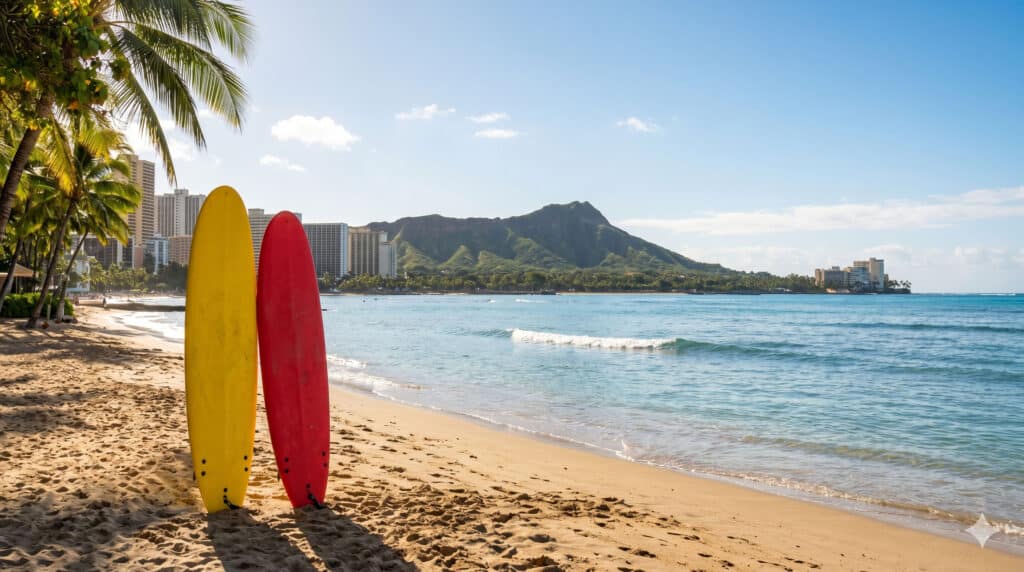
Taking kids to Waikiki sounds like an easy win until someone reminds you about the five-hour flight. But once you land? It makes complete sense. Waikiki is genuinely built for families—calm water, activities that hold a kid’s attention without requiring a second mortgage, and enough variety that the adults don’t quietly lose their minds in the process. Here’s a field-tested list of kid-friendly things to do in Waikiki, with honest notes on what to actually expect when you show up with real children.
The Atlantis Submarine — Waikiki’s Instant Family Win
This is the activity that makes you the hero of the trip. Atlantis Submarines loads everyone onto a shuttle boat, takes you out from the Hilton Hawaiian Village pier, and transfers you into an actual submarine that descends about 100 feet below the surface. You sit in a dry, air-conditioned cabin, look through large portholes, and watch reef fish, sea turtles, and sunken structures drift by outside. It’s genuinely cool — for kids and for adults pretending not to be impressed.
Practical notes: kids need to be at least 36 inches tall and able to manage a short ladder. The total experience runs about 90 minutes, with roughly 45–50 minutes underwater. Departures leave from near Hilton Hawaiian Village, which has restrooms and plenty of open space to burn pre-boarding energy. Book a morning departure when you can — kids are fresher, and the whole afternoon stays intact.
Honolulu Zoo — Easy, Stroller-Friendly, and Better Than Expected
The Honolulu Zoo sits inside Kapiʻolani Park, about a 10-minute walk from most Waikiki hotels, and it’s one of the most low-effort, high-reward activities for families in the area. The size works in your favor when you’re traveling with kids — it’s large enough to feel substantial but small enough that you won’t be trudging through exhibits long after everyone’s checked out mentally.
Saturday evening Twilight Tours are worth looking into if you want a completely different vibe: cooler temperatures, more active animals, and an educator-led format that’s a genuine step above the standard daytime loop. Standard survival tips apply regardless: go early, bring more water than you think you need, and budget generously for snacks. Zoo days in Hawaii are secretly long walks in direct sun.
Surf Lessons — Because Waikiki Was Built for Beginners
Waikiki is one of the top beginner surf spots in the world. The main break is gentle and forgiving, the bottom is sandy, and the instructors here have talked thousands of nervous first-timers off the ledge before anyone ever hit the water. Kids take to it fast — they weigh less, fear less, and have better balance than most adults would like to admit.
Mickey’s Surf School is a well-regarded option in Waikiki offering lessons for both children and adults. Book morning sessions when possible: calmer water, less wind, and you’re done before the midday heat arrives. If your child is anxious about the ocean, a private lesson is worth the small price difference over a group setting — the one-on-one attention makes a real difference before they’re willing to give it a try.
Mānoa Falls — The Rainforest Hike Kids Actually Remember
About 20 minutes from Waikiki, the Mānoa Falls Trail has a way of making kids forget they were “too tired” five minutes before leaving the hotel. The path winds through dense rainforest — giant tropical plants, mist, birds you’ve never heard before — for about 0.8 miles until it opens up to a roughly 150-foot waterfall. It’s the kind of thing that earns a genuine “okay, that was awesome” from even the skeptics in your group.
What to know: the trail is 1.6 miles round trip and usually takes 1–2 hours depending on mud levels and how many times someone needs to stop and investigate something on the ground. Closed-toe shoes are non-negotiable — it gets slippery. Do not swim at the falls; it’s prohibited due to leptospirosis risk and falling rocks. The trail can temporarily close after heavy rain or storm damage, so check DLNR trail conditions before you head out. Pack lunch and eat it somewhere scenic after the hike — kids are always hungrier coming out than they admitted going in. If you want to add more hiking to your trip, the day trip hikes from Waikiki guide covers several more options across Oahu.
Luaus — The Big Family Night Worth Every Dollar
If you want one unmissable evening that genuinely checks every box — food, entertainment, Hawaiian culture, and something the kids will still bring up in September — make it a luau. Fire dancers, hula, live music, and enough food to fully derail any diet. It’s the rare activity where “what are we doing tonight?” solves itself completely.
Experience Nutridge is one of the more intimate options, held at a historic estate in the hills above Honolulu with a farm-to-table dinner and interactive cultural programming. Because the setting is smaller, kids actually get to participate rather than just watch from a crowded table. For a full breakdown of family-friendly luau options — including walkable picks and those worth a short drive — the best luaus near Waikiki guide covers them all in detail. Bring a light layer for after dark (it cools off faster than expected in the hills), and book in advance — good luaus sell out.
Ocean Adventures: Dolphin Watching, Snorkeling, and the Waikīkī Aquarium
One important note before booking anything ocean-related: in Hawaiʻi, federal law prohibits approaching Hawaiian spinner dolphins within 50 yards. Any tour advertising “swim with dolphins” is not operating within what’s legally allowed. Reputable operators watch from the boat and then move to a separate snorkeling location — which is still a legitimately great day on the water, and a better lesson for kids than pushing wildlife boundaries. The Dolphins and You tour is one well-known family-friendly option with dolphin watching from a respectful distance, snorkeling, and kid-accessible boat features.
If you’d rather skip the open ocean, the Waikīkī Aquarium is an easy and underrated win. It’s compact, walkable from most Waikiki hotels, open daily from 9 am to 4:30 pm (facility closes at 5 pm), and admission runs around $12 for adults with discounts for kids — confirm current pricing at their site before you go. It works especially well as a rainy-day option or a lower-energy afternoon activity after something more strenuous in the morning. The rainy day activities in Waikiki guide has plenty of other ideas if the weather doesn’t cooperate.
Camp Penguin, the Lagoon, and Other Bonus Picks
If you’re staying at Hilton Hawaiian Village and traveling with kids roughly ages 5–12, Camp Penguin is a supervised daytime program with themed activities, games, and occasional off-site excursions. Hours, age cutoffs, and availability change seasonally — call the resort directly before you build your whole morning around it. When it works, though, it’s a few hours of kid-occupied, adult-free time, which is its own kind of vacation magic.
A few more easy add-ons that round out any family trip:
- Duke Kahanamoku Lagoon — calm, enclosed water perfect for younger kids or cautious swimmers who aren’t quite ready for the open beach
- Kapiʻolani Park playground — free, walkable from the aquarium and zoo, and great for toddlers who need 45 minutes of running in circles
- Sunset catamaran cruise — calm water, genuinely beautiful light, minimal physical effort required from anyone
- Shave ice — Island Snow in Waikiki, or Matsumoto’s if you make it up to the North Shore. Non-negotiable.
Sample Itineraries for Families in Waikiki
If you only have one day: Atlantis Submarine in the morning, beach lunch, zoo or aquarium in the afternoon, sunset dinner nearby. Simple, satisfying, and no one needs to argue about what comes next.
Two days: Day one covers the zoo, a beach session, and surf lessons. Day two tackles Mānoa Falls in the morning and a luau at night. That’s a hard-to-beat family itinerary for the price of a weekend.
Three or more days: Add dolphin watching, a Camp Penguin morning slot (so you can actually sit still for an hour), and at least one day trip beyond Waikiki. The 20 best day trips from Waikiki guide has family-friendly ideas across the whole island. If you want a structured day-by-day framework, the 5-day Waikiki itinerary is a good starting point to build from.
Frequently Asked Questions About Kid-Friendly Things to Do in Waikiki
What is the best activity for young kids under 5 in Waikiki?
The Honolulu Zoo and Waikīkī Aquarium are both solid choices for toddlers and young kids — stroller-friendly, easy to cut short, and manageable without a full-day commitment. Duke Kahanamoku Lagoon is also a great beach option for small children since the water is calm and enclosed compared to the open beach.
What age can kids take surf lessons in Waikiki?
Most surf schools in Waikiki take kids as young as 4–5 for beginner lessons, though requirements vary by operator. Waikiki’s gentle waves and sandy bottom make it one of the best places in the world for young first-timers. Confirm age and size requirements directly with your chosen school before booking.
Is the Mānoa Falls hike safe for kids?
Yes, with proper preparation. The trail is 1.6 miles round trip and manageable for kids who can handle uneven ground and some mud. Closed-toe shoes are required. Do not swim at the falls — it’s prohibited due to leptospirosis risk and falling rocks. Check DLNR trail conditions before visiting, especially after heavy rain when closures are possible.
Are luaus good for kids?
Most luaus are designed to be family-friendly, with a mix of performances, interactive cultural activities, and varied food that keeps kids engaged without requiring them to sit still for hours. Look for options with pre-show activities — those tend to work especially well for younger kids. Earlier start times also make the evening easier to manage for families.
Is it legal to swim with dolphins in Hawaii?
No. Federal rules prohibit approaching Hawaiian spinner dolphins within 50 yards, making swimming with them illegal. Reputable tour operators follow these regulations and offer dolphin watching from the boat followed by snorkeling at a separate reef location. Any operator promising close contact with dolphins is not operating legally — skip them.
What is the calmest beach for kids in Waikiki?
Duke Kahanamoku Lagoon, near Hilton Hawaiian Village, is the most protected and calm option for younger swimmers. The main Waikiki Beach has gentle surf and lifeguards on duty, making it family-friendly overall. The eastern end near Kapiʻolani Park tends to be less crowded than the central tourist stretch, which is a bonus for families who want more room to spread out.
Waikiki has a way of making family travel look easier than it is — and once you’ve sorted the key activities, it really is. Plan one big thing per day, leave room for beach time (because the beach is always the thing), and don’t be surprised if the shave ice becomes a daily non-negotiable by day two. For more family-specific planning tips — from lodging to logistics for bigger groups — the Mom’s Guide to Waikiki has you covered.