
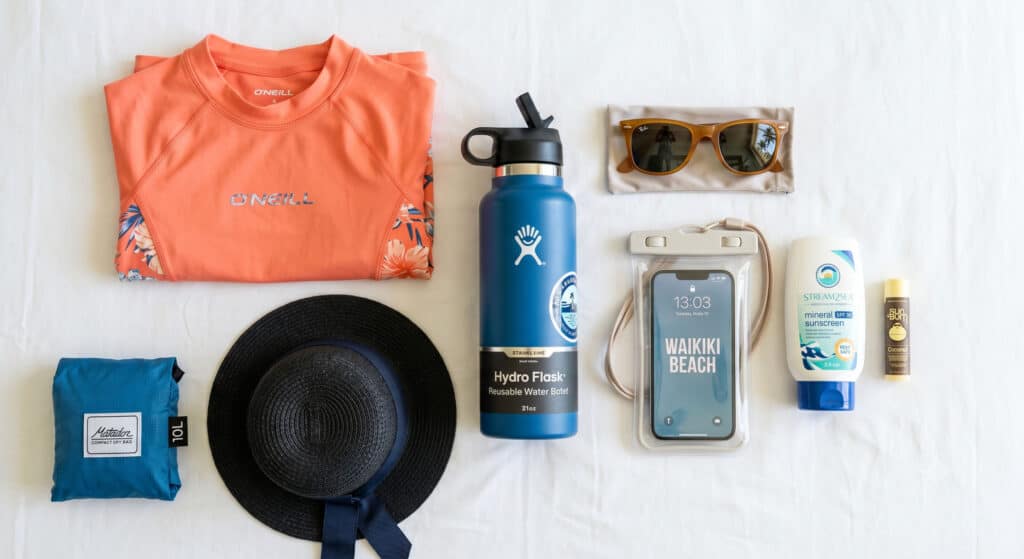
The first purchase most Waikiki visitors make after landing isn’t shave ice or a cold Longboard Lager. It’s sunscreen — either because they forgot to pack it or grabbed the wrong kind, and the ABC Store is perfectly happy to charge Waikiki prices for it. That’s a fixable problem, and exactly why a solid Waikiki packing checklist matters before you leave home.
The real packing challenge here isn’t tropical heat. It’s range. A Waikiki day can move from snorkeling at 9 a.m. to a Diamond Head hike before lunch to a dinner reservation at a nice spot by 7 p.m. Pack for one and you’re scrambling for the others. This checklist covers all of it — beach days, trail days, evenings out, and the carry-on essentials that protect your trip opener when airlines have other plans for your checked bag. If you’re still working out your days, our 5-day Waikiki itinerary shows you exactly how these days flow together.
Waikiki Packing Tips Worth Knowing Before You Start
Before you open the suitcase, a few Waikiki-specific realities worth knowing:
Mineral sunscreen is worth packing from home. Hawaii banned sunscreens containing oxybenzone and octinoxate — two chemical UV filters linked to coral reef damage — effective January 2021. Mineral sunscreen is widely available in Waikiki, but prices run noticeably higher than the mainland. Pack your preferred brand and don’t make it a day-one errand.
Trade winds are real. Daytime temperatures sit in the mid-80s°F year-round, but evenings near the water can feel genuinely breezy. A thin cardigan or zip layer earns its suitcase space on every trip.
Waikiki is walkable. The neighborhood is compact and pedestrian-friendly. A crossbody bag or belt bag handles most of your days better than a full backpack. Save the daypack for hikes and longer excursions.
Many hotels supply beach towels. Confirm with your property before you pack a bulky one — it takes up disproportionate suitcase space for something you might not need.
Leave room for the return trip. Kalākaua Avenue shopping is real, and there’s genuinely good stuff to bring home — local honey, koa wood pieces, good coffee — if your suitcase has breathing room when you arrive.
The Waikiki Packing Checklist: Travel Documents and Trip Essentials
Keep these in a dedicated travel folder or zip pouch — something you can grab quickly at security or drop into your carry-on without thinking twice.
- ☐ Passport (if applicable) or government-issued photo ID
- ☐ Boarding passes — digital and a screenshot backup
- ☐ Hotel confirmation and check-in details
- ☐ Travel insurance documents (highly recommended for international travelers)
- ☐ Credit cards + one backup card stored separately from your main wallet
- ☐ Cash for tips, parking, food trucks, and small purchases
- ☐ Health insurance card (photo backup in your camera roll)
- ☐ Copies of your ID or passport in cloud storage or email
- ☐ Emergency contacts written down — not only saved in your phone
A slim RFID-blocking travel wallet keeps all of this organized. Waikiki is safe by any standard, but high-traffic tourist areas attract opportunists everywhere.
Clothing for Waikiki: Pack Light, Plan for Range
Waikiki’s dress code is resort casual across the board. Even the nicer beachfront restaurants aren’t asking for heels or blazers — a sundress or a clean linen shirt handles dinner anywhere you’d want to go. Build your clothing around mix-and-match basics that work for breakfast, beach, and an evening out without a full outfit change in between.
- ☐ Lightweight tops — tees, tanks, breezy button-downs (4–5 for a week)
- ☐ Shorts, skirts, sundresses, or rompers
- ☐ 2–3 swimsuits (Waikiki humidity slows drying time — rotating helps)
- ☐ Cover-ups for beach-to-street transitions
- ☐ Light cardigan, zip fleece, or thin hoodie for evenings
- ☐ Comfortable walking shoes — sandals for most days, one pair with real support for longer ones
- ☐ Flip-flops or easy slip-on sandals
- ☐ Undergarments, socks, sleepwear
- ☐ One elevated dinner outfit — a nice dress or collared shirt handles everything
- ☐ Optional: workout set for hotel gym or early morning beach walks
- ☐ Packable rain jacket or small umbrella — particularly useful during the wetter winter months
If hiking is anywhere on your itinerary, pack closed-toe athletic shoes with actual grip. Sandals on a trail are a reliable way to turn a fun morning into a rolled-ankle story. Our Diamond Head guide covers what to bring, current reservation requirements, and the best time of day to go.
Beach Essentials: Sun Safety and Ocean Days
The Hawaiian sun is intense year-round, and first-timers consistently underestimate how fast a burn develops — especially when you’re moving in and out of the water all afternoon. Sun protection is the single most important thing to get right on a Waikiki beach day.
- ☐ Mineral sunscreen, SPF 30 minimum (SPF 50 for fair skin or extended water time)
- ☐ Lip balm with SPF
- ☐ Polarized sunglasses — glare off the water is relentless
- ☐ Wide-brim hat or baseball cap
- ☐ Rash guard — better sun coverage and more comfortable for long snorkeling sessions
- ☐ Refillable water bottle
- ☐ Beach bag — tote or packable backpack
- ☐ Waterproof phone pouch — protects a $1,000 device for under $15
- ☐ After-sun lotion or aloe vera gel — your future self will appreciate this
- ☐ Flip-flops or water-friendly sandals
For ocean activity days, add:
- ☐ Snorkel mask and fins — your own gear means no rental lines and no size compromises
- ☐ Water shoes — useful for rocky ocean entries and boat excursions
- ☐ Dry bag — non-negotiable for boat tours and anything involving real splash exposure
Planning a snorkeling day at Hanauma Bay? It’s one of Oahu’s best, but reservations are required and spots fill fast. Our Hanauma Bay reservation guide has the full booking walkthrough, current fees, and exactly what to expect on arrival.
Toiletries and Personal Care
Most Waikiki hotels provide the basics — shampoo, conditioner, body wash — but having your own preferred products matters more after a few days of sun, salt, and long walks in the heat. Pack travel sizes from home. Hawaii prices for toiletries run noticeably higher than the mainland, and travel sizes clear security without argument.
- ☐ Toothbrush and toothpaste
- ☐ Deodorant (earns its weight in warm, humid weather)
- ☐ Shampoo and conditioner (travel size)
- ☐ Body wash or soap
- ☐ Moisturizer — sun and ocean air dry skin faster than most people expect
- ☐ Razor and shaving supplies
- ☐ Hairbrush or comb, hair ties or clips
- ☐ Makeup and cosmetics as needed
- ☐ Contact lenses and solution, or glasses
- ☐ All medications and prescriptions in original containers
- ☐ Basic first-aid kit — bandages, blister pads, pain reliever, antihistamine
- ☐ Insect repellent (particularly useful on hikes and in lush valley areas like Mānoa)
- ☐ Hand sanitizer and travel wipes
Warm-weather additions worth including:
- ☐ Anti-chafe balm — long walks plus humidity sneaks up by day three
- ☐ Motion sickness remedies if boat tours are on the plan
- ☐ Mini stain remover pen — shave ice and poke bowls happen to everyone
- ☐ Electrolyte packets — important during hot hikes and long beach days when you’re sweating more than you realize
Electronics and Excursion Gear
You don’t need much tech in Waikiki. The whole point is to be outside. But the right few items keep travel days smooth and your photos worth keeping.
- ☐ Phone and charger
- ☐ Portable power bank — long beach days and all-day tours take your battery off the grid
- ☐ Waterproof phone pouch (worth mentioning twice — it’s the highest-return item on this list)
- ☐ Headphones or earbuds for flights and beach reading sessions
- ☐ Camera with extra memory card and battery (optional — modern phones are genuinely excellent)
- ☐ E-reader or a book — beach reading is a Waikiki tradition
- ☐ International power adapter if traveling from outside the U.S.
Even the most committed beach-and-pool traveler usually ends up adding a hike, a scenic drive, or a cultural stop by day three. Oahu’s best experiences — Diamond Head, the North Shore, Pearl Harbor, Hanauma Bay — are all within an hour or two of Waikiki. A small excursion kit is worth including. Our guide to the best day trips from Waikiki covers 20 options with practical logistics for each.
- ☐ Small daypack for full-day excursions
- ☐ Reusable zip bags — wet swimwear, trail snacks, sunscreen overflow
- ☐ Light snacks for early tours and long travel days
- ☐ Travel-size laundry detergent or sink-wash sheets — a quiet game-changer for longer stays
- ☐ Blister pads — small to pack, significant relief if you need them mid-hike
Carry-On Essentials — Don’t Check These
Checked luggage gets delayed. It doesn’t happen often, but on a long-haul trip to Hawaii, arriving without a swimsuit on day one genuinely stings. Pack these in your carry-on and you can be beach-ready within an hour of landing — regardless of what the airline does with your bag.
- ☐ One change of clothes
- ☐ Swimsuit — start the vacation the moment you land
- ☐ Mini toiletries: toothbrush, deodorant, face wash
- ☐ All medications and must-have prescriptions
- ☐ Charger and power bank
- ☐ Sunglasses
- ☐ Light layer for the plane — aircraft cabins stay aggressively cold
What NOT to Pack for Waikiki
Every item you leave home is space for something better — an aloha shirt, a bottle of local honey, a koa wood piece that actually means something. These are the most common Waikiki overpacking mistakes:
- Heavy sweaters or bulky jackets — a thin layer handles every cool evening Waikiki has for you
- Multiple pairs of heels — sand, sidewalks, and beach-town energy favor comfortable sandals in every situation
- Too many “just in case” outfits — you’ll rewear your favorites, and that’s what vacation is for
- Giant beach towels — confirm with your hotel first; most mid-range and higher properties include them
- Full-size toiletries — travel sizes cover a full week with room to spare and clear security in seconds
Forgot Something? Where to Shop in Waikiki
Waikiki is one of the best-stocked tourist neighborhoods in the country for last-minute supplies. Whatever you forgot is almost certainly findable within a few blocks of your hotel.
- Longs Drugs (Waikiki) — Sunscreen, medications, toiletries, and snacks. Generally the best prices for drugstore basics in the area.
- ABC Stores (multiple Waikiki locations) — Beach items, drinks, snacks, sunscreen, and souvenirs. Almost always within a few blocks of any hotel.
- Target (Ala Moana) — A short rideshare from Waikiki and worth it for bigger restocking runs — swimwear, sandals, toiletries, all at mainland-comparable prices.
Hours shift during holidays. A quick check before making a special trip saves a wasted walk, especially early mornings or late evenings.
Frequently Asked Questions About Packing for Waikiki
What should I pack for Waikiki that I can’t easily buy there?
Your preferred mineral sunscreen is the top answer — not because it’s unavailable in Waikiki, but because prices run noticeably higher than the mainland and you don’t want to spend your first beach morning hunting for it. Prescription medications, specialty toiletries you rely on, and your own snorkel gear (if fit matters to you) are also worth bringing from home rather than sourcing on arrival.
Do I need to bring a beach towel to Waikiki?
In most cases, no. Mid-range and upscale Waikiki hotels typically provide beach towels for guests. Confirm with your specific property before you pack one — a large beach towel takes up a disproportionate amount of suitcase space for something you may not need. If you’re staying in a vacation rental or budget accommodation, a compact microfiber towel is a much better option than a full traditional one.
What’s the best bag to carry in Waikiki during the day?
A crossbody bag or belt bag is the practical favorite for most Waikiki days. The neighborhood is wonderfully walkable, and a hands-free bag works equally well at the beach, in shops along Kalākaua Avenue, and at restaurants. Save the daypack for hikes and longer excursions when you need to carry more gear.
Can I bring fresh fruit or plants from the mainland to Hawaii?
No. Hawaii has strict agricultural inspection rules enforced by the Hawaii Department of Agriculture. Fresh fruits, vegetables, plants, and certain animal products may be restricted or require inspection before entering the state. Inspections at arrival are real and thorough. When in doubt, leave home-grown produce at home — Hawaii’s own fruit is excellent anyway.
What should I pack for a rainy day in Waikiki?
A packable rain jacket or small umbrella handles most Waikiki rain — showers here are usually brief and followed quickly by sunshine. Beyond that, a rainy day opens up some genuinely good options: the Honolulu Museum of Art, the Waikiki Aquarium, world-class spas, and excellent shopping. Our guide to rainy day activities in Waikiki has a full breakdown organized by vibe and interest level.
How many swimsuits should I bring to Waikiki?
Bring at least two, three if you’ll be in the water daily. Waikiki’s humidity slows drying time considerably — wearing a damp swimsuit to the beach every morning gets old by day two. Two suits lets you rotate comfortably; three gives real flexibility if boat tours, snorkeling days, and pool time are all on the same trip.
A well-packed bag means one less thing standing between you and a good time. Use this Waikiki packing checklist as your pre-trip sanity check, zip the suitcase, and start looking forward to it. When you’re ready to lock in dinner plans, our Waikiki restaurant guide is worth a read before reservations at the better spots fill up.