
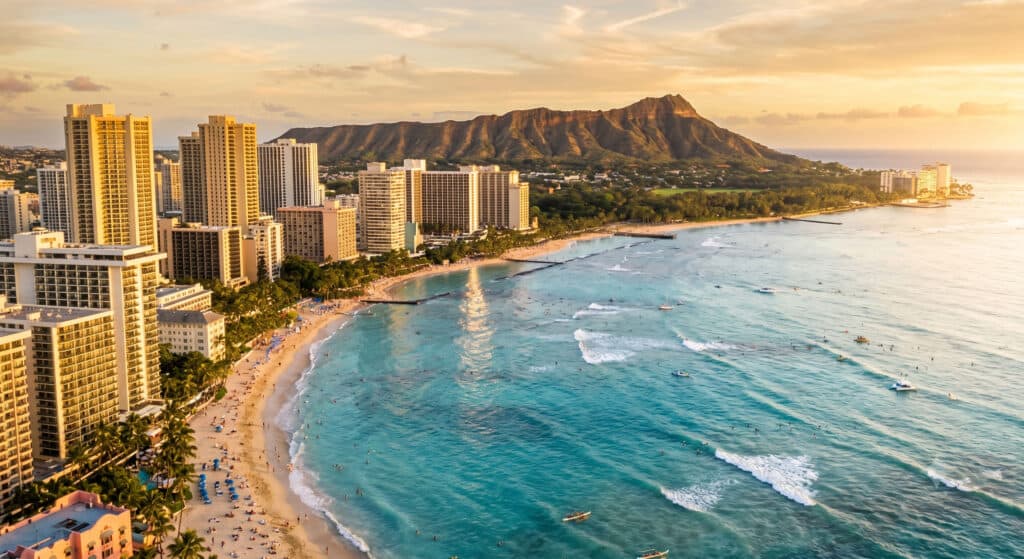
Getting to Oahu takes most people at least one long flight — sometimes two with a layover. Ten days is the sweet spot for doing it right, but a good 10-day Waikiki itinerary doesn’t sprint from the plane to the itinerary list. The travelers who leave Oahu happiest are the ones who start slow, save the big adventures for the middle, and don’t try to cram three activities into every single day.
This plan keeps Waikiki as your home base the whole time. Unpack once, then fan out from there — day trips to the North Shore and Pearl Harbor, hiking mornings, beach afternoons, a luau or two, and a shopping day in between. Every stop on this itinerary is a realistic drive or rideshare from where you’re staying.
One thing to handle before your flight: timed-entry reservations for Diamond Head, the USS Arizona Memorial at Pearl Harbor, and Hanauma Bay. All three sell out in advance, and none of them have reliable walk-up options anymore. Lock those in first — then the rest of the trip can stay flexible.
Your 10-Day Waikiki Itinerary at a Glance
| Day | Theme | What to Expect |
|---|---|---|
| 1 | Arrive + Decompress | Sunset stroll, easy dinner, early night |
| 2 | Beach Day | Pick your favorite stretch of sand, rentals on-site |
| 3 | Spa + Luau Night | Resort spa afternoon, luau evening |
| 4 | History Day | Pearl Harbor + one museum |
| 5 | Adventure Day | Water park, parasailing, scuba, or fishing (pick one) |
| 6 | North Shore | Dole, Laniakea, Sunset Beach, Waimea Valley |
| 7 | Shopping + Dinner | Ala Moana, Swap Meet, rooftop views |
| 8 | Scenic Oahu | Tantalus, Diamond Head, Hanauma Bay, Nuuanu Pali |
| 9 | Hiking Day | Koko Head, Manoa Falls, or Makapuu (pick your level) |
| 10 | Family Fun Finale | Zoo, Aquarium, escape room, or dolphin experience |
This is a framework, not a rigid schedule. Each day has options built in so you can match the plan to your group’s pace. Some people swap Days 4 and 6 to break up the history with a beach morning — that works just as well.
Days 1–3: Beach Time, Spas, and Your First Luau
Don’t fight the jet lag on Day 1. Get outside, walk the shoreline, grab a shave ice, and let Waikiki do its thing. The first three days are intentionally light — beach time, a spa afternoon whenever your body asks for it, and one good luau evening.
Waikiki isn’t one beach — it’s a string of named sections each with a slightly different feel. Starting from the western end near Hilton Hawaiian Village and heading toward Diamond Head: Duke Kahanamoku Beach has a calmer lagoon setup that’s particularly good for families with young kids. Fort DeRussy has grassy park space behind the sand with shade and picnic tables. Royal Hawaiian Beach is classic Waikiki — busy, social, excellent people-watching. Kuhio Beach runs calmer and more sheltered, another good family option. Toward the quieter eastern end, Sans Souci near the aquarium draws a more local crowd and has a noticeably different feel from the tourist-heavy sections further west. See the full breakdown in the guide to Waikiki’s best beaches.
One thing worth knowing: you don’t need to haul a mountain of beach gear. Chair rentals, umbrella rentals, snorkel equipment, and boogie boards are all available right on the sand at most beach zones. Pack light and rent what you need when you need it.
Somewhere around Day 2 or 3, book a spa afternoon. That specific point in a Waikiki trip — post-travel stiffness starting to ease, first sun exposure setting in — is when a massage feels almost medically necessary. Several Waikiki resort spas are legitimately excellent, and a few are genuinely special: oceanfront settings, garden cabanas, hydrotherapy options. The full list of the best spas in Waikiki covers the top picks with honest notes on what each one does well.
Schedule your luau in the first three days, not the last. Having a big cultural evening early sets the tone for the rest of the trip — and it’s one less thing to squeeze into your final night when you’re trying to pack. The options range from large resort productions with stadium-style seating to intimate hilltop experiences. If your group wants more than just dinner and a show, the Polynesian Cultural Center includes a full afternoon of cultural village experiences before the evening feast. The complete guide to the best luaus near Waikiki breaks down every current option with honest notes on format, vibe, and who each one suits best.
Day 4: History Day at Pearl Harbor
Go early. Pearl Harbor is quiet and powerful, and it earns the time you give it. The visitor center alone — 17 acres of exhibits covering the attack and its aftermath — deserves more than a quick walk-through on the way to the boat.
The USS Arizona Memorial is the centerpiece, and it requires advance reservations through Recreation.gov. Tickets release on a rolling 56-day window at 3 PM Hawaii time, and peak season slots disappear fast. There’s no walk-up option — if you don’t have a reservation, you’re in standby with no guarantee. Full booking details and a step-by-step guide are in the Pearl Harbor ticket guide.
After Pearl Harbor, pick one museum add-on — not three. Museum overload is real, and the goal here is leaving Day 4 feeling moved, not exhausted.
- Pearl Harbor Aviation Museum — an airplane hangar that survived the attack, now full of restored aircraft and hands-on exhibits; great for aviation fans and kids who are hard to impress
- U.S. Army Museum of Hawaiʻi (Fort DeRussy) — small but good, and conveniently back near Waikiki for an easy day-end stop
- Bishop Museum — the best option if you want Hawaiian culture, natural history, and science under one roof; families with curious kids tend to love it
- Honolulu Museum of Art — calm, air-conditioned, and one of the better art museums in the country; a good pick if your group hits their history limit early
Day 5: Adventure Day — Pick One Big Thrill
This is the day for something that makes a good story. The rule: choose one major activity and do it well. Adding a second works only if everyone’s still energized after the first.
Wet’n’Wild Hawaii (Kapolei) — Hawaii’s only water park, about 45 minutes from Waikiki in Oahu’s second city. Slides, wave pools, and a layout that covers everyone from small kids to thrill seekers. The park doesn’t run seven days a week, so check the current operating schedule before making plans around it. Bonus pairing: Chief’s Luau operates nearby in Kapolei, which makes for a solid day-into-evening combo if you want to end on a feast.
Parasailing over Waikiki — for big views with almost no physical effort. Flights run from Kewalo Basin harbor and put you 400–800 feet above the water with Diamond Head and the Waikiki coastline spread out below. It’s a 10–15 minute flight and it looks exactly like the postcards.
Scuba diving — Waikiki is a solid launch point for dive boats heading out to reefs and wrecks. Certified divers have good options, and some operators run beginner discovery experiences for first-timers depending on conditions and group size.
Deep-sea fishing charter — an early departure, open ocean, and the kind of trip where the views are worth the wake-up call regardless of what bites. A genuine Oahu classic even for people who don’t fish.
Day 6: The North Shore Day Trip
The North Shore deserves a full day. Leave early — traffic heading out of Honolulu can stack up after 8 a.m. — and plan to move at a slow pace once you get there. This is the day that makes people want to come back to Oahu.
Dole Plantation — yes, it’s touristy. Still worth stopping. The soft-serve Dole Whip alone justifies the detour for most people, and the Pineapple Express train tour gives kids something to do while adults pretend they’re not also enjoying it.
Laniakea Beach — known as Turtle Beach, this is one of the most reliable places on Oahu to spot Hawaiian green sea turtles resting on shore. No guarantees, but the odds are good. Keep at least 10 feet of distance — these are protected animals, and there are usually volunteers around to remind people who forget.
Sunset Beach — in winter, professional surf contests happen here on waves that can top 20–30 feet. In calmer months, it’s a long, spacious stretch of sand with the kind of scenery that explains why the North Shore has its reputation. Walk it, photograph it, and let the day continue.
Waimea Valley and Waimea Falls — the walk to the waterfall is easy, not a hike. Lush botanical gardens, a wide path, and a beautiful falls at the end. Plan around 1.5 to 2 hours. If you’re going on a Monday, Tuesday, or Wednesday, the Toa Luau at Waimea Valley runs in the evening and makes for a perfect day-to-night combination — jungle walk, waterfall, feast, fire knife dancing.
For anyone who wants to explore further beyond the North Shore, the full guide to Oahu day trips from Waikiki covers 20 different options across the island with honest notes on timing, transportation, and what each one actually takes to pull off.
Day 7: Shopping, Swap Meet, and a Rooftop Dinner
After the North Shore intensity, Day 7 is a stylish reset: wander, eat well, and end somewhere with a view. No rental car required.
Ala Moana Center — one of the largest open-air shopping centers on Earth, just a short trolley ride from Waikiki. You could spend a few hours here or an entire day. The mix covers big brands, local boutiques, and a food court that’s better than most mall food courts deserve to be.
Aloha Stadium Swap Meet & Marketplace — worth knowing that this has relocated. The historic Aloha Stadium is being demolished as part of the New Aloha Stadium Entertainment District redevelopment, and the swap meet now operates at the Halawa parking area. Current schedule runs Wednesdays and Saturdays 8 a.m.–3 p.m. and Sundays 6:30 a.m.–3 p.m. It’s still the best place on Oahu for souvenir hunting at non-tourist prices — just confirm the current schedule and parking setup before you go.
For dinner, Tanaka of Tokyo Central does teppanyaki-style tableside cooking that turns the meal into a show — good for groups, good for families. SKY Waikiki is the rooftop bar worth lingering at: cocktails, views across Waikiki and Diamond Head, and enough energy to feel like the evening is going somewhere. One note: the revolving restaurant Top of Waikiki is permanently closed, so if any older travel guides point you there, ignore them.
Days 8–10: Scenic Drives, Hikes, and the Family Fun Finale
Day 8 — Scenic Oahu
Pick two or three of these based on your group — not all of them. This is meant to feel like discovery, not a run sheet.
Diamond Head State Monument — the hike every Waikiki first-timer should do. It’s 1.6 miles round-trip, uphill and fully exposed, with a few dark tunnel sections that need your phone flashlight. Not brutal, but not a stroll either. Go early, bring water, and wear actual shoes. The view from the top is the one from every Oahu postcard — it earns it. Non-residents need advance entry reservations.
Hanauma Bay — the island’s top snorkel spot: calm water, abundant marine life, sea turtles on good days. The catch is that it’s closed Mondays and Tuesdays, entry reservations only open two days in advance at 7 a.m. Hawaii time, and they sell out within minutes. The full Hanauma Bay reservation guide walks through the exact booking process and lists five good alternatives if you can’t get a spot.
Round Top Drive / Tantalus — a winding, tree-lined road above Honolulu with pull-off viewpoints looking over Diamond Head, the coastline, and the city. Cooler up here, quieter, and genuinely worth the 20-minute drive. Good for golden hour.
Nuuanu Pali Lookout — a dramatic windward-side viewpoint where the trade winds hit you like a wall. It’s a quick stop with a big reward, and it’s easy to combine with a Tantalus drive on the same day.
Day 9 — Hiking Day
Pick trails that match your actual fitness level, not your aspirational one. Island trails are not the place for stubbornness — and the sun makes everything harder than it looks.
Koko Head Crater Trail — the infamous “stairway” of 1,048 old railroad ties going nearly straight up the side of a dormant tuff cone. Steep, fully exposed, zero shade. The views from the top are extraordinary. Go at sunrise or as early as you can manage — midday on this trail is genuinely unpleasant.
Manoa Falls Trail — the best option for mixed fitness groups: lush rainforest, manageable length, and a beautiful waterfall at the end. It can be muddy, so skip the sandals. This is the hike that makes people say “I didn’t expect Hawaii to look like this.”
Makapuu Lighthouse Trail — paved, family-friendly, and genuinely rewarding with dramatic coastal views the whole way up. The easiest option on this list, and still worth doing.
Day 10 — Family Fun Finale
End on easy wins. Your last full day in Waikiki is not the day for a two-hour drive or a steep hike.
Honolulu Zoo sits in Kapiʻolani Park right near the beach — 42 acres with over 1,200 animals, easy to pair with a morning swim and a lazy afternoon. Waikiki Aquarium is smaller but excellent: air-conditioned, thoughtfully designed, and one of the best places on Oahu to understand Hawaiian marine life before you head home. If your crew has teens who’ve hit their animal-exhibit limit, Breakout Waikiki is an escape room option that’s a genuine change of pace from everything else on this itinerary.
For dolphin experiences: Dolphin Quest at The Kahala Hotel & Resort is a structured, reputable encounter program with clearly defined standards. For wild dolphin boat tours on the west side, choose operators that clearly state a no-harassment, no-chasing approach — the distinction matters both ethically and legally.
Frequently Asked Questions About a 10-Day Waikiki Itinerary
How many days in Waikiki is enough?
Most first-time visitors do best with 7 to 10 days. Seven days covers the highlights — Pearl Harbor, Diamond Head, a North Shore day, and solid beach time — but it feels rushed. Ten days lets you add hiking, a proper scenic driving day, and actual rest days, which most people undervalue until they’re sunburned, tired, and staring at yet another packed morning on the itinerary.
Is 10 days too long in Waikiki?
Not if you treat Waikiki as a base rather than the only destination. Using it as home base for day trips to the North Shore, Pearl Harbor, Hanauma Bay, and the windward coast keeps the trip fresh. People who feel bored are usually the ones who planned to stay on the same beach stretch for 10 days without venturing out. The island is small enough to explore thoroughly in 10 days, but only if you actually leave Kalakaua Avenue occasionally.
Do I need a rental car for a 10-day Waikiki trip?
Not the whole time, but having a car for 3 to 4 days makes a real difference. The North Shore, Waimea Valley, Tantalus, and the southeast coastal drive all go better with a car. Within Waikiki itself — beach, restaurants, shopping — you can walk or use rideshares. The Waikiki Trolley is a solid car-free option for getting between Waikiki, Diamond Head, and Ala Moana. The smart move is renting only on the day-trip days rather than paying for a car and hotel parking every day of the trip.
What should I book in advance for a Waikiki vacation?
Three reservations matter most, and all three should be locked in before your flight: the USS Arizona Memorial at Pearl Harbor (books via Recreation.gov, opens 56 days in advance at 3 PM Hawaii time), Diamond Head State Monument (non-residents need advance tickets that can sell out), and Hanauma Bay (reservations only open two days in advance at 7 a.m. Hawaii time — be ready). After those, book your luau early. Better options sell out weeks ahead during peak travel periods.
When is the best time of year to visit Waikiki?
Waikiki is genuinely year-round — there’s no bad season. April through October brings warmer ocean temperatures, calmer water (especially on the North Shore), and better snorkeling conditions at spots like Hanauma Bay and Shark’s Cove. Winter months from November through March mean bigger surf on the North Shore and cooler evenings, but beach weather in Waikiki stays excellent. If you care about crowds: the week between Christmas and New Year’s is one of the busiest travel periods of the year — book everything earlier than you think you need to.
Ten days goes by faster than it sounds. Lock in Pearl Harbor, Diamond Head, and Hanauma Bay before your flight, then let the rest of the plan breathe. You’ll leave with a North Shore tan, the quiet of Pearl Harbor still with you, and a strong opinion about which beach section in Waikiki is actually the best. That’s a good sign the trip worked.