
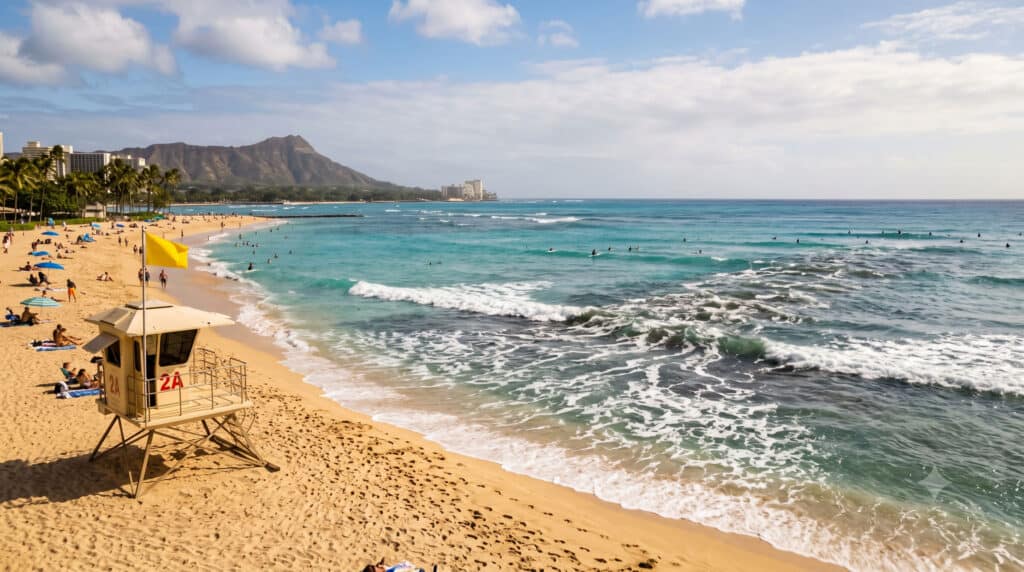
Waikiki’s water looks like a postcard: flat, turquoise, warm enough to skip a wetsuit, calm enough that toddlers wade out past their knees without anyone blinking. Most days, that’s exactly what you get. But “most days” isn’t “every day,” and the question people actually type into Google before their trip — is it safe to swim in Waikiki today — doesn’t have one answer that holds all summer.
Short version: yes, generally. Waikiki is one of the calmest, most heavily lifeguarded stretches of coastline on Oahu. But a Waikiki rip current can build fast during a south swell, the monthly box jellyfish window catches visitors off guard, and the beach’s easygoing reputation is exactly why people skip the one thing that actually keeps them safe: reading the flag before they walk in.
Is It Safe to Swim in Waikiki Today? (The Quick Answer)
Before you dig your beach chair into the sand, check three things: the lifeguard flag color flying above your stretch of Waikiki’s beaches, whether there’s a high surf advisory or south swell in the forecast, and how many days it’s been since the last full moon. Do that and you’ve covered almost every real risk Waikiki throws at swimmers.
Quick answer: Yes, on a normal day. Waikiki’s reef and near-constant lifeguard coverage make it one of the gentler beaches on Oahu. Conditions still change beach to beach and day to day, so check the flag flying over your specific stretch of sand and glance at the PacIOOS Waikiki current forecast before you get in, not after.
How to Spot — and Escape — a Waikiki Rip Current
South swell season, roughly April through September, sends bigger and more organized surf into the reef breaks off Waikiki, and that water has to go back out somehow. It pulls out through gaps in the reef, and those gaps are where rip currents form. Look for a stretch of water that’s choppier or more churned-up than what’s around it, a line of foam, sand, or seaweed moving steadily offshore, or a patch where waves simply aren’t breaking the way they are on either side. That flat-looking patch isn’t calmer water. It’s usually the current.
If you get caught in one, the instinct to swim straight back to the beach is the wrong move — you’ll wear yourself out fighting a current that’s typically 100 to 200 feet wide and moving faster than most people can swim against it. Swim parallel to shore until you feel the pull ease, then angle back in. If you can’t make progress, float, wave an arm overhead, and let the lifeguards do their job. Even people who’ve taken a surf lesson before get caught off guard the first time a current shows up, because it isn’t a permanent feature — it depends on the swell that day.
For a real-time read before you leave your hotel, PacIOOS runs an hourly current forecast built specifically for Waikiki’s south shore, not just Oahu in general — worth bookmarking if you’re swimming here more than once.
Reading Hawaii’s Lifeguard Flags (It’s Not the Mainland System)
If you’ve swum on the mainland, forget what green and yellow used to mean. Hawaii’s ocean safety flags work differently, and there’s no flag at all for “totally calm” — no flag flying just means lifeguards haven’t posted a specific warning, not that conditions are perfect.
- Yellow: moderate hazards — some current or surf present, use normal caution
- Red: high hazard — strong current or dangerous surf, experienced swimmers only
- Double red: water closed to the public
- Purple: marine life hazard — jellyfish, Portuguese man o’ war, or similar — flown alongside another color, not alone
Purple is the flag visitors misread most, since it doesn’t mean the water itself is rough — it means something specific is in it. Pair it with the jellyfish calendar below and you’ll know whether it’s a day to pack the reef shoes or just stay dry for a few hours.
The Box Jellyfish Calendar: When They Show Up at Waikiki
Box jellyfish arrive on Oahu’s south-facing shores — Waikiki included — on a schedule tied to the lunar cycle, typically 8 to 10 days after each full moon, occasionally lingering a day or two longer. It’s predictable enough that the Waikīkī Aquarium publishes an annual calendar, and lifeguards post purple flags when a bloom actually shows up on the sand.
| Full Moon Date | Estimated Jellyfish Risk Window |
|---|---|
| June 29, 2026 | July 7–9, 2026 (underway now) |
| July 29, 2026 | Aug 6–8, 2026 |
| Aug 28, 2026 | Sept 5–7, 2026 |
| Sept 26, 2026 | Oct 4–6, 2026 |
| Oct 25, 2026 | Nov 2–4, 2026 |
| Nov 24, 2026 | Dec 2–4, 2026 |
| Dec 23, 2026 | Dec 31, 2026–Jan 2, 2027 |
If you’re reading this around early July, you’re inside a jellyfish window right now — not a reason to cancel plans, but a good reason to check the flags before your swim. A sting is painful but rarely a medical emergency. Rinse with vinegar if a lifeguard station has it, remove visible tentacles with a gloved hand or a card edge, and skip the fresh water or rubbing, both of which make it worse.
Dates above are estimates based on the lunar cycle — actual blooms shift with wind and current, so the flag on the beach that day always overrides any calendar, including this one.
Sharks, South Swells, and Other Real (But Rare) Risks
Waikiki consistently ranks among the lowest shark-risk swim areas in Hawaii, a byproduct of its shallow, reef-protected profile and the sheer volume of daily ocean traffic that keeps the water busy and visible. That doesn’t mean zero risk, just low. The more useful thing to know is that Waikiki’s calm reputation is a little misleading on its own: south swells in peak summer can push real surf and rip currents into a beach most visitors assume is protected year-round.
Skip swimming near stream or storm-drain outlets for a day or two after heavy rain — runoff draws bait fish, and bait fish draw everything that eats them. And if you want calmer, more sheltered water for young kids or a first snorkel outing, the protected bays outside Waikiki proper, like Hanauma Bay, are worth the drive. Good visibility for snorkeling usually lines up with the same calm, low-surf days that make swimming safest in the first place.
FAQ: Waikiki Ocean Safety
What does a purple flag mean at Waikiki?
A purple flag signals a marine life hazard, most often box jellyfish, Portuguese man o’ war, or occasionally a shark sighting nearby. It’s usually flown alongside a yellow or red flag rather than by itself, so check both colors before deciding whether to swim.
How do I know if there’s a rip current at Waikiki today?
Check the lifeguard flag at your specific beach section first — that’s the most current, localized read available. For a broader picture before you leave your hotel, PacIOOS publishes an hourly current forecast built specifically for Waikiki’s south shore.
Is Waikiki safe for beginner swimmers and kids?
On a normal, yellow-flag day, yes — Waikiki’s sandy bottom and reef-protected shallows are about as forgiving as ocean swimming gets, and lifeguard towers line the beach. Stay close to a tower, avoid red-flag days entirely, and keep young kids in ankle-to-knee depth unless an adult is right beside them.
Do box jellyfish stings require medical attention?
Most stings cause a painful welt that fades within a day and don’t need emergency care. Seek medical help if the sting covers a large area, wraps around a limb, or if someone shows signs of an allergic reaction like difficulty breathing or swelling beyond the sting site.
What time of year has the roughest water in Waikiki?
South swells peak roughly April through September, which is also peak visitor season — so the busiest months on the sand are also when rip currents are most likely to be a real factor, not just a warning label.
None of this is a reason to skip the water. Waikiki earns its reputation as one of the easiest beaches in Hawaii to swim, most days, for most people. Just make checking the flag as automatic as reapplying sunscreen, and let the calendar and the lifeguards handle the rest.