
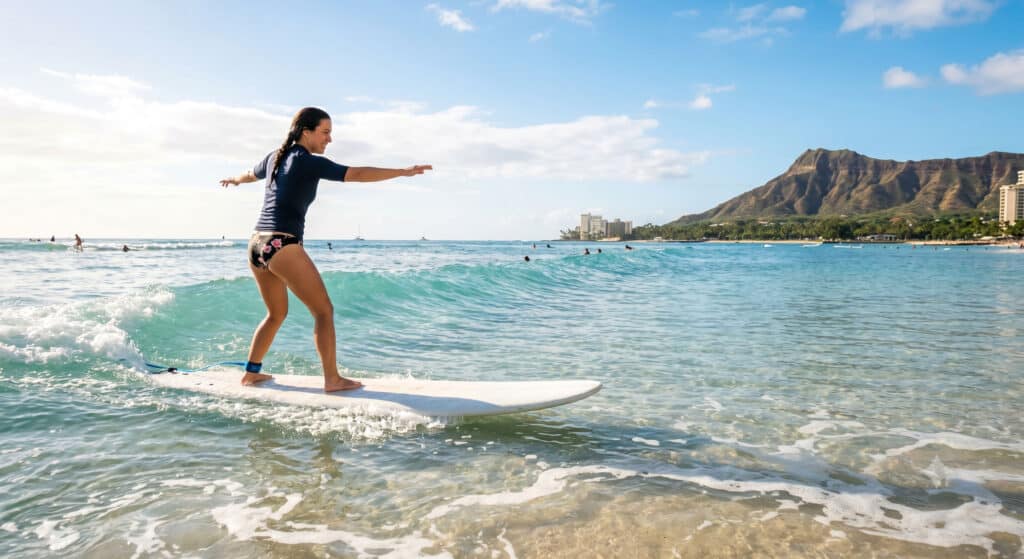
There are places in the world where learning to surf feels almost unfair. Waikiki is one of them. The waves here are gentle, long, and forgiving in a way that makes the whole experience surprisingly achievable — even for people who’ve never been on a board. Taking surfing lessons in Waikiki is consistently ranked the top bucket-list activity for first-time Hawaii visitors, and the schools here have turned the two-hour beginner lesson into something close to an art form. This guide covers the best surf schools for 2026, current pricing, what a lesson actually looks like, and how to book without getting shut out of your preferred time slot.
Why Waikiki Is the Best Place in the World to Learn Surfing
Waikiki’s reputation as a beginner haven isn’t travel brochure fluff. It’s geography. The south shore faces open ocean swells that wrap gently around the reef and roll into shallow, waist-to-chest-deep water at the main learning breaks. Water temperature sits around 78–80°F year-round, which means no wetsuit required and no cold-shock anxiety when you fall in. You will fall in. It’s fine.
What makes Waikiki special is the length of the rides. Beginner breaks here produce 20-to-30-second waves — long enough to actually find your balance, enjoy the moment, and maybe even grin a little before you wipe out. The success rate on a standard two-hour beginner lesson in Waikiki runs around 90 percent standing up at least once. That’s not instructor hype — that’s just what these waves do for you.
Surfing has been part of Hawaiian culture for centuries. Duke Kahanamoku — the Olympic gold medal swimmer and the person most responsible for spreading surfing globally — rode these exact waves from childhood in Waikiki. Catching a wave here carries a little extra weight because of that history, and the instructors, many of whom grew up surfing these same breaks, tend to talk about it that way.
Canoes vs. Queens: The Two Main Beginner Breaks
Two breaks dominate the Waikiki beginner scene. Canoes — named after the outrigger canoes that were historically launched from this stretch of shore — is the most popular. It sits just offshore from the heart of the beach activity zone, and the waves here are slow, soft, and perfectly sized for first-timers. Most surf schools operate here. On summer weekends it can get busy, but an 8am session sidesteps most of the crowd.
Queens is a bit further out and produces slightly longer, more powerful rides — still very manageable for beginners, but with more push behind the wave. Once you’ve had a lesson or two under your belt, Queens starts to feel like a real upgrade. Some instructors will move students out there mid-lesson if conditions and ability line up. If you’re on your second or third session, mention it to your instructor before you start.
What Happens During a 2-Hour Surf Lesson
Most Waikiki surf lessons follow the same basic structure, and knowing what to expect beforehand takes the nerves out of the whole thing.
The first 20 to 30 minutes happen on the beach. Your instructor covers the fundamentals: how to read a wave, how to paddle efficiently, how to position yourself on the board, and the pop-up technique — the move that takes you from lying flat to standing. You’ll practice the pop-up on dry sand before you ever touch the water. It feels a little silly. It’s also the thing that makes everything click later.
Then you head into the ocean. Instructors position you in the lineup, help you read incoming waves, and give you a push at the right moment while coaching your stance. Most beginners catch their first rideable wave within the first 20 minutes in the water. By the end of two hours, you’ll have caught several, have a real feel for wave timing, and likely be talking yourself into booking another session for tomorrow. Boards used in beginner lessons are large foam longboards — stable, buoyant, and very forgiving when you fall.
What’s included in the lesson price at most schools: a foam surfboard sized to your height and weight, a rashguard, and reef walkers (protective water shoes). Photo and video packages are available as add-ons at most schools for $30 to $75. Hawaii Surfing Academy goes a step further and includes professional photos and aerial drone footage from their in-house pilot as a standard part of every lesson — no add-on charge.
Waikiki Surf Schools Compared: 2026 Pricing and What Each Offers
Here’s how the main schools stack up. Prices are per person for a two-hour session and don’t include tax. Specific pricing for some schools wasn’t publicly listed at time of writing — check their booking pages directly before reserving.
| School | Group Lesson | Private Lesson | Stand-out Perk |
|---|---|---|---|
| Hans Hedemann Surf School | ~$95–$115/person | $200–$300 | Waikiki’s most established school; 3 daily time slots |
| Hawaii Surfing Academy | Available (verify pricing) | Available (verify pricing) | Free professional photos + drone footage included |
| Ty Gurney Surf School | Private/semi-private only (max 2:1 ratio) | Available (verify pricing) | Lowest student-to-instructor ratio in Waikiki |
| Sparky’s Surf School | Available (verify pricing) | Available (verify pricing) | Authentic beachboy-style instruction; 7am–3pm daily |
Hans Hedemann Surf School is the most established operation in Waikiki, founded in 1995 by former professional surf competitor Hans Hedemann. They run group lessons at 8am, 11am, and 2pm daily from their location near the Queen Kapiolani Hotel. Group sessions run at 3 to 5 students per instructor, and photo/video add-ons are available for $75. They’re bookable on GetYourGuide and Viator, so it’s easy to compare prices across platforms before committing.
Hawaii Surfing Academy is the school to book if getting real footage of your first wave matters — and honestly, for a lot of people it does. Their in-house drone pilot captures aerial footage of your session and professional water-level photos as a standard part of every lesson. No extra charge. For a bucket-list moment this good, having actual video of yourself standing up for the first time is worth a lot.
Ty Gurney Surf School runs a different model from the large group approach. They cap every session at two students per instructor — no traditional group lessons. That ratio translates to a lot more individual coaching and wave time compared to a five-person group. Ty has been operating in Waikiki for two decades, is a certified ocean lifeguard, and holds blue card certification for both Oahu’s North and South Shore. If personalized instruction is the priority over price, this is the school.
Sparky’s Surf School is the beachboy experience — and that’s a genuine compliment. Sparky is cut from the cloth of the original Waikiki watermen who built the beach culture here, the kind of instructor who makes the lesson feel like something beyond a tourist activity. Open seven days a week from 7am to 3pm, working with all ages and ability levels.
When to Book (and Why Waiting Until You Land Is a Gamble)
During Waikiki’s peak summer season — June through August — early morning slots fill up 10 to 14 days in advance on weekends. Waiting until you land and hoping an 8am Saturday opening is available is a coin flip at best. Book before you leave home.
Time of day matters more than most guides admit. Morning sessions (8–9am) consistently offer the best conditions: lighter trade winds, calmer water surface, fewer people in the lineup, and better light for photos. Afternoon slots work fine — you’ll just be paddling through choppier water and competing with more crowds. If your schedule allows it, always go early.
On the budget side: check Viator and GetYourGuide before booking direct. The price gap between platforms and a school’s website isn’t always dramatic, but on a $110 lesson, saving 10 to 15 percent is real money. Once you’ve settled on your school and time slot, compare prices across platforms, then book wherever it lands best.
Timing within your trip also matters. Day 2 or 3 tends to work better than Day 1 — you’ll be rested, oriented, and actually able to enjoy it rather than powering through jet lag. Our 5-day Waikiki itinerary maps out a full day-by-day layout you can slot a surf lesson into. A great setup for first-timers: morning lesson at Canoes, lunch somewhere on Kalākaua, then spend the afternoon on the Diamond Head trail for one of the best bucket-list days in Waikiki.
What to Bring (and What Your Lesson Already Covers)
This section is short because your school handles most of it. The surfboard, rashguard, and reef walkers are all included in the lesson price. Show up in a swimsuit and let the school handle the rest.
The one non-negotiable you need to bring yourself: reef-safe sunscreen. Hawaii banned sunscreens containing oxybenzone and octinoxate in 2021 — those are the most common UV filters in standard drugstore brands. Mineral-based formulas using zinc oxide or titanium dioxide are what you want. Apply before you arrive at the beach, not in the water. If you didn’t pack any, ABC Stores and pharmacies throughout Waikiki stock reef-safe options. Our Waikiki packing guide has the full breakdown on which brands work and which ones don’t meet Hawaii standards.
Leave the chest-mounted GoPro at the hotel. Instructors are hands-on — positioning you, pushing you into waves, coaching your stance — and a tethered camera creates a real tangle hazard. If you want footage, opt for the school’s add-on photo package or book Hawaii Surfing Academy where it’s already standard. Bring water and a snack for after the lesson. You’ll be hungrier than you expect.
Frequently Asked Questions About Surfing Lessons in Waikiki
How much do surfing lessons in Waikiki cost?
Group lessons at most Waikiki surf schools run $95 to $130 per person for a two-hour session, including the surfboard, rashguard, and instruction. Semi-private lessons (typically two students per instructor) run $150 to $200 per person. Fully private one-on-one lessons range from $200 to $300. Photo and video packages are usually available as add-ons for $30 to $75, though Hawaii Surfing Academy includes professional photos and drone footage as a standard part of every lesson at no extra cost.
Do I need any prior experience to take a surf lesson in Waikiki?
None at all. Beginner lessons at Waikiki’s main breaks are designed specifically for people with zero ocean or board experience. The waves at Canoes are gentle enough that most people stand up within the first hour, and instructors handle all the positioning and wave-catching timing so you can focus on balance. Basic comfort in the water is helpful — you don’t need to be a strong swimmer, but you should be able to float and stay calm if you take a tumble.
What is the best time of year for surfing lessons in Waikiki?
Surf lessons run year-round, but summer (June through August) is peak season for beginner conditions. South swells during these months produce consistent, gentle waves at Canoes and Queens — exactly what you want for a first lesson. Shoulder months work well too, with lighter crowds and easier booking. Winter brings bigger surf to Waikiki’s outer breaks, but the main beginner zones at Canoes stay manageable for lessons throughout the year.
How old do you have to be to take a surf lesson in Waikiki?
Age minimums vary by school and lesson format. Hans Hedemann’s group lessons require participants to be at least 14; children younger than that are directed to private lessons for safety reasons. Other schools, including Sparky’s and Hawaii Surfing Academy, accommodate younger kids in appropriate formats. If you’re bringing children under 10, call the school directly before booking to confirm they can work with your group.
What should I wear to a surf lesson in Waikiki?
Arrive in a swimsuit — your school provides the rashguard, reef walkers, and board. Apply reef-safe mineral sunscreen before you head out, since Hawaii law prohibits sunscreens containing oxybenzone and octinoxate. No wetsuit needed; Waikiki’s water stays around 78–80°F year-round. Wear a swimsuit that stays secure in the water — the waves will test it, and you’ll thank yourself for thinking ahead.
Can I book a surf lesson on the day I arrive in Waikiki?
During the slower shoulder months (late fall through spring, outside of holiday weeks), same-day or next-day bookings sometimes open up. During peak summer season — especially June through August weekends — early morning slots fill 10 to 14 days in advance. Don’t count on a walk-up booking for your preferred time. Book online before you leave home and lock in your slot before summer demand gets ahead of you.
A surf lesson in Waikiki is one of those bucket-list items that actually delivers — and usually surprises people with how fast those two hours fly by. When you’re ready to plan the rest of your time on the island, the full Waikiki activity guide has plenty more to fill out your trip, from hikes and snorkel spots to the best luaus on Oahu.