Most visitors arrive in Waikiki saying “I’m heading to the beach” — as if there’s only one. There isn’t. Waikiki’s shoreline stretches nearly two miles along Honolulu’s south shore, and it’s made up of six distinct beach sections, each with its own vibe, water conditions, and best use case. Pick the wrong one for your goals and you’ll spend the afternoon fighting crowds when you wanted calm water — or waiting for beginner surf when you just wanted to spread out a towel.
This guide breaks down the best beaches in Waikiki, section by section: who it’s best for, what the water actually feels like, and what to do when you get there. Whether you’re traveling with toddlers, chasing your first wave, or just want the most iconic postcard view on the island, there’s a stretch of sand here with your name on it.
Below you’ll find an honest, practical breakdown of all six Waikiki beach sections — plus quick-hit tips on timing, safety, gear, and what to skip. Let’s go find your beach.
Waikiki Beach (Central Shoreline): The Classic You Came For
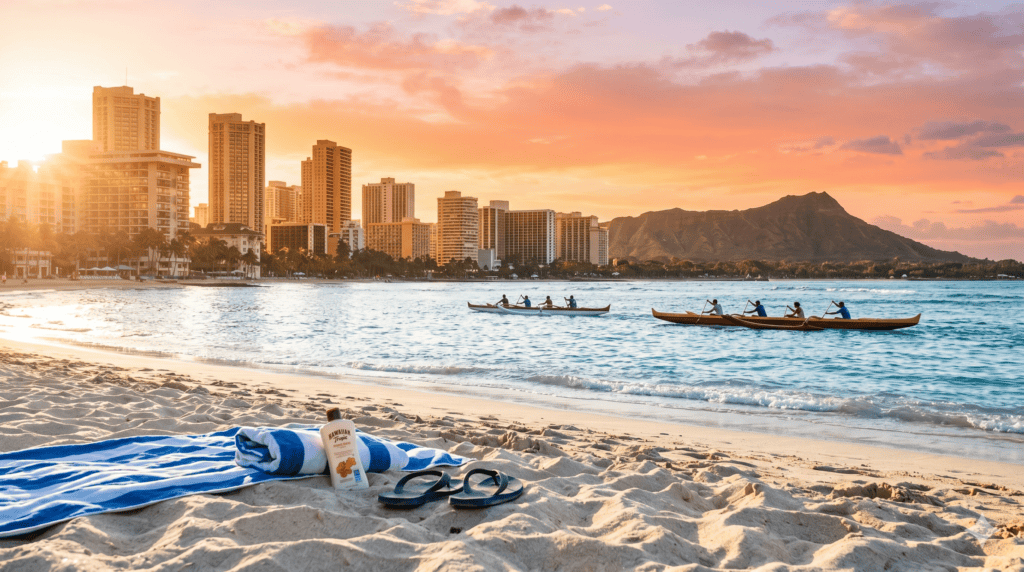
When someone says “Waikiki Beach,” they’re usually picturing this: golden sand, gentle rolling surf, surfboards gliding in slow motion, and a resort skyline rising behind you with Diamond Head anchoring the frame. The central Waikiki shoreline — stretching roughly between the Moana Surfrider and the Royal Hawaiian — is the postcard. And it delivers every single time.
This is where the “city meets beach” magic is strongest. You can walk out of your hotel, cross the street, and be toes-in-sand within two minutes. The waves here are approachable enough for beginners but interesting enough to keep experienced surfers happy. Outrigger canoe rides launch from this stretch, as do catamaran sails — both are classic Waikiki experiences worth putting on the list. Surf lesson operators work up and down the beach, charging roughly $70–$95 for a group lesson with board rentals running about $20–$30 per hour on their own.
The tradeoff is crowds. By mid-morning, this stretch fills up fast — especially in summer and over holiday weekends. If you want a calm morning here, arrive before 9 AM. If you want more breathing room but still want beach access, slide west toward Fort DeRussy (more on that below). If you’re mapping out your days and wondering when to work in beach time versus activities, our 5-day Waikiki itinerary has a solid built-in beach strategy for both couples and families.
- Best for: First-timers, surf lessons, outrigger canoes, postcard sunsets
- Water conditions: Gentle rolling waves; generally calm enough for swimming
- Crowd level: High — go early or accept the company
Kūhiō Beach: The Best Waikiki Beach for Families
Ask a local which Waikiki beach is best for kids, and the answer is almost always Kūhiō Beach — specifically the protected swimming enclosure locals call “Kūhiō Ponds.” Two concrete walls extending into the water create a calmer, more sheltered area where the ocean feels less wild. It’s not a swimming pool, but it’s significantly gentler than the open breaks, which is exactly why families park themselves here.
Beyond the protected water, Kūhiō has strong beach-day logistics: lifeguards on duty, rinse-off showers, public restrooms nearby, and a steady supply of beach vendors for snacks and rentals. There’s also a free hula show at the nearby Duke Kahanamoku statue most evenings around sunset — a genuinely lovely way to end a beach afternoon without spending a dime.
The section does get busy, especially on weekends. Locals know to claim towel space before 10 AM. If you’re packing for a full beach day with kids in tow, our Waikiki packing checklist covers exactly what to bring — including water shoes (worth it on any Waikiki beach), reef-safe sunscreen, and dry bags for phones.
- Best for: Young kids, first ocean swims, families wanting calm water
- Water conditions: Protected enclosure; much calmer than open breaks
- Crowd level: Moderate to high — claim space early
Fort DeRussy Beach: More Space, More “Ahhh”
If shoulder-to-shoulder sand isn’t your vacation fantasy, Fort DeRussy Beach Park is your answer. This stretch — which borders roughly a third of a mile of oceanfront — is consistently less crowded than the central Waikiki corridor, and the sand can be impressively wide (up to 200 feet in places). The reason it stays relatively uncrowded is partly location (it requires a short walk past the resort cluster) and partly the fact that it doesn’t have the same iconic pull as the central beach. That’s your advantage.
The vibe here is low-key beach day done right: spread out your towel, find some shade near the park’s grassy area, and actually relax. Water conditions are generally similar to central Waikiki — swimmable on calm days, occasionally choppy in trade-wind season. Military Beach (adjacent to Fort DeRussy) is technically reserved for active-duty and retired military, but the civilian section next door is fully public and rarely overcrowded.
Fort DeRussy is a great launching point for a Waikiki beach walk. Start here in the cooler morning hours and stroll east toward the central shoreline as the day warms up — you’ll cover the whole stretch and be ideally positioned for lunch near Kalākaua Avenue.
- Best for: Travelers wanting space, long beach walks, low-key sun days
- Water conditions: Open ocean; swimmable in calm conditions
- Crowd level: Low to moderate — easiest to find your own patch of sand
Kahanamoku Beach: Waikiki’s Water-Sports Playground
On the western edge of Waikiki, the beach near the Hilton Hawaiian Village pays tribute to Duke Paoa Kahanamoku — Olympic swimmer, surfing legend, and the person most responsible for spreading aloha (and the sport of surfing) to the world. The beach and adjacent lagoon area are known for calmer conditions and a high concentration of water-sports activity. If you want to do something on or in the water, this is your neighborhood.
Paddleboarding, outrigger canoeing, catamaran sails, and kayak rentals are all common here. The lagoon itself (managed by the Hilton) offers very calm, shallow water — excellent for non-swimmers and young children who want ocean exposure without ocean intensity. Catamaran sunset sails typically run $45–$75 per person and depart from this section of beach, making it a great early-evening anchor point.
Sunset here is exceptional. Watch the catamarans and canoes silhouette against the western sky as the light turns orange — it’s one of those Waikiki moments that sticks with you long after you’ve unpacked your suitcase.
- Best for: Water sports, paddleboarding, catamaran sails, sunset watching
- Water conditions: Calmer than central Waikiki; lagoon area is very gentle
- Crowd level: Moderate — spread out along a longer stretch
Queen’s Surf Beach: Best for Snorkeling in Waikiki
Sitting closer to Diamond Head between Kapi’olani Park and the Waikiki Aquarium, Queen’s Surf Beach is the go-to for travelers who want to get in the water and actually see something. The area is designated as part of a Marine Life Conservation District, which means fish populations are healthier here than at the more heavily trafficked central sections. Bring a mask and fins and you have a legitimate chance at spotting reef fish, the occasional sea turtle, and colorful coral on a good day.
Beyond snorkeling, Queen’s Surf draws bodyboarders and confident open-water swimmers to its breaks. The park area nearby (with restrooms, showers, and grassy space) gives it a more “local park beach” feel — slightly removed from the resort energy, in the best possible way. Weekend afternoons here have a great community vibe: picnickers, volleyball, food vendors, and people who are genuinely happy to be outside.
Water conditions can change. If the surface looks rough or cloudy, stick to the calmer swim zones and save snorkeling for a clearer day. For tips on getting the best underwater shots when conditions are right, our guide to underwater camera snorkeling in Waikiki covers everything from lighting angles to waterproof housing choices. And if you want to go beyond Waikiki for snorkeling, Hanauma Bay is the ultimate Oahu option — it’s covered in full in our day trips from Waikiki guide.
- Best for: Snorkeling, bodyboarding, local park beach energy
- Water conditions: Variable — check conditions before snorkeling
- Crowd level: Moderate — less touristy than central Waikiki
Gray’s Beach: Waikiki’s Little Secret
Gray’s Beach is small, narrow, and tucked between the Halekulani Hotel and the Sheraton Waikiki — easy to walk right past if you don’t know to look for it. It’s connected in local lore to Kawehewehe, a traditional Hawaiian freshwater spring site with a history tied to healing. As a beach destination, it’s more “interesting stop” than “full beach day” — the sand can be thin depending on erosion and tide — but it has a genuinely quiet, secretive character that feels rare in the middle of busy Waikiki.
Gray’s is best treated as a discovery rather than a destination. Wander over from the central beach, spend 20 minutes, take some photos, absorb a little history, then move on. It’s the kind of spot that makes you feel like you’ve seen a side of Waikiki that most visitors haven’t — because most of them walk right by it.
- Best for: A quick “hidden” stop, photos, Waikiki history buffs
- Water conditions: Varies significantly by tide and erosion
- Crowd level: Usually quiet — one of the least-crowded spots in Waikiki
Beach-Day Tips That Actually Matter in Waikiki
Knowing which beach to pick is half the battle. Here’s what makes the other half go smoothly:
- Go early. Every Waikiki beach gets more crowded as the day progresses. The best sand, the clearest water, and the calmest conditions are almost always before 10 AM.
- Use reef-safe sunscreen. As of July 2026, Hawaii’s expanded sunscreen law bans oxybenzone, octinoxate, octocrylene, homosalate, octisalate, and avobenzone on state beaches and parks — only mineral sunscreens with zinc oxide or titanium dioxide are legal to use here now. Check the Drug Facts label before you pack. SPF 30 or higher, and reapply every 90 minutes if you’re in and out of the water.
- Check conditions before snorkeling. Ocean Surface Monitoring buoys post near-real-time wave height data online. If the Waikiki nearshore buoy is reading above 2–3 feet, snorkeling can be uncomfortable and visibility drops.
- Swim near lifeguards. All major Waikiki beach sections have lifeguard towers. Stay within their zone, respect posted ocean flags, and always tell someone where you’re going before a longer swim.
- Water shoes are underrated. The reef and occasional rocks near shore can surprise you — especially near Kūhiō and Queen’s Surf. A $15 pair of water shoes can save a week of limping.
- Leave valuables in your room. Beach theft happens. Don’t bring your passport, extra cash, or any jewelry you’d hate to lose. A dry bag for your phone is fine; your laptop is not a beach accessory.
If the weather turns on you — which does happen in quick bursts, even in paradise — our rainy day Waikiki guide has a full lineup of indoor options to pivot to without losing the day.
Frequently Asked Questions
What is the best beach in Waikiki for beginners?
The central Waikiki shoreline and Kūhiō Beach are the top picks for beginners. Central Waikiki has the most surf instructors and gentle beginner waves; Kūhiō Beach offers a protected enclosure ideal for those who want calmer water for swimming. Both have lifeguards on duty and easy beach access from most hotels.
Which Waikiki beach is best for snorkeling?
Queen’s Surf Beach is the strongest snorkeling option within Waikiki itself — it’s in a Marine Life Conservation District, meaning healthier fish populations and better underwater visibility on calm days. For more serious snorkeling, Hanauma Bay (a short drive from Waikiki) is Oahu’s best dedicated snorkeling site and worth reserving in advance.
Are the beaches in Waikiki safe for kids?
Kūhiō Beach is widely considered the most family-friendly beach in Waikiki, thanks to its protected swimming enclosure (nicknamed “Kūhiō Ponds”) and consistent lifeguard coverage. The Kahanamoku lagoon area near the Hilton is also extremely calm and suitable for young children. Always follow posted ocean safety flags regardless of which beach you choose.
How long is Waikiki Beach?
The full Waikiki shoreline — from Kahanamoku Beach in the west to Queen’s Surf Beach near Diamond Head — spans approximately two miles. The central section most visitors think of as “Waikiki Beach” is roughly half a mile, stretching between the Moana Surfrider and the Royal Hawaiian Hotel.
Is parking available near Waikiki’s beaches?
Street parking near the beach is limited and fills quickly — especially on weekends. The beachfront lot at Fort DeRussy itself is restricted to military ID holders — the paid public lot across the street near the Hale Koa Hotel is open to everyone and is often the best bet. Most visitors staying in Waikiki hotels find it easiest to walk to the beach, since nearly all major hotels are within a few minutes of the water. If you’re driving in from elsewhere on Oahu, arriving before 9 AM significantly improves your parking chances.
Do you need to pay to access Waikiki beaches?
No — all beaches in Hawaii are public by law, regardless of what hotel sits next to them. You don’t need to be a guest at the Halekulani or the Hilton to use the adjacent shoreline. That said, beach chair rentals, umbrellas, and water-sports equipment from hotel-affiliated vendors do cost money, typically $25–$50 per day for a chair-and-umbrella setup.
Final Thoughts
The best beaches in Waikiki aren’t a compromise — they’re a menu. Each stretch of sand serves a different version of the beach day you came here for. Families find calm water at Kūhiō. Space-seekers find breathing room at Fort DeRussy. Snorkelers find real marine life at Queen’s Surf. And anyone who just wants the full Waikiki postcard experience finds it right in the middle, with Diamond Head in the frame and a catamaran on the horizon.
Give yourself permission to beach-hop. Waikiki is small enough that you can sample two or three sections in a single day without any heroics. Start early at your pick, stroll to the next, and let the afternoon slow down the way Hawaiian afternoons are supposed to. If you’re still mapping out everything beyond the sand, our guide for first-time visitors to Waikiki is a solid next read.