
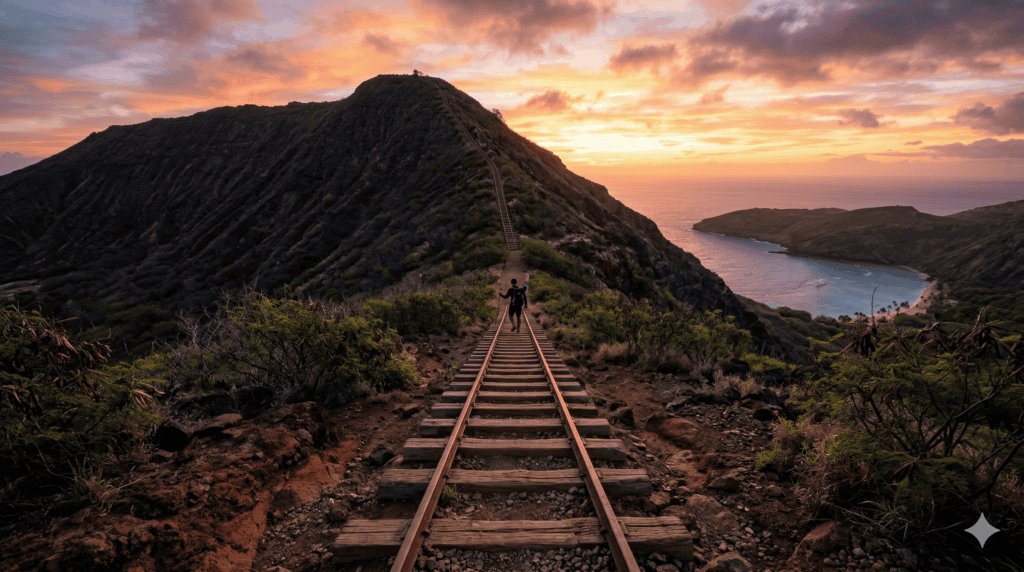
There’s a moment somewhere around step 800 of the Koko Head hike when your legs are burning, the sun is full-on, and the ocean behind you is so ridiculously blue that you start laughing a little. That’s the Koko Head experience in a nutshell: equal parts workout and wow.
The Koko Crater Railway Trail—better known as the Koko Head stairs—is one of the most talked-about hikes on Oʻahu. It’s short. It’s steep. And the panoramic views at the top are the kind that stop you mid-sentence. From Waikiki, you’re less than 30 minutes away from one of the best summit views on the island.
This guide covers everything you need to plan your hike: trail stats, parking, what to bring, safety updates (including the 2025 bunker incident and current trail status), nearby stops worth combining, and a simple half-day plan you can use right away.
Koko Head Hike at a Glance
Before you lace up your shoes, here’s a quick snapshot of what you’re getting into:
- Trail name: Koko Crater Railway Trail (also called Koko Head Stairs or Koko Head Tramway)
- Distance: Just under 2 miles round trip
- Stairs: 1,048 railway tie “steps”
- Elevation gain: ~990 feet (summit at approximately 1,208 feet)
- Typical time: 30–90 minutes total depending on fitness and breaks
- Difficulty: Short but steep—expect serious leg burn and heavy breathing
- Cost: Free. No reservation or permit required.
- Trail hours: Open 24/7. Parking lot hours: 4:00 a.m. – 11:00 p.m.
- Dogs: Allowed on leash
For a broader look at hiking options around the island, our guide to the best day trip hikes from Waikiki compares Koko Head to Diamond Head, Manoa Falls, and several other trails across Oʻahu.
How to Get There from Waikiki (Directions & Parking)
Koko Head sits on the southeast side of Oʻahu in the Hawaiʻi Kai neighborhood—about a 20–30 minute drive from Waikiki under normal traffic conditions. It’s an easy half-day adventure that still leaves plenty of time for beach or food afterward.
For GPS navigation, search “Koko Head Trailhead Parking Lot” in Google Maps or Waze. You can also enter the park address directly: 423 Kaumakani St, Honolulu, HI 96825. Note that Hwy 72 sometimes has road closures near the entrance—if that happens, the alternate route is to come through the residential area via Lunalilo Home Rd to Anapalau St.
A few parking tips worth knowing:
- The lot opens at 4:00 a.m., which is great news for sunrise hikers
- If you arrive before 4:00 a.m., street parking near the tennis courts is commonly used
- Don’t leave valuables visible in your car—this is standard advice for any Oʻahu trailhead
- Parking is free
What Is Koko Crater, and Why Does It Have Stairs?
Koko Crater is a dormant tuff cone—a type of volcanic formation created when ash and debris compacted into rock over thousands of years. It’s one of the most striking examples of its kind on Oʻahu, which is part of why this part of the southeast shore looks so dramatically different from the rest of the island.
The “stairs” themselves aren’t really stairs at all. They’re old railway ties left over from a World War II-era military tram system used to transport supplies up to a radar station at the summit. After the military decommissioned the site and handed it over to the City and County of Honolulu in 1966, hikers gradually turned the old tramway into one of the most popular trails on the island.
Today, the non-profit Kokonut Koalition helps maintain the trail and keeps it accessible. If you enjoy the hike, their website accepts donations.
How Difficult Is the Koko Head Hike, Really?
This is the question everyone Googles, and the honest answer is: it depends on you, not on the mileage. The distance is short—less than a mile up—but the relentless steepness and lack of shade make it tougher than it looks on paper.
Here’s how to set realistic expectations:
- Fit hikers moving steadily: 20–40 minutes up, faster coming down
- Most visitors with breaks and photos: 45–75 minutes up
- Downhill: Often harder than expected—knees and quads take a beating on uneven ties
- The last 100 steps: Widely considered the toughest stretch before the summit
If you can climb a long flight of stairs without stopping—and you’re willing to take breaks—most healthy adults can complete this hike. Go at your own pace and ignore anyone sprinting past you. This is a vacation, not a race.
One section to know about in advance: roughly midway up, the trail crosses a bridge section with open space beneath the ties. It’s only about 50 steps, but it can feel exposed if heights aren’t your thing. There’s a bypass trail to the right through a shady clearing—perfectly fine and commonly used.
Trail Safety in 2026: What’s Changed (And What You Need to Know)
In July 2025, the trail made news when an 8-year-old boy fell into one of the old military bunker shafts at the summit, sustaining serious injuries. The trail closed briefly while the City assessed the situation, then reopened on July 10, 2025 after placing new caution tape and warning signs around the access points.
By September 2025, the City took more permanent action—sealing the bunkers with metal bars to prevent entry. As of 2026, the trail is fully open, but a few reminders still apply:
- Stay on the tramway. Do not venture off-trail or past posted warning signs or caution tape
- Keep children close, especially near the summit structures
- Check for current advisories before heading out—the City can temporarily close the trail for maintenance with short notice
- Downhill is where most slips happen—take your time, keep space between hikers, and step carefully on uneven or dusty ties
As always, heat exhaustion is a real concern. Symptoms include dizziness, nausea, heavy sweating, and feeling “off.” Start early, drink consistently, and turn back if you feel unwell. No view is worth pushing through signs of heat illness.
What to Wear and Bring on the Koko Head Hike
This is a short trail, but it’s exposed and physically demanding. Packing smart makes the whole experience better.
Must-haves:
- Water—more than you think. A full liter minimum per person; more in warmer months
- Sturdy shoes with grip. Trail runners or hiking shoes are ideal. Flip-flops are doable but awkward and not recommended
- Sunscreen, hat, and sunglasses. There is almost zero shade on this trail
- A small daypack so your hands stay free on the ties
- Headlamp or phone flashlight if you’re hiking pre-dawn for sunrise
Nice to have:
- Electrolyte tablets or packets if you sweat heavily
- A light snack for the summit (something you’ll actually want after a hard climb)
- Basic blister or bandage care
For a full breakdown of what to pack for any Waikiki adventure—hiking included—our Waikiki packing guide has a detailed gear list for beach days, hikes, and everything in between.
Why Sunrise Is the Best Time to Hike Koko Head
If you can set that early alarm, sunrise at Koko Head is genuinely one of the most memorable things you can do on Oʻahu. Here’s why it’s worth it:
- Cooler temperatures—dramatically more comfortable than midday heat
- Softer, golden light that makes the coastal views even more photogenic
- Fewer crowds than late morning or afternoon
- That unmistakable feeling of standing above a waking island
The parking lot opens at 4:00 a.m., so you can time your arrival to reach the summit right around first light. Bring a headlamp and move carefully until the trail is fully visible. The effort is absolutely worth it.
What You’ll See at the Summit
The views from the top are the whole reason people keep coming back. On a clear day—which is most days—you get:
- Panoramic ocean views sweeping across the southeast coast
- Hanauma Bay from above—that iconic turquoise crescent laid out below you
- The Hawaiʻi Kai neighborhood and the Koʻolau mountains behind it
- In winter, occasional humpback whale spouts offshore
The sealed military bunkers are still visible at the summit—worth a look from a distance for historical context, but do not attempt to enter or climb on them.
What to Do After the Hike: East Oʻahu Is Worth Exploring
You’ve earned the summit and made it back down. Now you’re already in one of the most scenic corners of the island—so keep going. Some excellent stops to combine with your Koko Head morning:
- Hanauma Bay — You just saw it from above; now consider snorkeling it up close. Note that the preserve requires advance reservations and is closed Mondays and Tuesdays. See our complete Hanauma Bay guide for everything you need to plan your visit.
- Halona Blowhole — A five-minute stop with big drama. Sea spray shoots through a lava tube and the ocean cliffs are stunning.
- Sandy Beach Park — One of Oʻahu’s most famous shorebreak spots. Watching the waves here is free and exciting; swimming is a different conversation depending on conditions.
- Makapuʻu Lighthouse Trail — A paved, ADA-accessible trail with sweeping windward coast views. Much friendlier on the knees after Koko Head.
- Koko Crater Botanical Garden — Inside the crater itself, this garden is known for its dramatic cacti and succulent collection. Easy walking, beautiful photos, no stair-climbing required.
If you’re still building out your Oʻahu adventure list, our roundup of the 20 best day trips from Waikiki covers the full southeast coast and beyond.
A Simple Half-Day Plan from Waikiki
Here’s a straightforward morning that fits well before beach time or lunch:
- 5:30–6:00 a.m. — Leave Waikiki (earlier for sunrise at the summit)
- 6:00–6:30 a.m. — Arrive, park, light stretch, start climbing
- 7:00–8:00 a.m. — Summit time: views, photos, snack, catch your breath
- 8:00–8:45 a.m. — Careful descent
- 9:00 a.m. — Choose a bonus stop: Halona Blowhole, Sandy Beach, or the Botanical Garden
- Late morning — Back to Waikiki for a well-earned breakfast and beach time
Want help building this into a full trip? Our 5-day Waikiki itinerary shows exactly how to weave East Oʻahu adventures into a balanced vacation schedule.
Frequently Asked Questions
Is the Koko Head hike open right now?
Yes—as of 2026, the Koko Crater Railway Trail is open and operating normally. The trail was briefly closed in July 2025 following a safety incident at the summit bunkers. By September 2025, the City sealed the bunker access points with metal bars. The trail itself has no regular closing time and is open 24/7, though the parking lot closes at 11:00 p.m. Always check for short-term closure notices before you go, as the City occasionally shuts the trail for maintenance.
How hard is the Koko Head hike for beginners?
It’s challenging but completable for most reasonably fit adults. The key is setting the right expectations: it’s not long, but it’s steep and relentlessly exposed to the sun. If you can manage a long staircase at home without stopping—and you’re willing to take breaks and hydrate—you can do this. Start early, go at your own pace, and don’t let anyone else’s speed set yours.
Do I need a reservation or permit to hike Koko Head?
No. The Koko Crater Railway Trail is free and requires no reservation or permit. Just show up. This makes it much more accessible than nearby Diamond Head, which requires advance reservations for non-residents. The parking lot is also free.
What’s the best time of day for the Koko Head hike?
Early morning—ideally arriving by 6:00 a.m. or earlier for sunrise. The trail is fully exposed with almost no shade, and midday heat turns an already hard climb into a brutal one. Sunrise hikers get cooler temps, beautiful light, and smaller crowds. If you can’t go early, aim for late afternoon on cooler days, but always bring plenty of water regardless of when you go.
How far is Koko Head from Waikiki?
About 20–30 minutes by car depending on traffic. It’s located in the Hawaiʻi Kai neighborhood on the southeast side of Oʻahu. There’s no direct bus route that gets you close, so a rental car, rideshare, or tour is your best bet if you don’t have wheels.
Can I combine Koko Head with Hanauma Bay?
Absolutely—this is one of the best East Oʻahu combos. Hike Koko Head first (you’ll want the cool morning temps), then head to Hanauma Bay for snorkeling afterward. Just remember that Hanauma Bay requires advance reservations, is closed Mondays and Tuesdays, and has a limited daily entry cap. Check our Hanauma Bay guide to plan the timing correctly.
Final Thoughts
The Koko Head hike is one of those experiences that sounds simple—”it’s just stairs”—until you’re on step 600 with the Pacific glittering below you and suddenly nothing in the world matters except making it to the top. It’s a hard climb. It’s a stunning reward. And for most visitors, it ends up being one of the highlights of their entire Oʻahu trip.
Go early. Bring more water than you think you need. Take the bridge bypass if heights aren’t your thing. And when you’re standing at the summit watching the island wake up, snap a photo—because this is one view that your phone camera is actually going to do justice to.