
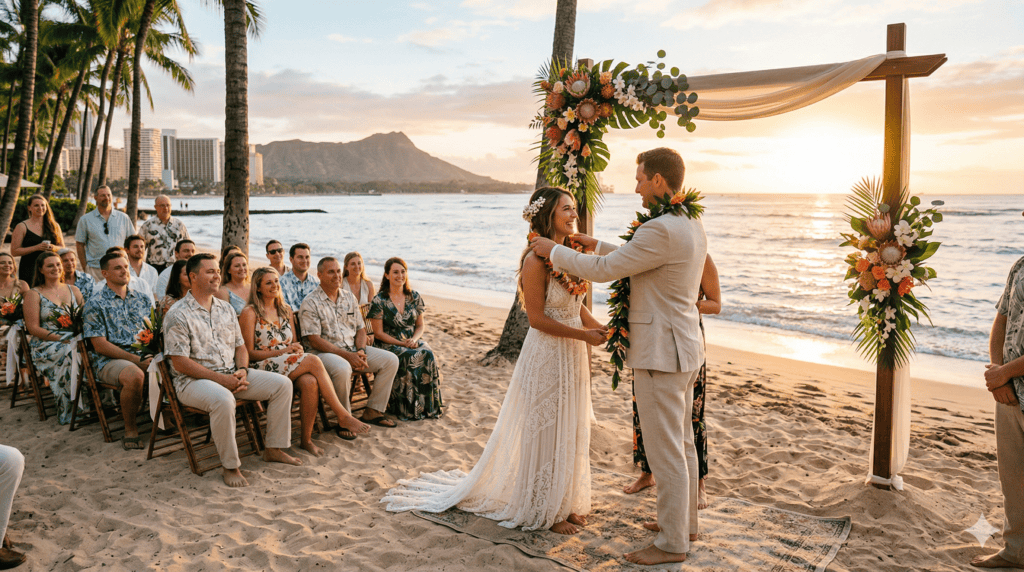
About 72,000 people visit Waikīkī on any given day—and yet, somehow, couples still manage to find moments that feel like the whole beach belongs only to them. That’s the quiet magic of a Waikiki wedding: it’s romantic by default, with warm sand, swaying palms, and that Pacific glow that makes every photo look like it was shot by a professional.
The tricky part? Waikiki wedding planning involves more moving pieces than most couples expect—permits, jurisdiction rules, venue trade-offs, and a Hawaii tax structure that can quietly inflate your budget. Get those wrong, and you’re scrambling on your wedding morning.
This guide cuts through the noise. Whether you’re planning a sunrise elopement for two or a full weekend celebration with 100 guests, here’s what you actually need to know to pull it off beautifully—and without surprises.
What Kind of Waikiki Wedding Are You Planning?
Before you book a single vendor, get clear on your wedding style. It drives every other decision—guest count, venue, permits, budget, and timeline.
- Elopement (2–5 people): Private, fast, and incredibly romantic. A sunrise ceremony, two leis, an officiant, and brunch after. Total planning time: 4–8 weeks if you move quickly.
- Micro-wedding (6–30 guests): The sweet spot for most destination couples—intimate enough to feel personal, large enough to include your closest people. Easier to coordinate than a full wedding, and you can still include real touches like live music and a private dinner.
- Full wedding (30–150+ guests): Requires the most lead time (10–14 months for peak season) and typically means a private venue with a full reception. Hotel ballrooms and resort packages are designed exactly for this.
Once you know your style and rough guest count, everything else gets much easier to plan. Most destination wedding surprises happen when couples skip this step and pick a venue before they know what they actually need.
Best Wedding Venues Near Waikiki: Public Beaches vs. Private Venues
Oʻahu makes destination weddings genuinely workable—major airport, great vendors, and a range of venues from free public beaches to full-service luxury resorts. The trade-off is that Waikiki is busy. Here’s how to think through your options.
Public Beach and Park Locations
Public locations can be stunning—and budget-friendly—but they come with real rules. You’re sharing the space, and permits (more on those below) come with time windows, setup limits, and sound restrictions.
- Waialae Beach Park (Kahala area): Palms, calm water, and a relaxed local feel. Great for morning ceremonies and bright tropical photos. Quieter than Waikiki proper.
- Magic Island at Ala Moana Beach Park: Wide lawn areas with gorgeous sunset views. Weekday ceremonies are noticeably calmer than weekends.
- Kapiʻolani Regional Park: That iconic Diamond Head backdrop at a green, spacious location close to most Waikiki hotels—very practical for guests.
- Liliʻuokalani Botanical Garden: Stream, waterfall backdrop, lush tropical greenery. Ideal if you want a garden ceremony without leaving Honolulu.
The best approach for public locations: keep the ceremony short (20–30 minutes), light on decor, and plan the celebration at a nearby restaurant or hotel.
Private Waikiki Venues
If you have 20+ guests or want a reception on-site, private venues are worth the cost. You get reserved space, clear vendor rules, and a dedicated contact to handle logistics. The top hotel options for Waikiki weddings:
- Moana Surfrider: Historic 1901 hotel right on Waikiki Beach—the Banyan Courtyard is one of the most photographed ceremony spaces in Hawaii.
- Halekulani: Intimate, ultra-luxury, and genuinely oceanfront. Their La Mer terrace is exceptional for small weddings with high budgets.
- The Royal Hawaiian: The “Pink Palace” delivers old-Hawaii glamour and an outdoor Coconut Grove that’s hard to beat for ceremony photos.
- Outrigger Reef Waikiki: Solid beachfront packages built specifically for destination weddings—practical and well-priced relative to the luxury set.
If you’re open to a 30–45 minute drive, Kualoa Ranch (cinematic mountains + valley floor) and Waimea Valley (waterfall garden setting) offer backdrops that are genuinely hard to find anywhere else. For couples who want Oʻahu’s dramatic scenery without a Waikiki hotel feel, these are worth investigating early.
For a deeper look at hotel options across budget levels, our guide to Waikiki vacation costs breaks down what to expect at different price points.
Do You Need a Permit for a Beach Wedding in Waikiki?
Yes—almost certainly. And this is where Waikiki wedding planning gets more complicated than couples expect, because the rules depend on exactly where you’re standing. Public beaches, park lawns, and botanical gardens can fall under three different permitting authorities: the State DLNR, Hawaiʻi State Parks, or the City and County of Honolulu’s Department of Parks & Recreation.
Here’s the 2026 snapshot:
- Hawaii Marriage License: Apply online, then meet with a license agent in person before your ceremony. The state fee is $65. No blood tests required. (Source: Hawaii Department of Health)
- State shoreline/beach commercial permits: If your wedding company is operating on an unencumbered state shoreline, permits typically come through DLNR Wiki Permits and include liability insurance requirements.
- City park permits (lawns, picnic areas): Apply through Honolulu’s Department of Parks & Recreation. Plan at least three weeks in advance; liability insurance may be required.
- State park special use permits: Required for events including weddings in Hawaiʻi State Parks. Timing and approval guidance is on the DLNR site.
Honest advice: Unless you’re doing a true elopement (two people, no chairs, no arch, no vendor setup), hire a local wedding coordinator for at least a day-of package. Permit knowledge alone is worth their fee—and they’ll know which specific park zones require what, which changes regularly.
Waikiki Wedding Costs: What to Budget in 2026
One of the most common shocks in Waikiki wedding planning is the gap between “what I expected” and the final invoice. Hawaii’s stacked tax structure adds roughly 18.5% on top of hotel rates on Oʻahu—and that applies to venue packages too. Here’s a realistic framework:
- Elopement (2 people, public beach): $1,500–$4,000 total. Includes officiant, simple florals, a photographer for 2 hours, and marriage license fee.
- Micro-wedding (10–20 guests, private venue): $8,000–$20,000. Venue rental, catering, photographer, officiant, florals, and coordination.
- Full wedding (50–100 guests, hotel venue): $25,000–$75,000+. This is where hotel packages, catering minimums, and per-head costs escalate quickly.
Photography is consistently the #1 vendor where couples say they wish they’d spent more. A great Waikiki wedding photographer books 10–14 months out for peak season (spring and fall). Budget $3,000–$6,500 for a full-day photographer; $1,200–$2,500 for a 2-hour elopement session.
For guests traveling from the mainland, pointing them to the right hotel neighborhood matters—walkability to your ceremony venue can simplify the whole weekend. Our Waikiki vacation cost guide covers hotel tiers and what to expect at each level.
Best Time of Year (and Day) for a Waikiki Wedding
Hawaii is genuinely wedding-friendly year-round, which is one of its great advantages over continental US venues. That said, your experience changes meaningfully depending on timing.
- Best time of day — Sunrise (6:00–8:00 AM): Calm beaches, almost no crowd, softer light for photos, and gentler trade winds. If you can get your partner to agree to a 6 AM ceremony, it’s almost always worth it.
- Best time of day — Late afternoon (4:00–6:30 PM): The iconic golden hour light, but higher crowd levels and tighter timing windows at popular spots.
- Best months: April–June and September–October hit the sweet spot—warm, lower rainfall than winter, and lighter crowds than peak summer travel weeks.
- Avoid: Major holiday weeks (Thanksgiving, Christmas/New Year’s, Spring Break) drive hotel prices up and venues book out months earlier.
- Weekdays vs. weekends: A Tuesday or Wednesday ceremony can get you a noticeably quieter public beach, lower photographer minimums, and sometimes better venue availability.
Hawaiian Wedding Traditions Worth Including
You can keep your ceremony entirely modern and still work in island touches that make the day feel distinctly Hawaiian. A few that photograph beautifully and resonate with guests:
- Lei exchange: The simplest and most meaningful tradition—leis symbolize love, respect, and welcoming each other into your lives. Fresh plumeria or maile leis photograph better than silk.
- Hawaiian blessing (Oli Chant): A cultural blessing in the Hawaiian language, performed by a kahu (cultural practitioner). Deeply moving and genuinely grounding. Book early—respected practitioners are in demand.
- Conch shell (Pū): A blown conch shell to open the ceremony. It’s dramatic in the best way—expect genuine goosebumps from guests.
- Unity sand ceremony: Swap a unity candle for two separate sands poured into one vessel. Perfect for beach settings, and you take home a keepsake that actually looks good on a shelf.
None of these require a big budget or a long ceremony. Even one or two Hawaiian touches can make the day feel meaningfully connected to the place—rather than a generic beach wedding that could have happened anywhere.
Reception Ideas That Work for Any Size
The ceremony is the moment. The reception is where guests remember how they felt. Good news: Waikiki has great options at every scale.
- Private dining room buyout: For groups under 20, this is often the best value—great food, no venue rental fee, and everyone can actually have a conversation.
- Beachfront hotel terrace: Most major Waikiki hotels offer terrace rental for receptions. Ask specifically about sunset timing when pricing options.
- Sunset catamaran cruise: A “just married” sail with your closest guests is genuinely unforgettable—and easy to book as a 2–3 hour private charter.
- Luau evening: If you have guests who’ve never been to Hawaii, a private luau experience turns the reception into its own bucket-list moment.
For restaurant ideas that would work well for a post-ceremony dinner, our Waikiki restaurant guide covers the top spots across every price range—including beachfront options that work well for private groups.
Waikiki Wedding Planning Timeline
Destination weddings move faster than local ones because travel logistics lock in your date early. Here’s a realistic timeline:
- 10–14 months out: Lock in your wedding style + guest count. Start venue research. Book your photographer—they fill up first.
- 8–10 months out: Book venue or ceremony location. Hire officiant and wedding coordinator (even day-of-only). Reserve hotel room block if needed.
- 5–7 months out: Book florist, hair/makeup, and any live music. Plan reception dinner or venue. Map photo locations.
- 2–3 months out: Submit permit applications. Confirm all vendors in writing. Finalize guest count and dinner reservations.
- 30 days out: Confirm every vendor one more time. Plan your rain contingency. Send final timeline to all vendors.
- Week of: Hand off the logistics to your coordinator. Hydrate, rest, and enjoy Oʻahu.
If you’re planning the honeymoon alongside the wedding—and you should, because you’re already in paradise—our Oʻahu day trips guide covers the best adventures to add to your post-wedding days, from Kualoa to the North Shore.
Frequently Asked Questions
How much does a Waikiki wedding cost on average?
A simple elopement with an officiant, photographer, and florals typically runs $1,500–$4,000. A micro-wedding with 10–20 guests at a private venue can range from $8,000–$20,000. Full hotel receptions for 50–100 guests commonly run $25,000–$75,000 or more, depending on the venue and catering package. Hawaii’s 18.5% hotel and tax structure on Oʻahu adds meaningfully to venue-based costs, so always ask vendors for all-in pricing before comparing quotes.
Do you need a permit for a beach wedding in Waikiki?
Almost always, yes. Permits depend on which authority governs your specific location—state DLNR, Hawaiʻi State Parks, or the City and County of Honolulu. For a simple two-person elopement with no vendor setup, the requirements are lighter. For anything involving chairs, an arch, a florist, or an officiant working commercially, expect a permit plus liability insurance. A local wedding coordinator will know exactly what’s needed for your specific spot.
When is the best time to get married in Waikiki?
April through June and September through October offer the best combination of warm weather, lower rainfall, and lighter tourist crowds. Sunrise ceremonies (6:00–8:00 AM) are excellent year-round—calmer beaches, softer light, and almost no bystanders. Weekday weddings also offer better availability and sometimes lower vendor minimums than weekends.
How far in advance should I book a Waikiki wedding photographer?
For peak season (spring and fall), book your photographer 10–14 months out. The best wedding photographers on Oʻahu fill their calendars quickly, and they often book before venues do. If you’re planning a winter or summer elopement on shorter notice, 4–6 months is typically workable—but don’t wait longer than that for your preferred photographer.
What Hawaiian wedding traditions should we include?
The most popular and meaningful choices are the lei exchange (plumeria or maile), a Hawaiian blessing (Oli Chant) performed by a kahu, and a conch shell (Pū) blown to open the ceremony. Any of these can be incorporated into a modern ceremony in about 5–10 extra minutes. If you’re including a reception, a luau-style evening is a natural way to bring the culture in for guests—especially for anyone experiencing Hawaii for the first time.
Can guests without a car attend a beach wedding in Waikiki?
Yes—Waikiki’s biggest advantage as a wedding destination is walkability and ride-share access. Public locations like Magic Island and Kapiʻolani Park are easy to reach from most Waikiki hotels without a car. Major hotel venues are walkable from dozens of nearby lodging options. Our guide to navigating Waikiki without a car has helpful context for guests planning their stay around your wedding weekend.
Final Thoughts
Waikiki wedding planning comes down to a few key decisions: your guest count, public beach versus private venue, and how much of the logistics you want to hand off to a coordinator. Get those three things settled early, and the rest—florals, timeline, Hawaiian touches, honeymoon plans—falls into place much more smoothly than couples expect.
The island does a lot of the heavy lifting. You just have to show up.