Most tourists visiting Oahu in late April know about the beaches, the luaus, and the sunset cocktails at a rooftop bar. What almost none of them know is that on May 1, Kapiolani Park transforms into one of the most beautiful — and completely free — cultural events in all of Hawaii. Lei Day Hawaii 2026 draws thousands of locals and a handful of lucky visitors for a morning of lei-making competitions, hula performances, live Hawaiian music, and a coronation ceremony that’s been running since 1928.
Most major travel sites have nothing on this event. Not a planning guide, not a first-timer’s breakdown, not even a paragraph. That’s your advantage: you can experience something deeply Hawaiian that the tour-bus crowd will completely miss.
In this guide, you’ll learn exactly what Lei Day is, what to expect at Kapiolani Park, how to watch the lei competition like you know what you’re looking at, where to park, where to eat afterward, and why arriving during Golden Week makes this particular week one of the most culturally rich on the island.
What Is Lei Day? Hawaii’s Most Authentic Hidden-Gem Holiday
Lei Day is Hawaii’s own cultural holiday, celebrated every year on May 1. While the rest of the world marks May 1 as International Workers’ Day, Hawaii marks it as a day dedicated entirely to the lei — the flower garland that is perhaps the most iconic symbol of aloha spirit.
The celebration centers on everything the lei represents in Hawaiian culture: welcome, love, respect, celebration, and connection. Locals spend weeks preparing their entries for the lei competition. Hula hālau (dance schools) rehearse their performances for months. And on the morning of May 1, Kapiolani Park fills with color, fragrance, and music in a way that feels completely different from any ticketed tourist experience on the island.
For first-time visitors, Lei Day offers something rare: a chance to experience Hawaiian culture as it actually exists among the people who live here — not as a packaged show, but as a genuine community celebration that has been going on for nearly a century. If your trip overlaps with May 1, this is non-negotiable. Clear your morning.
The History of Lei Day Hawaii — Started in 1928 by a Poet and a Songwriter
Lei Day was founded in 1928 by Don Blanding, a poet who had fallen deeply in love with Hawaiian culture, and Charles E. King, a celebrated Hawaiian musician and composer. Blanding proposed the idea in a newspaper column — a day for Hawaii to honor the lei the way Valentine’s Day honors love or Thanksgiving honors gratitude. The Honolulu Star-Bulletin published the concept, the community embraced it, and the holiday was formalized almost immediately.
The first Lei Day celebration was held on May 1, 1928. Within a few years, a Lei Queen coronation ceremony was added — a beloved tradition that continues today. Each of Hawaii’s counties crowns its own Lei Queen, representing a different island, and each wears a lei made from that island’s official flower.
- Oahu’s flower: Ilima (a delicate orange blossom, requiring hundreds of individual blossoms per lei)
- Maui’s flower: Lokelani (pink cottage rose)
- Kauai’s flower: Mokihana (a small green berry with a distinctive anise scent)
- Hawaii Island’s flower: Lehua (red ohia blossom)
Understanding this history makes the competition and coronation far more meaningful when you’re standing in Kapiolani Park on May 1. You’re not watching a performance for tourists — you’re witnessing a living tradition that locals have passed down for nearly 100 years. To get even more context on the rich culture you’ll encounter throughout your stay, the history and fascinating facts of Waikiki are worth reading before you arrive.
What Actually Happens at Kapiolani Park on Lei Day 2026
The main Lei Day celebration on Oahu takes place at the Kapiolani Park Bandstand, a beautiful open-air venue at the Diamond Head end of Waikiki. The park itself sits just a short walk from the main Waikiki strip — close enough that you can fold it easily into any morning without disrupting the rest of your day.
Here’s what to expect at the event:
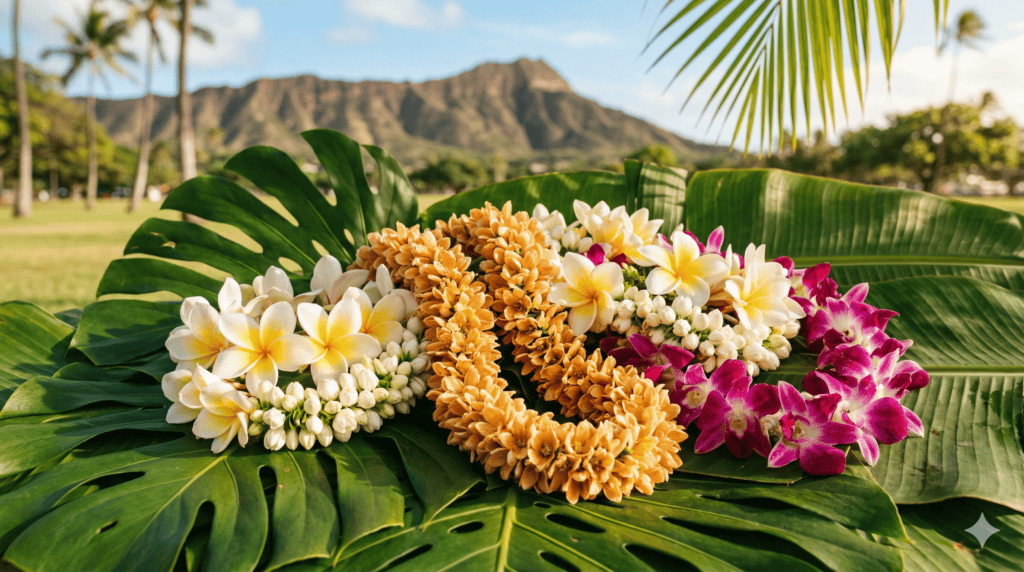
- Lei competition display: Dozens of entries are judged and displayed in categories ranging from most fragrant to most creative, with entries made from native Hawaiian flowers, ferns, seeds, and foliage. The craftsmanship is extraordinary.
- Lei Queen coronation ceremony: Each island’s Lei Queen is introduced and crowned in a formal ceremony that includes traditional chant (oli) and ceremony.
- Hula performances: Multiple hula hālau perform throughout the day, representing both kahiko (ancient-style hula) and auana (modern-style hula). These are not abbreviated tourist performances — expect full, carefully rehearsed dances in traditional attire.
- Live Hawaiian music: Musicians perform traditional and contemporary Hawaiian music throughout the event, filling the park with sound that carries all the way to the surrounding lawn.
- Lei-making demonstrations: Visitors can often watch skilled lei makers at work and sometimes participate in beginner demonstrations.
Admission is free. There is no ticket to buy, no reservation required. Just show up, find a shady spot on the grass, and let the morning unfold. If hula and live Hawaiian music are on your bucket list, also check out our guide to the 9 best luaus near Waikiki — several of them are walkable or just a short drive and pair perfectly with a Lei Day morning.
How to Watch the Lei Day Competition Like You Know What You’re Looking For
The lei competition is the heart of Lei Day Hawaii 2026, and it rewards visitors who take a few minutes to understand the judging before they walk through the display. Entries are organized into categories — typically by material type, design style, and intended use (wearable leis vs. display leis).
When you’re browsing the competition entries, look for these things:
- Uniformity: The best leis have blossoms of identical size, color depth, and spacing. A perfectly uniform lei of 500 ilima blossoms can take days to make.
- Technique: Different stringing and braiding techniques — hili, wili, haku, kui — are each judged differently. Haku leis (braided onto a base) are especially complex and striking.
- Native materials: Entries made entirely from native Hawaiian plants score higher in certain categories and are considered more culturally significant.
- Fragrance: Some categories are judged in part on scent. Pikake (Hawaiian jasmine) and gardenia leis are particularly prized.
Don’t be shy about lingering over the display tables. The competition entries are meant to be seen up close. And if you have questions, the volunteers and organizers at the event are incredibly welcoming to curious visitors. This is the aloha spirit in its most unfiltered form.
Practical Tips for Visiting Kapiolani Park on Lei Day 2026
Lei Day is popular with locals, which means a few logistics deserve attention before you head out.
Arrive early. The event typically begins around 9 a.m., and the lei competition display opens early in the morning. Arriving between 8:30 and 9:30 a.m. gives you the best chance to see the full display before crowds build and before the midday heat sets in. The coronation ceremony and main hula performances often run from late morning into early afternoon.
Parking is tight. Kapiolani Park has a large free parking lot, but it fills up fast on Lei Day. Street parking along Monsarrat Avenue and Paki Avenue is available but limited. Your best strategy is to park farther into Waikiki and walk the 10–15 minutes to the bandstand, or take TheBus (Oahu’s public transit system) to the Kapiolani Park stop. If you’re still deciding whether a rental car makes sense for your trip, our breakdown of whether you need a rental car in Waikiki covers exactly this kind of situation.
Dress comfortably. The park is open-air and there’s limited shade near the bandstand. Light, breathable clothing and reef-safe sunscreen are essentials. A hat and a small blanket or beach towel to sit on the grass will make the experience significantly more comfortable.
Bring cash. Vendors selling leis, flowers, and snacks typically prefer cash. There are no ATMs in the park itself.
Be respectful during ceremony. The coronation and oli (chant) portions of the event are sacred cultural moments. Silence your phone, hold applause until it’s appropriate, and follow the lead of the locals around you.
Lei Day and Golden Week: Why This Week Is the Richest on Oahu’s Calendar
If you’re visiting Oahu during Golden Week — Japan’s national holiday cluster running approximately April 29 through May 6 — you’ve landed during one of the most energetic weeks of the year on the island. Japanese visitors make up one of the largest international tourism segments for Hawaii, and Golden Week brings a significant wave of travelers, particularly to Waikiki.
What this means practically: Waikiki will be busy. Hotel rates peak. Restaurants fill earlier in the evening. The beach is more crowded than average for late April.
But what it also means is that you’ll be in Waikiki during Lei Day, when the island is at its most culturally alive. The combination of Golden Week energy in Waikiki proper and the deeply local Lei Day celebration at Kapiolani Park creates a week that’s simultaneously vibrant and authentic in a way that’s hard to find at other times of year.
The key is balance: enjoy the energy of Waikiki in the evening, and use your mornings for the experiences that most visitors miss. Lei Day on May 1 is the perfect example. For more ideas on how to structure a week like this, our 5-day Waikiki itinerary builds in exactly this kind of mix — tourist highlights alongside hidden-gem local experiences.
Where to Eat Near Kapiolani Park After Lei Day
One of the best parts of a Lei Day morning is that it puts you at the Diamond Head edge of Waikiki with a full afternoon ahead of you and a built-in reason to explore the restaurants and cafes that tourists often skip in favor of the main Waikiki strip.
The stretch along Monsarrat Avenue just outside Kapiolani Park has some of Oahu’s most beloved local spots — shave ice stands, plate lunch counters, coffee shops, and brunch spots that locals line up for on weekends. It’s a completely different dining experience from the hotel restaurants on Kalakaua Avenue.
If you’d rather head back toward central Waikiki after the event, our comprehensive guide to the best restaurants in Waikiki covers the full range from local plate lunch to upscale oceanfront dining — with specific picks for every budget. And if you want to know where the residents themselves actually eat, the local eateries guide is worth bookmarking before your trip.
Frequently Asked Questions About Lei Day Hawaii 2026
When and where is Lei Day Hawaii 2026?
Lei Day Hawaii 2026 is on Friday, May 1, 2026. The main Oahu celebration takes place at the Kapiolani Park Bandstand, located at the Diamond Head end of Waikiki near the intersection of Kalakaua Avenue and Monsarrat Avenue. The event typically runs from approximately 9 a.m. into the early afternoon. Admission is free.
Is Lei Day Hawaii a public holiday?
Yes — Lei Day (May 1) is an official state holiday in Hawaii. That means government offices, banks, and some businesses may be closed or operating on reduced hours. Most tourist-facing businesses, restaurants, and attractions remain open, and the holiday atmosphere adds to the celebration rather than disrupting it.
Can visitors participate in the lei-making competition?
The judged competition is for pre-registered entrants, but lei-making demonstrations and hands-on activities for visitors are often available at the event. Check the event program when you arrive — the Hawaii State Foundation on Culture and the Arts typically publishes a schedule closer to May 1. Buying a lei from a vendor at the park is also a lovely way to participate in the spirit of the day.
What should I wear to Lei Day at Kapiolani Park?
Light, casual clothing is perfect. Many locals wear a fresh lei to the event, and you can purchase one from vendors at the park entrance or nearby shops on the morning of May 1. The event is entirely outdoors, so sunscreen, a hat, and comfortable walking shoes are strongly recommended. If you’re building a full day around it, pack a small bag with water and a beach towel for sitting on the grass.
How does Lei Day fit into a first-timer’s Waikiki itinerary?
It fits beautifully into a morning slot. Arrive at Kapiolani Park by 9 a.m., spend two to three hours exploring the lei competition and watching the hula performances, then head back to Waikiki for the afternoon — beach, lunch, and whatever’s next on your list. It’s one of the easiest and most rewarding additions to any first-timer’s schedule during the Golden Week window.
Is Lei Day just on Oahu, or is it celebrated on other islands too?
Lei Day is celebrated across all of Hawaii’s islands, with each county hosting its own ceremony and Lei Queen coronation. The Oahu celebration at Kapiolani Park is the largest and most elaborate, but visitors on Maui, Kauai, and Hawaii Island will find their own local events. If you’re island-hopping during Golden Week, check local event listings for whichever island you’re on May 1.
Final Thoughts
Lei Day Hawaii 2026 is exactly the kind of experience that turns a good vacation into an unforgettable one. It’s free, it’s beautiful, it’s deeply local, and it happens on a date that puts it squarely in the middle of one of Waikiki’s busiest and most exciting travel weeks. There is no good reason to sleep through it.
Set your alarm for May 1, point yourself toward Kapiolani Park, and let the morning surprise you. Have you been to Lei Day before, or is this your first time planning around it? Drop a question in the comments — and if you’re building out the rest of your Waikiki week, let us know what else you’re trying to fit in.