Every June, Waikiki turns into something most tourists never expect: a full-blown cultural festival where taiko drummers, hula dancers, and performers from across the Pacific Rim take over Kalākaua Avenue — for free. If your trip falls anywhere near June 12–14, 2026, you need to know about this.
The Pan-Pacific Festival is the largest Pacific cultural festival in Hawaiʻi, and it’s almost entirely overlooked by travel writers until after it happens. Most visitors stumble across it by accident. This guide is designed to help you show up prepared — knowing exactly what’s on, where to stand, and how to make the most of all three days.
Below you’ll find the 2026 dates, a breakdown of every major event (free vs. ticketed), the best spots to watch the Sunday parade, and a few practical tips on hotels and parking that will save you a headache.
What Is the Pan-Pacific Festival?
The Pan-Pacific Festival started in 1980 under the name “Matsuri in Hawaii” — a cultural exchange program born during a period of surging Japanese tourism to the islands. The original idea was simple: bring Japanese cultural performers to Waikīkī and create genuine cross-cultural connections, not just a tourist transaction. It worked so well that by 1996, the scope expanded beyond Japan to include cultures from across the Pacific Rim, and the event became the Pan-Pacific Festival.
Today, the festival is a 501(c)(3) nonprofit supported by the Hawaiʻi Tourism Authority and draws performers from Japan, Okinawa, Korea, the Philippines, Samoa, and the Hawaiian Islands themselves. After a five-year pause during COVID, the festival returned in 2024 and drew thousands back to Waikīkī for three days of cultural programming. The 43rd edition runs June 12–14, 2026.
What makes it genuinely special — and different from most “tourist events” on the island — is the depth of the programming. You’re not watching a polished resort show. You’re watching actual cultural groups perform traditions they’ve practiced for generations, many of whom travel specifically to participate. It’s the kind of thing you talk about after you get home.
Pan-Pacific Festival 2026 Dates and Schedule Overview
The 2026 festival runs across three days and multiple venues, stretching from Ala Moana Center down through the heart of Waikīkī to Kāpiʻolani Park. Here’s how the weekend breaks down:
- Friday, June 12 — Pan-Pacific Hoʻolauleʻa (Block Party): Kalākaua Avenue closes to traffic at 5:00 p.m. between Seaside and Uluniu Avenues. The main block party runs 7:00–10:00 p.m. Simultaneously, the Pan-Pacific Hula Festival begins at Kūhiō Beach Hula Mound (near the Duke Kahanamoku statue) from 5:00–7:00 p.m. Cultural performances at Ala Moana Centerstage also kick off Friday evening.
- Saturday, June 13 — Cultural Performances Continue: Performances run at Ala Moana Centerstage and International Market Place from 4:30–9:00 p.m. The Hula Festival at Kūhiō Beach Hula Mound continues 4:30–9:00 p.m.
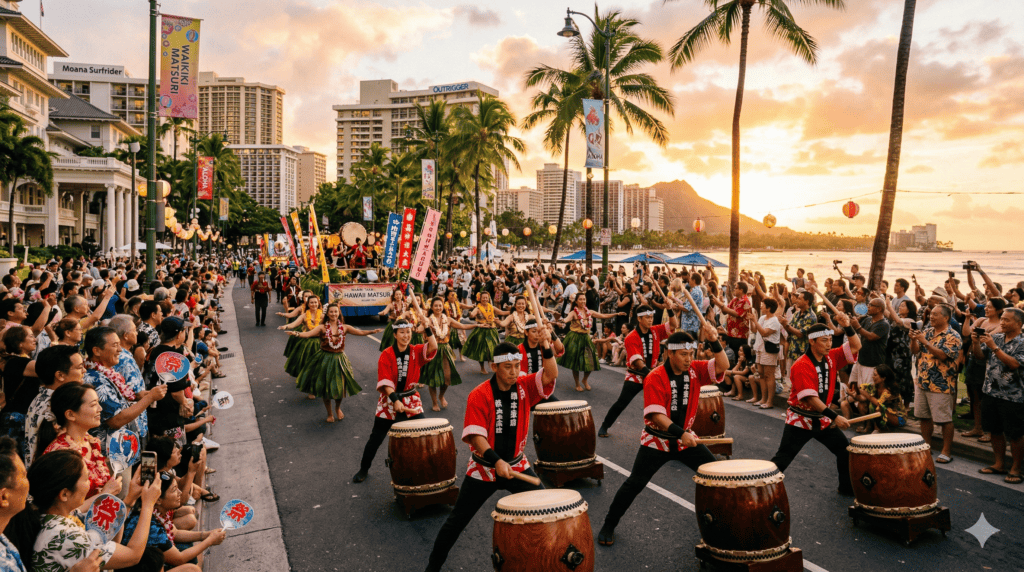
- Sunday, June 14 — Pan-Pacific Parade (Grand Finale): Kalākaua Avenue closes at 4:00 p.m. The parade begins at Fort DeRussy Park and travels the full length of Kalākaua Avenue to Kāpiʻolani Park. Hula Festival wraps up Sunday evening 6:30–10:00 p.m.
All events are free and open to the public. There are no tickets to buy, no wristbands to track down — just show up. The festival almost always falls on the second weekend of June, so the 2026 dates fit the pattern perfectly. Note that schedules are subject to change; always check the official schedule at panpacificfestival.org as the event approaches.
The Friday Block Party: Best Way to Start the Weekend
The Pan-Pacific Hoʻolauleʻa — the Hawaiian word means “festival; gathering for a celebration” — is the highlight of Friday night, and honestly it might be the most electric night of the whole weekend. Kalākaua Avenue between Seaside and Uluniu Avenues shuts down to cars and transforms into a pedestrian-only cultural corridor from 5:00 p.m. onward.
By 7:00 p.m., stages are running at both ends of the closed stretch. Performance groups rotate every 20–30 minutes: taiko drummers, Okinawan folk dancers, hula hālau, Japanese bon odori (a traditional summer circle dance tied to the Obon Festival), contemporary Hawaiian musicians, and more. Food vendors line the street with everything from plate lunches and musubi to takoyaki, mochi, and shave ice. It feels like Waikīkī’s version of a giant neighborhood party — except the neighborhood happens to include Japan, Hawaiʻi, and half the Pacific.
At the same time, head toward the beach side near the Duke Kahanamoku statue and you’ll find the Kūhiō Beach Hula Mound hosting the Pan-Pacific Hula Festival. Audiences sit on the grass under a banyan tree as hula is performed against the backdrop of the setting sun over Waikīkī Beach. Bring a beach mat or a small folding chair — the grounds fill up. If you’re trying to plan your night, this is a great warm-up before the main block party ramps up. For a full picture of what makes Waikīkī evenings tick, our guide to the best happy hours in Waikiki can help you build a perfect pre-festival evening.
Saturday Cultural Performances: Where to Go
Saturday is a longer, more spread-out day. The main action runs from mid-afternoon into the evening, with two venue clusters worth knowing about.
Ala Moana Centerstage and International Market Place host rotating cultural performances throughout the afternoon and evening. These are excellent spots for families because they’re covered, food-accessible, and less crowded than the street festival. If you have kids in tow or just want a more relaxed experience, this is your Saturday sweet spot. For more ideas on keeping a full family happy in the area, our 5-day Waikiki itinerary has great family-friendly suggestions you can build around the festival weekend.
Kūhiō Beach Hula Mound continues the hula programming Saturday from 4:30–9:00 p.m. If you only catch one hula performance all weekend, Saturday evening at the Hula Mound is the one to choose — the light is beautiful, the setting is unbeatable, and the performances tend to be longer and more varied mid-festival than on opening night.
One practical tip: Saturday is when hotel guests start arriving for the festival weekend, so Kalākaua Avenue gets noticeably busier. If you want to walk between venues without fighting crowds, stick to Kūhiō Avenue (one block mauka, or inland) for easier movement.
The Sunday Parade: Best Viewing Spots on Kalākaua Avenue
The Pan-Pacific Parade is the grand finale — and it’s one of the most colorful, joyful processions you’ll see anywhere in Hawaiʻi. The parade starts at Fort DeRussy Park at the western end of Waikīkī and travels the full length of Kalākaua Avenue, finishing at Kāpiʻolani Park near Diamond Head.
Participants include hula dancers, taiko drummers, high school marching bands, Korean traditional performers, Okinawan dancers, steel pan musicians, lion-dragon dancers, flag twirlers, and cultural groups representing countries across the Pacific Rim. There are two emcee stands where each group is introduced — one near the start at Fort DeRussy, and the main viewing stand in front of the Moana Surfrider Hotel. That midpoint stand in front of the Moana Surfrider is widely considered the best viewing spot: you get a formal introduction to each group, a pre-show with taiko drums and dancing, and a front-row seat to the parade’s energy when it peaks mid-route.
- Best early spot: Fort DeRussy Park (parade start) — less crowded, good for families with strollers
- Best overall viewing: In front of the Moana Surfrider Hotel — prime location, formal emcee introductions, most energy
- Best finish-line spot: Kāpiʻolani Park — spread out, shaded, great for anyone who wants to watch the parade arrive and linger after
Kalākaua Avenue closes at 4:00 p.m. Sunday. Stake out your spot by 3:30 p.m. at the latest along the popular mid-parade stretch. Bring a portable chair or beach mat — this is a standing-or-sitting event, and the parade can run over an hour.
Practical Tips for Visiting the Pan-Pacific Festival Waikiki 2026
A few things that make a real difference:
- Getting there: Don’t try to drive to the festival on Friday evening or Sunday afternoon. Kalākaua Avenue closures start at 5:00 p.m. Friday and 4:00 p.m. Sunday. The Skyline rail connects to Ala Moana Center, which is a good drop-off point. From there, it’s a walkable 10–15 minutes into Waikīkī. Rideshare (Uber/Lyft) works well if you drop off mauka of the closures on a parallel street.
- Parking: Ala Moana Center’s parking garage is your best daytime option (free with validation from many stores). Hotel garages in Waikīkī run $6–$10/hour. Street parking on Kalākaua will be completely unavailable during closures.
- What to eat: Friday’s Hoʻolauleʻa has food vendors right on the street — takoyaki, shave ice, plate lunches, musubi — all part of the experience. Saturday and Sunday, the surrounding Waikīkī restaurants are all within easy walking distance. Our guide to the best restaurants in Waikiki has solid options for a sit-down dinner after the performances.
- What to bring: Comfortable walking shoes, sunscreen (Saturday afternoon events are in full sun), a small folding chair or beach mat for the Hula Mound and parade, and cash for food vendors (not all accept cards).
- Hotel urgency: Waikīkī hotels book up fast for this weekend. June is already prime season, and festival weekends see an additional surge in occupancy. If you’re planning to be in Waikīkī June 12–14, book your hotel as early as possible. Rates rise significantly in the final 4–6 weeks before the event.
If you’re still putting together your overall trip plan, our first-time visitor guide to Waikīkī covers the full picture — where to stay, how to get around, and what to budget.
The Hawaii-Japan Connection: Why This Festival Matters
Hawaiʻi has the largest Japanese-American population of any U.S. state, and the cultural ties between the two places run deep — spanning generations of immigration, shared traditions, and cross-cultural exchange that you can feel everywhere from the food scene to the island’s festivals. The Pan-Pacific Festival was born directly from that relationship.
The bon odori dances performed during the festival are a striking example: this traditional Japanese summer dance, performed during the Obon Festival to honor ancestral spirits, has nearly faded from practice in modern Japan — but it continues to thrive in Hawaiʻi, kept alive by Japanese-American communities across the islands. Watching it performed on Kalākaua Avenue is one of those genuinely moving cultural moments that catches visitors off guard.
Understanding this history makes the festival more than just a street fair. It’s a living demonstration of what happens when cultures mix deeply over generations — something Hawaiʻi does better than almost anywhere else on earth. If you’re interested in experiencing more of that cultural richness during your trip, our guide to the best luaus near Waikiki covers another side of that same story.
Frequently Asked Questions
When is the Pan-Pacific Festival Waikiki 2026?
The 43rd Pan-Pacific Festival runs Friday through Sunday, June 12–14, 2026. The Hoʻolauleʻa block party is Friday night, cultural performances continue Saturday, and the Pan-Pacific Parade closes the weekend Sunday afternoon. All events span venues from Ala Moana Center to Kāpiʻolani Park.
Is the Pan-Pacific Festival free?
Yes — every public event at the Pan-Pacific Festival is completely free and open to anyone. There are no tickets, no wristbands, and no registration required. Just show up. Food vendors charge normal prices, but all performances and the parade are free to watch.
What time does the Pan-Pacific Parade start in 2026?
Kalākaua Avenue closes to traffic at 4:00 p.m. on Sunday, June 14. The parade begins at Fort DeRussy Park and proceeds down Kalākaua Avenue toward Kāpiʻolani Park. Plan to arrive at your viewing spot by 3:30 p.m. to get a good position, especially along the popular stretch in front of the Moana Surfrider Hotel.
What is the best spot to watch the Pan-Pacific Parade?
The viewing stand in front of the Moana Surfrider Hotel is widely considered the best spot — each group gets a formal introduction from the emcee, and the parade energy peaks mid-route. Fort DeRussy Park (the start) is a good option for families with strollers. Kāpiʻolani Park at the finish is spacious and shaded if you prefer more room to spread out.
What is the Pan-Pacific Hoʻolauleʻa?
The Hoʻolauleʻa is the Friday night block party that opens the festival. Kalākaua Avenue between Seaside and Uluniu Avenues closes to traffic at 5:00 p.m., and the main celebration runs 7:00–10:00 p.m. Expect rotating cultural performances on stages at both ends, food vendors selling everything from plate lunches to takoyaki, and the lively energy of Waikīkī’s main street turned into a pedestrian cultural corridor.
Do I need to book a hotel early for Pan-Pacific Festival weekend?
Yes — book as early as possible. June is already peak season in Waikīkī, and festival weekends see additional demand that pushes rates and availability quickly. Hotels in desirable locations along Kalākaua Avenue and near the beach sell out well in advance. If you’re planning around the festival, locking in your accommodation now is genuinely worth it.
Final Thoughts
The Pan-Pacific Festival Waikiki 2026 is the kind of event that makes a trip feel like more than a vacation. Three days of free cultural programming, a parade that shuts down one of the world’s most famous avenues, and hula performed under a banyan tree with the Pacific Ocean as the backdrop — it doesn’t get much more Hawaiʻi than that.
If your schedule allows, plan your June trip around June 12–14. And if you’re already going to be in Waikīkī that weekend: clear Friday evening and Sunday afternoon, find your spot on Kalākaua, and let the island do its thing.