
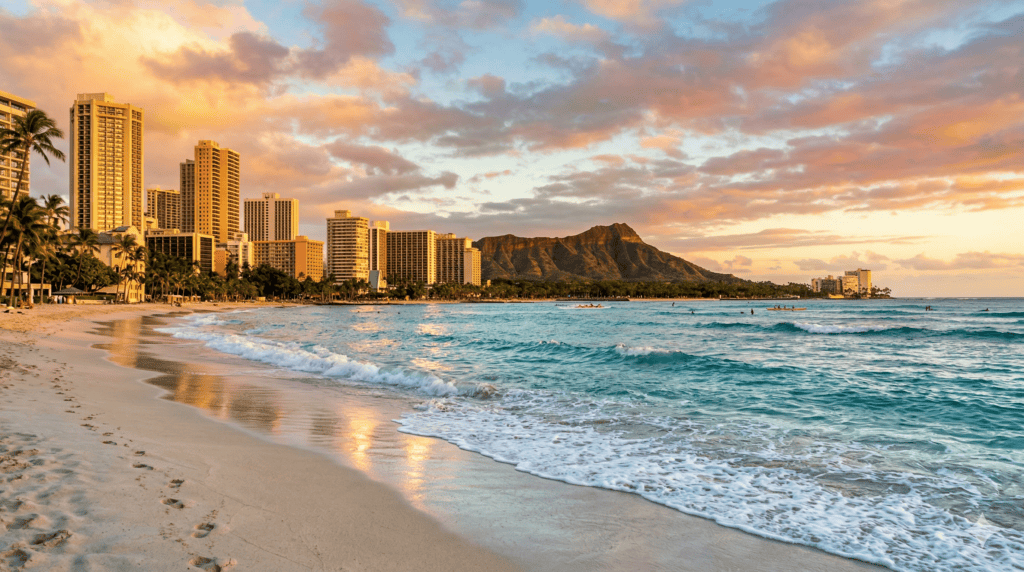
You’re standing on one of the most famous stretches of sand in the world — golden beach, warm turquoise water, Diamond Head rising in the background — and you’ve got four days to make the most of it. Where do you stay? What do you eat? What’s actually worth your time versus what’s just a tourist trap dressed up in a lei?
First-time Waikiki visitors often underestimate how much is packed into just a few sunny blocks. Hotels range from budget-friendly to bucket-list luxury. Restaurants span $3 malasadas to reservation-only dining rooms with sweeping ocean views. And the activities? You could genuinely fill two weeks without running out of things to do.
This guide cuts through the noise. Whether you’re planning your first trip or your fifth, here’s everything you need to know to do Waikiki right in 2026 — where to sleep, what to eat, which happy hours to hit, and the local tips that make the difference between a good vacation and a great one.
Where to Stay in Waikiki: Pick Your Neighborhood First
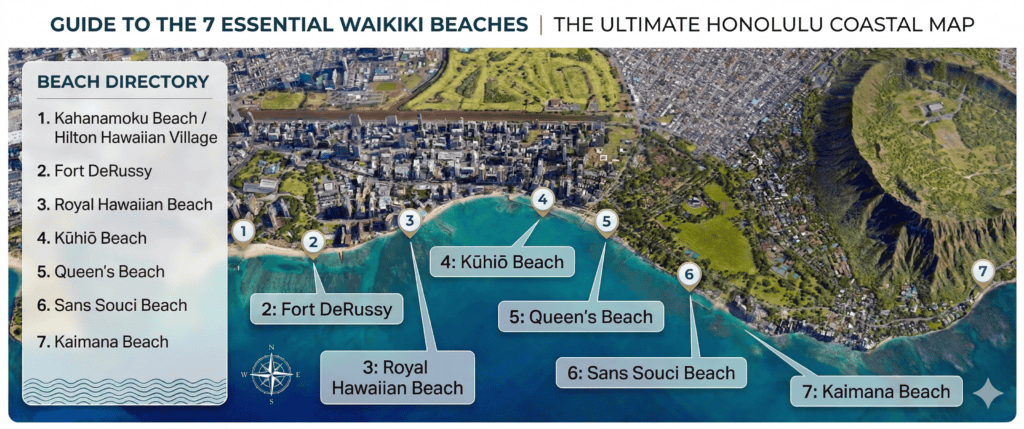
Waikiki is walkable and compact — but the experience changes considerably depending on which end of the neighborhood you call home base. Getting this decision right sets the tone for your entire trip.
The west end (Hilton Hawaiian Village / Fort DeRussy area) is the go-to for travelers who want beachside energy without feeling like they’re living inside a concert crowd. The beach here is noticeably calmer, the vibe is more spacious, and you’re a short stroll from Fort DeRussy Beach Park’s greenery when you need a breather. It’s the best area in Waikiki for families, early risers, and anyone who wants slow, easy mornings.
The center strip (around Kalākaua Avenue and the International Market Place) is classic postcard Waikiki — busy, beautiful, and convenient to everything. Staying here puts you near the best shopping, the widest restaurant selection, and the most photo-worthy sunsets. Just know it’s lively, and “lively” sometimes means noisy at night and expensive to park.
A few blocks inland (near Kūhiō Avenue) is where budget-savvy travelers score: you’ll trade an ocean view for meaningfully lower nightly rates, and you’re still walking distance to the beach. For longer stays or travelers who plan to explore the whole island, this zone makes a lot of financial sense.
Before you book, pay close attention to the full nightly cost — hotel taxes and resort fees in Waikiki can add $50–$100+ per night to your bill. For a complete breakdown, our guide to the real cost of visiting Waikiki walks through exactly what to budget.
Best Breakfast Spots in Waikiki (Start the Day Right)
Waikiki has a surprisingly excellent breakfast scene — whether you want a slow, brunch-worthy morning or a grab-and-go bite before an early tour pickup.
- Kona Coffee Purveyors: The line forms before they open, and it’s worth every minute. World-class Kona coffee paired with pastries from b.patisserie makes this one of the best morning stops on the island. Go early.
- Basalt: A rare brunch spot that works for a leisurely vacation morning and doubles as a happy hour later in the day. The food is beautiful, the setting is relaxed, and you’ll want to linger.
- Kono’s Waikiki: Your best friend on early-activity days. Their breakfast burritos are filling, fast, and consistently delicious — perfect if you have a snorkel tour or Diamond Head hike on the calendar.
- Leonard’s Bakery: The malasada pilgrimage is non-negotiable. Leonard’s flagship is just outside the core Waikiki area, but these warm, sugar-dusted Portuguese pastries are the most “iconic Oahu treat” you can eat. Work it into a driving day.
Happy Hours Worth Planning Your Afternoon Around
Waikiki’s happy hour scene is genuinely excellent — strong drinks, competitive pricing, and some of the best ocean views you’ll find anywhere. The trick is knowing which spots deliver and which are trading on location alone.
Monkeypod Kitchen (OUTRIGGER Reef on the Beach) runs a beloved happy hour daily from 3:30–5 PM. It’s consistently good: creative craft cocktails, solid bar bites, and that relaxed-but-polished island atmosphere that feels like a proper vacation moment. This one earns its reputation.
Hideout at The Laylow offers open-air lanai energy with craft cocktails in a scene that’s fun without being over the top. It’s a great second stop if you want to keep the evening moving.
Bar Leather Apron is the reservation-worthy option — intimate, seriously skilled bartending, and a cocktail menu that changes seasonally. Save this one for a special night. For a full list of the best deals on the island, check out our guide to the best happy hours in Waikiki.
Best Restaurants in Waikiki: From Casual to Celebratory
The dining scene in Waikiki spans every budget and mood. Here’s the shortlist that actually delivers, from post-beach casual to special-occasion splurge.
- Paia Fish Market Waikiki: The go-to for a fresh, fast, delicious meal after a day on the water. It’s casual, popular, and reliably satisfying — no reservations, no fuss.
- Quiora (Ritz-Carlton Residences): Upscale Italian in a stunning setting. If you have one “dress up for dinner” night on your trip, this is it.
- Basalt: Works just as well for dinner as it does for brunch. The menu is creative, the cocktails are excellent, and the vibe hits that sweet spot between relaxed and refined.
For a deeper dive into local favorites beyond the tourist trail, our guide to where locals eat in Waikiki covers the spots that don’t show up in hotel concierge recommendations.
Top Things to Do in Waikiki (Iconic Picks + Hidden Gems)
The activities in and around Waikiki range from zero-effort beach days to full-day island adventures. Here’s how to build a trip that actually matches your pace.
Diamond Head State Monument is the must-do for first-timers. The hike is short (roughly 60–90 minutes round trip), manageable for most fitness levels, and the views from the crater rim are genuinely jaw-dropping. Non-residents need advance reservations — book before you arrive so you’re not locked out. If you’re tackling this one, our Oahu day trip guide pairs it perfectly with other nearby stops.
A North Shore day is worth every mile of the drive. Combine Waimea Valley’s waterfall and botanical gardens with classic North Shore beach stops and a shave ice or two. It’s the “we actually experienced Hawaii” day that every visitor deserves at least once.
The Honolulu Zoo sits at the east end of Waikiki and makes an easy, low-effort morning or late-afternoon activity — especially good for families with younger kids.
The Tantalus / Round Top Scenic Drive is one of the most underrated Waikiki-adjacent experiences: a winding road through lush green canopy with multiple lookout points over Honolulu and the coastline. Beautiful near golden hour. No ticket required, no reservations needed.
Not sure how to structure your days? Our 5-day Waikiki itinerary maps out a balanced mix of adventure, beach time, and good food — with mix-and-match options for both couples and families.
What to Do When It Rains in Waikiki (And It Will, Briefly)
Waikiki rain is almost always short, warm, and frequently followed by a rainbow — but if a shower sticks around longer than expected, you’re not out of options. The neighborhood is packed with indoor activity that turns a “washed out” afternoon into something memorable.
- Waikiki Aquarium: Right near Kapiʻolani Park, walkable from most hotels, and genuinely impressive. Time it with coffee and a nearby lunch while the clouds clear.
- International Market Place: Three levels of shopping, dining, and air conditioning. A reliable rainy-day hub, especially if you’re near the center of Waikiki.
- Spa day: Lean into it. Several Waikiki hotels have on-site spas (the Moana Surfrider’s Moana Lani Spa and The Royal Hawaiian’s Abhasa are standouts), and availability often opens up on overcast days.
- Cocktail time: Nobody’s judging. Bar Leather Apron and Hideout at The Laylow both work beautifully on a moody afternoon.
For a complete list of the best indoor options, check out our dedicated guide to rainy day activities in Waikiki.
Waikiki Travel Tips That Save Real Money (and Headaches)
A few practical notes that make a genuine difference, especially for first-time visitors:
- Skip the rental car (for the most part): Waikiki is extremely walkable, and hotel parking can run $40–$60 per night. Most visitors do just fine with walking, Biki bike shares for quick hops, and rideshare for longer stretches. Save the rental car for a dedicated driving day — North Shore, Tantalus, or a full island loop.
- Airport transfers: As of October 2025, TheBus W Line provides direct service between Honolulu Airport and Waikiki — the most affordable option at $3 per ride. For a full comparison of shuttle, rideshare, taxi, and bus options, see our guide to getting from Honolulu Airport to Waikiki.
- Pack reef-safe sunscreen: Hawaii restricts sunscreens containing oxybenzone and octinoxate — bring a compliant formula or plan to buy reef-safe options locally. Your skin and the coral will thank you.
- Budget for the real nightly rate: Hawaii’s stacked tax system (roughly 18.5% total on Oahu in 2026) plus resort fees can add significant cost above the advertised room rate. Always check the full booking total before you commit.
Frequently Asked Questions About Visiting Waikiki
What is the best area to stay in Waikiki?
For a calmer, more relaxed experience, the west end near Hilton Hawaiian Village and Fort DeRussy Beach Park is a favorite — less crowded beach, more breathing room. The center strip near Kalākaua Avenue is best for first-timers who want to be close to everything. If you’re watching your budget, a few blocks inland near Kūhiō Avenue offers the best nightly rates while keeping you within easy walking distance of the beach.
Is Waikiki good for first-time visitors to Hawaii?
Waikiki is one of the most first-timer-friendly destinations in Hawaii — it’s compact, walkable, packed with restaurants and activities, and easy to navigate without a car. The tradeoff is that it’s busy and can be expensive. But as a base for exploring Oahu, it’s hard to beat: Diamond Head, the North Shore, Pearl Harbor, and Hanauma Bay are all within a day-trip drive.
How much does a trip to Waikiki actually cost?
Budget travelers can get by on $150–$200/day (inland hotel, cheap eats, free beaches). Mid-range visitors typically spend $300–$500/day including a beachfront hotel, dining out twice daily, and paid activities. Luxury travelers can easily spend $700–$1,000+/day. Whatever your tier, factor in Hawaii’s ~18.5% hotel tax rate on Oahu and any applicable resort fees — they add up fast.
Do I need a rental car in Waikiki?
Not for Waikiki itself — the neighborhood is very walkable and well-served by Biki bike shares and rideshare apps. You’ll want a rental car (or a booked tour) for bigger island adventures like a North Shore day, the Tantalus Drive, or visiting Hanauma Bay. Renting just for specific driving days, rather than your entire stay, is usually the smartest approach.
What’s the best time of year to visit Waikiki?
Waikiki is a year-round destination, but the sweet spot for most visitors is April–June and September–November: less crowded than peak summer and winter holiday seasons, generally good weather, and better hotel rates. Summer (June–August) brings the biggest crowds and highest prices. Winter (December–February) is peak whale-watching season off Oahu’s coast — a bonus worth knowing.
Is Waikiki safe for tourists?
Waikiki is considered safe for tourists by Hawaii standards, with a strong visitor infrastructure and a well-patrolled beach area. Standard city-travel common sense applies: don’t leave valuables in rental cars (car break-ins are a known issue across Oahu), keep an eye on your belongings at the beach, and stay aware of your surroundings after late nights. The vast majority of visitors have zero issues.
Final Thoughts
Waikiki rewards the traveler who takes a little time to plan — not because it’s hard to navigate, but because the difference between a rushed, “we didn’t get to that” trip and a genuinely great one often comes down to a few good decisions made before you arrive. Pick the right area to stay, know which breakfast spots open early, and leave room for at least one slow sunset happy hour on the beach.
The magic of Waikiki is real. The beach really is that beautiful. The food really is that good. And the feeling of “we should stay one more day” really does hit like clockwork around day three.