
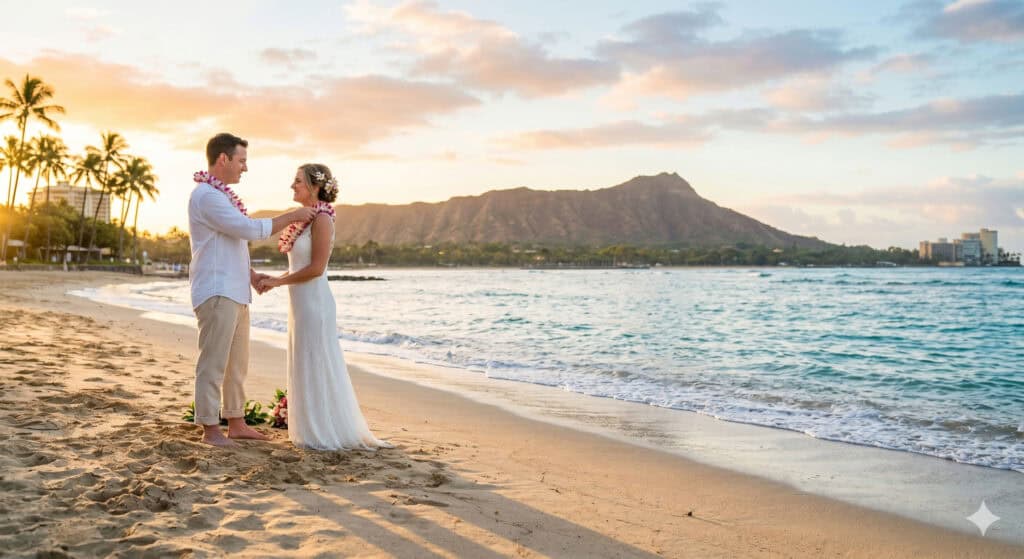
Here’s the thing nobody tells you when you start planning a Waikiki wedding: most of Waikiki Beach cannot be commercially permitted for ceremonies. The stretch of sand you’re picturing — postcard-perfect, in front of the big hotels — is largely off-limits for setup-based ceremonies involving a vendor. That one detail changes a lot of what couples plan.
Good news: there are solutions, and beautiful ones. Once you understand how beach permits, venue options, and Hawaii’s tax structure actually work, the planning gets much more straightforward. Whether you’re dreaming of a sunrise elopement for two or a reception in the Moana Surfrider’s legendary Banyan Courtyard — Waikiki’s original hotel, now freshly renovated after its 125th anniversary — this guide covers what you genuinely need to know before you book anything.
What Style of Waikiki Wedding Are You Planning?
Before booking a single vendor, get clear on your wedding format. It drives every other decision — guest count, venue type, permits needed, budget, and how much lead time you actually have.
- Elopement (2–5 people): The most flexible option. A sunrise ceremony at Kahanamoku Beach or Magic Island, two leis, a licensed officiant, and brunch after. If you move quickly, this can come together in 4–8 weeks. You’ll still need a Hawaii marriage license — more on that below.
- Micro-wedding (6–30 guests): The sweet spot for most destination couples. Intimate enough to feel personal, large enough to include the people who actually matter. A day-of coordinator is worth every dollar at this scale.
- Full wedding (30–150+ guests): Hotel packages are built exactly for this — catering minimums, reserved outdoor terraces, and dedicated event staff. Budget 10–14 months of lead time for peak season bookings.
Most destination wedding surprises happen when couples choose a venue before they know how many people are actually coming. Don’t skip this step.
Beach Permits and the Hawaii Marriage License: What You Actually Need
This is where most Waikiki wedding guides gloss over the details. Here’s the full picture.
The Hawaii Marriage License
Apply online through the Hawaii Department of Health’s system, then meet with a licensed agent in person— both partners together — before your ceremony. The fee is $65 (a $60 application fee plus a $5 portal fee). No blood tests, no residency requirement, no waiting period after you pick up the license. The license is valid for 30 days from the date of issuance. You can apply online up to a year before your ceremony, but the in-person appointment must happen within 30 days of the wedding date.
Beach and Park Permits
Here’s the nuance that trips couples up: the State of Hawaii does not issue commercial wedding permits for most of Waikiki Beach. The stretch of sand fronting the major hotels — the one in every Waikiki photo — is not available for setup-based ceremonies through commercial vendors. If a beach wedding company tells you they can plant an arch in front of the Moana Surfrider, ask to see the permit documentation.
The exception is Kahanamoku Beach at the western end of Waikiki, in front of the Hilton Hawaiian Village. Commercial vendors can obtain permits here for standing ceremonies. No chairs, no arch — but you get the iconic sand-and-Diamond-Head backdrop completely legally. Early morning (before 9:00 AM) gives you the best light and fewest onlookers. For anything with chairs, a floral setup, or a rental arch, your real options are:
- City and County of Honolulu parks (Magic Island, Kapiʻolani Park): Apply through the Department of Parks & Recreation at least 3–4 weeks in advance. Liability insurance is typically required.
- State Parks special use permits: Required for events in Hawaiʻi State Parks, including some botanical garden locations.
- Private hotel venue: No beach permit needed — the hotel handles everything on their own property.
Unless you’re doing a true barefoot elopement for two with no vendor setup, hire a local wedding coordinator for at least day-of service. Permit expertise alone is worth their fee — and they’ll know exactly which park zones require what, which changes regularly.
Best Waikiki Wedding Venues: Public Beaches vs. Private Hotels
Public Beach and Park Locations
Public locations can be genuinely beautiful — and far more budget-friendly than hotel venues. The trade-off is shared space, setup restrictions, and real permit logistics. The best options near Waikiki:
- Kahanamoku Beach: The only section of Waikiki proper where commercial vendor permits are available for beach ceremonies. Simple, standing ceremonies; early morning is essential for crowd control and lighting.
- Magic Island at Ala Moana Beach Park: Wide lawns with gorgeous water views and enough space for chairs and a small arch under a city park permit. One of the best alternatives to central Waikiki beach for setup ceremonies.
- Kapiʻolani Regional Park: That Diamond Head backdrop in a green, open setting — and practically walkable from every major Waikiki hotel. Weekday mornings are quieter than weekends by a significant margin.
- Liliʻuokalani Botanical Garden: Stream, waterfall backdrop, dense tropical greenery. Ideal for couples who want a distinctly non-beach ceremony atmosphere without leaving Honolulu.
Best approach for public locations: keep the ceremony short (20–30 minutes), keep decor simple, and plan the celebration at a nearby restaurant or hotel afterward.
Private Hotel Venues
For 20+ guests — or any couple who wants the ceremony and reception in one place — private hotel venues are worth the premium. You get reserved space, clear vendor rules, and someone whose full job it is to make the day work. Top options in Waikiki:
- Moana Surfrider, A Westin Resort & Spa: Waikiki’s original hotel, opened March 11, 1901, and freshly finished a full 125th-anniversary renovation in early 2026. The Banyan Courtyard — centered on a banyan tree planted in 1904 — is one of the most photographed ceremony spaces in all of Hawaii. Book early; it’s always in demand.
- Hilton Hawaiian Village: Multiple venue options, including the dedicated AKALĀ Chapel — an oceanfront chapel with floor-to-ceiling Pacific views — and the Great Lawn overlooking Duke Kahanamoku Lagoon, which handles receptions up to 1,600 guests.
- The Royal Hawaiian: The “Pink Palace” delivers old-Hawaii glamour. The outdoor Coconut Grove is exceptional for ceremony photos and small receptions.
- Halekulani: Ultra-luxury and genuinely oceanfront. Their La Mer terrace is exceptional for couples with smaller guest lists and higher budgets.
If you’re open to a 30–45 minute drive, Kualoa Ranch (mountain valley floor, frequently used as a film location) and Waimea Valley (waterfall garden on the North Shore) offer backdrops that are simply impossible to find anywhere in Waikiki. Worth looking at early if you want something dramatically different. For a full breakdown of hotel tiers and what they actually cost per night, our guide to where to stay in Waikiki covers every neighborhood and price level.
What a Waikiki Wedding Actually Costs in 2026
The most consistent shock in Waikiki wedding planning is the gap between the quote and the final invoice. Hawaii stacks three separate taxes on hotel and venue charges — the state Transient Accommodations Tax (now 11% after the January 2026 Green Fee increase), an Oʻahu county surcharge (3%), and the General Excise Tax (~4.5%) — which together push the effective tax rate to roughly 18–18.5% on top of base venue costs. Always ask vendors for all-in pricing before comparing quotes side by side.
Budget frameworks for 2026:
- Elopement (2 people, public beach): $1,500–$4,000 total — officiant, simple florals, a photographer for 2 hours, and the marriage license.
- Micro-wedding (10–20 guests, private venue): $8,000–$20,000 — venue, catering, photographer, officiant, florals, and day-of coordination.
- Full hotel wedding (50–100 guests): $25,000–$75,000+. Hotel packages, catering minimums, and per-head costs escalate quickly at this scale.
Photography is consistently the vendor where couples say they wish they’d spent more. Great Waikiki wedding photographers book 10–14 months out for peak season. Budget $3,000–$6,500 for full-day coverage; $1,200–$2,500 for a 2-hour elopement session. For out-of-town guests, pointing them to the right hotel matters — resort fees and taxes combined can quietly add $60–$120 per night beyond the listed rate. Our Waikiki resort fees guide breaks down exactly what’s on the bill so your guests aren’t caught off guard at checkout.
Best Time of Year and Day for a Waikiki Wedding
Hawaii is genuinely wedding-friendly year-round, which is one of its real advantages over continental U.S. venues. Timing still matters, though — a lot.
- Best time of day — Sunrise (6:00–8:00 AM): Calm beaches, minimal crowd, softer light, and gentle trade winds. If you can get your partner to agree to a 6 AM ceremony start, it’s almost always worth it.
- Best time of day — Late afternoon (4:00–6:30 PM): Golden hour light is beautiful, but crowd levels at popular public spots peak in the afternoon and timing windows tighten fast.
- Best months: April–June and September–October — warm weather, lower rainfall than winter, and lighter tourist volume. Our sunset photography guide shows exactly what that golden hour light looks like from Waikiki’s best vantage points, which is useful for timing your ceremony and reception photo schedule.
- Avoid: Thanksgiving, Christmas/New Year’s, and Spring Break weeks — hotel prices spike and venues book months earlier than usual.
- Weekday vs. weekend: A Tuesday or Wednesday ceremony gets you a noticeably quieter public beach, lower photographer minimums at some studios, and better overall venue flexibility.
Hawaiian Wedding Traditions Worth Including
You can keep your ceremony completely modern and still include a few island touches that make it feel specifically Hawaiian — rather than a generic beach wedding that could have taken place anywhere. A few that resonate:
- Lei exchange: The most meaningful and easiest tradition — leis symbolize love, respect, and welcoming each other into your lives. Fresh plumeria or maile photograph far better than silk, and they actually smell incredible.
- Hawaiian blessing (Oli Chant): A cultural blessing in the Hawaiian language, performed by a kahu (cultural practitioner). Genuinely moving — guests who’ve never experienced one are consistently surprised by how affecting it is. Book respected practitioners early; they’re in demand.
- Conch shell (Pū): Blown to open the ceremony. Dramatic in the best possible way — expect audible reactions from guests who didn’t see it coming.
- Unity sand ceremony: Two separate sands poured together into one vessel. Perfect for a beach setting, practically symbolic, and you take home a keepsake that actually looks good on a shelf.
None of these require a large budget or a longer ceremony. Even one Hawaiian touch grounds the day in place rather than making it feel like it could have happened anywhere tropical.
Reception Ideas That Work for Any Size
The ceremony is the moment. The reception is where guests remember how they felt. Waikiki has strong options at every scale.
- Private dining room buyout: For groups under 20, often the best value — great food, no venue rental fee, and everyone can have an actual conversation. Our Waikiki restaurant guide covers the top spots with private dining options across every price range.
- Beachfront hotel terrace: Most major Waikiki hotels offer terrace rental for receptions. Ask specifically about sunset timing when comparing options — the hour makes a real difference in photos and ambiance.
- Sunset catamaran cruise: A “just married” private sail with your closest guests is genuinely unforgettable — and easy to book as a 2–3 hour private charter from the Waikiki marina.
- Luau evening: If any of your guests have never been to Hawaii, a private luau experience turns the reception into its own bucket-list memory. Our guide to the best luaus near Waikiki covers which ones are worth the price and which to skip.
Waikiki Wedding Planning Timeline
Destination weddings move faster than local ones because travel logistics lock in your date early. Vendors fill faster than couples expect.
- 10–14 months out: Lock in your wedding style and rough guest count. Start venue research. Book your photographer — they fill first, before venues.
- 8–10 months out: Book your venue or ceremony location. Hire an officiant and coordinator. Reserve a hotel room block if your guest list is 20+.
- 5–7 months out: Book florist, hair and makeup, and any live music. Finalize your reception plan. Map out photo locations with your photographer.
- 2–3 months out: Submit permit applications for any public beach or park locations. Confirm all vendors in writing. Start your Hawaii marriage license application online.
- 30 days out: Meet with your marriage license agent in person — both partners together. Confirm every vendor one more time. Send a day-of timeline to all vendors.
- Week of: Hand logistics off to your coordinator. Spend the days before actually enjoying Oʻahu. For post-wedding adventures, our guide to day trips from Waikiki covers the best honeymoon excursions — from Kualoa Ranch to the North Shore.
Frequently Asked Questions About Waikiki Weddings
Can you actually get married on Waikiki Beach?
Yes — but with a real caveat. The State of Hawaii does not issue commercial wedding permits for most of Waikiki Beach. The exception is Kahanamoku Beach at the western end, near the Hilton Hawaiian Village, where standing ceremonies with a licensed commercial officiant can be permitted. For ceremonies with chairs, an arch, or any florist setup, Magic Island or Kapiʻolani Park are more practical alternatives.
How much does a Waikiki wedding cost?
A simple elopement with an officiant, photographer, and florals typically runs $1,500–$4,000. A micro-wedding for 10–20 guests at a private venue ranges from $8,000–$20,000. Full hotel receptions for 50–100 guests commonly reach $25,000–$75,000 or more. Hawaii’s combined hotel and venue tax rate of roughly 18–18.5% on Oʻahu applies to venue-based costs, so always request all-in pricing before comparing quotes.
What does the Hawaii marriage license cost, and how do you get it?
The fee is $65 — a $60 application fee plus a $5 portal fee — paid to the State of Hawaii. Apply online first through the Hawaii Department of Health’s marriage license system, then both partners must appear together in person before a licensed agent before the ceremony. No blood test or residency requirement. The license is valid for 30 days after issuance, so time your agent appointment accordingly.
When is the best time of year to get married in Waikiki?
April through June and September through October offer the best balance of warm temperatures, lower rainfall than winter, and lighter tourist crowds. Sunrise ceremonies (6:00–8:00 AM) are excellent year-round — calm beaches, soft light, and almost no bystanders. Weekday ceremonies offer better public beach availability and sometimes lower vendor minimums.
How far in advance should I book a Waikiki wedding photographer?
For peak season (spring and fall), book 10–14 months out. The best wedding photographers on Oʻahu fill their calendars before venues do. For winter or off-peak elopements, 4–6 months is often workable — but don’t wait longer than that if you have a specific photographer in mind.
Can guests attend a beach ceremony without a rental car?
Yes — Waikiki’s biggest logistical advantage as a wedding destination is walkability and ride-share access. Public ceremony locations like Magic Island and Kapiʻolani Park are easy to reach from most Waikiki hotels without a car, and major hotel venues are walkable from dozens of lodging options nearby. Our guide to getting around Oʻahu without a car has practical context for guests planning their stay around your wedding weekend.
Waikiki wedding planning comes down to three decisions made early: your wedding style and guest count, public beach versus private venue, and how much of the logistics you want to hand off to a coordinator. Get those settled, and the rest — permits, florals, timeline, Hawaiian traditions — falls into place faster than most couples expect. The island does most of the heavy lifting. You just have to show up.