
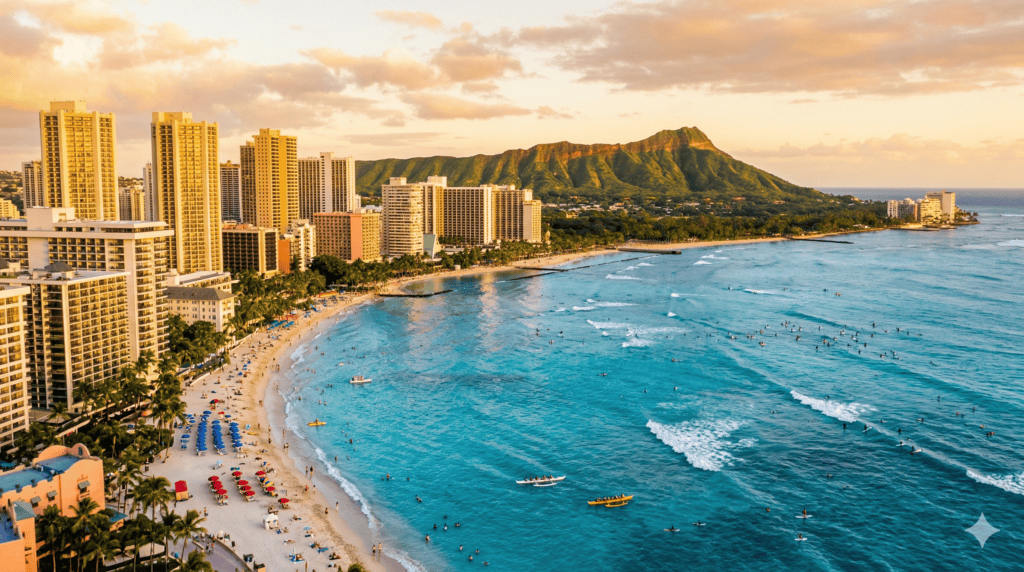
Every year, thousands of first-timers land in Honolulu, step outside the airport, feel that warm, jasmine-scented air hit them in the face—and immediately realize they have no idea what they’re doing. They booked a hotel, they know the beach is involved, and they’ve seen the Diamond Head photos. But the actual planning? That’s where things get fuzzy.
Waikiki is one of the easiest tropical destinations in the world to enjoy—but it takes a little pre-trip thinking to avoid the rookie mistakes: booking too few nights, skipping reservations for spots that actually require them, or accidentally spending your whole budget in the first 48 hours.
This guide cuts through the noise. You’ll get straight answers on how long to stay, the best time to visit, where to stay, how to get around, what things cost, and what to actually do when you get here.
How Long Should You Stay in Waikiki on Your First Visit?
The most common mistake first-timers make is not staying long enough. Waikiki feels like a lot from the outside, but once you’re on island time—moving slower, lingering over breakfast, watching sunsets that last forever—you burn through days quickly in the best way.
Here’s a simple breakdown by trip length:
- 3–5 nights: A solid “sampler.” You can do the beach, Diamond Head, Pearl Harbor, and one evening activity like a luau or sunset cruise. It’ll feel a little packed, but you’ll leave satisfied.
- 7 nights: The sweet spot for most first-timers. You get beach days, 2–3 day trips, a real cultural experience, and enough downtime to not feel like you need a vacation from your vacation.
- 10 nights: The “do it right” option. You’ll hit all the highlights, take a breath, and still have a day to discover something spontaneous. Highly recommended if your schedule allows it.
- 14 nights: For slow travelers, honeymooners, or anyone who wants to explore beyond Oʻahu. Two weeks gives you room to add a neighbor island or just enjoy Waikiki at a genuinely unhurried pace.
If you’re torn between 7 and 10 nights, go with 10. Nobody has ever come home from Waikiki wishing they’d cut the trip shorter.
For a ready-to-use blueprint, our 5-day Waikiki itinerary and 10-day Waikiki itinerary map out each day in detail so you’re not guessing when you get there.
Best Time to Visit Waikiki for First-Timers
Here’s the honest truth: Waikiki is a year-round destination, and there’s no truly “bad” month to visit. Hawaii doesn’t have four dramatic seasons—it’s more like warm and warmer, with shifts in rainfall, surf, and crowd levels. That said, some months are noticeably better for first-timers trying to balance cost, weather, and breathing room.
Best value windows: April–June and September–mid-December. These shoulder seasons tend to offer lower hotel rates and fewer crowds than peak periods, while still delivering the sunshine and warm water you came for. If your budget is flexible and your schedule is not, these months are your best bet.
Summer (June–August) is peak family season. Hotels fill up, beach space gets tighter, and prices reflect the demand. The upside: perfect swimming conditions, a lively beach energy, and no school-year constraints if you’re traveling with kids.
Winter (late December–March) is the other busy window, when mainland Americans and Canadians escape cold weather. Expect higher prices and more competition for popular restaurants and activities. You may also catch more passing showers—though Waikiki’s rain usually arrives fast and leaves even faster, often with a rainbow attached.
Bottom line: the best month to visit is the one that fits your budget and schedule. But if you have total flexibility, April through early June offers the most first-timer-friendly combination of value and experience.
Getting to Waikiki from the Airport
Most visitors fly into Daniel K. Inouye International Airport (HNL) in Honolulu. From there, Waikiki is about 8 miles away—which translates to anywhere from 20 to 45 minutes depending on traffic.
Your main options for getting to your hotel:
- Rideshare (Uber/Lyft): The most popular option for convenience. Pickup zones have been updated as of late 2025—look for ground-level signage at baggage claim rather than heading upstairs. Prices fluctuate with demand, so if you land during a busy arrival wave, check taxi rates before committing.
- Taxi: Reliable and straightforward, especially if you have a lot of luggage. Dispatchers in yellow shirts (managed by AMPCO Express) will direct you at the center median near baggage claim.
- Shared shuttle: Budget-friendlier, but slower—you’ll make multiple hotel stops before reaching yours.
- Public transit (TheBus): The most affordable option by far, though less practical if you’re hauling luggage or arriving tired.
For a full breakdown of each option with current pricing ranges and pickup logistics, check out our guide on getting from Honolulu Airport to Waikiki.
Getting Around Waikiki Without a Rental Car
One of the best things about Waikiki for first-timers: you don’t necessarily need a rental car. The neighborhood is extremely walkable, and most hotels, beaches, restaurants, and shops are within comfortable walking distance of each other.
For getting around on foot, Waikiki covers roughly a mile and a half from end to end along Kalākaua Avenue. If your main plan is beach + dining + a few tours, you can genuinely skip the car entirely and save yourself the parking headache.
When you need to range further:
- TheBus: Oʻahu’s public bus system covers a surprising amount of the island at very low cost. Not always the fastest, but budget-friendly for day trips.
- Biki bike share: Great for short distances in and around Waikiki. Fun, practical, and a good way to cover ground when you’re sandy and don’t want a full rideshare.
- Rideshare: The reliable “vacation save button” for when you’re too tired to walk or need to get somewhere specific quickly.
Should you rent a car? Yes—if you want to explore the North Shore on your own schedule, chase sunrise hikes, or visit remote beaches without booking a tour for everything. No—if you’re mostly staying in Waikiki, because hotel parking fees add up fast and traffic in the area is real.
Where to Stay in Waikiki on Your First Visit
Waikiki has an enormous range of accommodations, from historic beachfront icons to value-focused hotels a few blocks inland. The most important decision isn’t which hotel has the best pool—it’s choosing the right location and vibe for your trip style.
For iconic, beachfront history: The Moana Surfrider and The Royal Hawaiian (the “Pink Palace”) are Waikiki’s two most storied properties. Both sit directly on the beach, and both deliver that “we’re really here” feeling that’s hard to replicate anywhere else. These are strong picks for special occasions and first-timers who want the full experience.
For full-resort energy: Look for larger beachfront properties with multiple pools, on-site dining, and activity programs. Great if you want to spend full days at the resort without feeling like you need to venture out for entertainment.
For central convenience: Mid-Waikiki hotels put you steps from the beach, shopping on Kalākaua Avenue, and a massive range of restaurants. Often better value than beachfront, and still extremely well-located.
For a quieter base: The Kapiʻolani Park / Diamond Head end of Waikiki feels noticeably calmer than the busy center. Good choice if you value morning walks and green space over nightlife access.
One thing to build into your hotel budget before you book: resort fees and Hawaii’s stacked tax system (which adds roughly 18.5% on top of your nightly rate on Oʻahu in 2026). The price you see on the booking page is rarely the price you pay. Our guide on how to save money in Waikiki breaks down the smartest ways to keep lodging costs under control.
What Does a Waikiki Vacation Actually Cost?
Waikiki has a well-earned reputation for being expensive—and it can be. But your total cost depends heavily on the choices you make, not just the destination itself.
A rough daily range for two people:
- Budget trip: $250–$400/day (value hotel, mostly casual food, free and low-cost activities)
- Mid-range trip: $450–$700/day (mid-tier hotel, mix of dining styles, 1–2 paid activities per day)
- Splurge trip: $800–$1,200+/day (beachfront resort, fine dining, premium tours)
The biggest levers on your total budget are: hotel choice, travel dates, and how often you book paid tours. Flights add another major variable—and the good news is that shoulder-season travel typically delivers savings across all three categories simultaneously.
On the food side, the savviest first-timers mix one nicer sit-down meal per day with plate lunches, casual local spots, and grab-and-go options. Rainbow Drive-In is a classic for affordable plate-lunch energy. Musubi Cafe Iyasume is perfect for a quick, tasty, inexpensive bite between adventures. And if you want a relaxed evening with good food and no fine-dining bill, Cuckoo Coconuts delivers great local flavors at honest prices.
For a deeper look at where to eat without destroying your budget, our guide on the best restaurants in Waikiki covers the full spectrum—from casual plate lunch spots to sunset fine dining.
Top Things to Do in Waikiki for First-Timers
Waikiki rewards both the planner and the wanderer—but a few activities genuinely require advance booking, so they’re worth flagging early.
Diamond Head: The hike to the rim of the famous volcanic crater is a first-timer rite of passage. Views from the top are every bit as spectacular as the photos suggest. Non-residents need to book entry online in advance—walk-up availability is limited, especially on weekends.
Pearl Harbor: One of the most moving historic sites in the United States. Plan to spend most of a day here—there’s more to see than most visitors expect, and rushing it feels wrong. The USS Arizona Memorial requires a timed-entry reservation. Book early.
Hanauma Bay: If snorkeling is on your list, this protected marine preserve is exceptional. Reservations open just two days in advance and fill up fast. The preserve is also closed on Mondays and Tuesdays. Set a reminder to book the moment the window opens.
Beach days: Waikiki’s beach is actually a series of connected sections, each with a slightly different vibe. You’ll want at least two full beach days in your itinerary—one to settle in and one to actually enjoy it.
Ocean activities: Waikiki is one of the world’s friendliest places to learn to surf. Stand-up paddleboarding, catamaran sunset cruises, and snorkel tours are all easily arranged right from the beach or your hotel concierge.
ʻIolani Palace and Honolulu culture: A short drive from Waikiki, ʻIolani Palace offers a powerful look at Hawaiian history and the overthrow of the monarchy. If you have any interest in understanding Hawaii beyond the beach, this is essential.
For day trips beyond Waikiki—North Shore, Kualoa Ranch, Makapu’u Point, and more—our guide to the 20 best day trips from Waikiki covers every option with practical tips for each.
And if the weather turns on you (it happens, briefly), don’t stress—Waikiki actually has excellent rainy-day options. Our rainy day activities in Waikiki guide has everything from museums to escape rooms to indoor experiences that still feel like vacation.
First-Timer Tips That Make Everything Better
- Use reef-safe sunscreen. It’s better for the ocean, and Hawaii’s sun is genuinely powerful. Don’t wait until you’re burned to take it seriously.
- Pack smart, not heavy. Waikiki is casual, the weather is warm, and you’ll likely buy something to wear there anyway. Our Waikiki packing list has the complete breakdown of what to bring and what to skip.
- Respect ocean conditions. If locals are staying out of the water at a particular spot, follow their lead. Waikiki’s main beach is calm and beginner-friendly—but conditions elsewhere on the island can be serious.
- Give yourself permission to do less. First-timers often over-schedule and under-relax. A slow morning followed by a long afternoon at the beach is not wasted time—it’s the point.
- Book the reservation-required spots early. Diamond Head, Hanauma Bay, and the USS Arizona Memorial all have limited entry windows. Lock those in before you finalize anything else.
Frequently Asked Questions
Is Waikiki good for first-time visitors to Hawaii?
Waikiki is arguably the best starting point in all of Hawaii for first-timers. It’s walkable, packed with things to do, and well-served by tours and transportation options that make exploring the rest of Oʻahu easy. It’s also one of the safest and most visitor-friendly neighborhoods in the state.
How much spending money do I need per day in Waikiki?
A rough budget for two people is $250–$400/day for a value-focused trip or $450–$700/day for a mid-range experience—not counting flights or hotel. The biggest daily variables are dining and paid activities. Building in one nicer meal per day and mixing free activities (beach, walks, parks) with one paid experience keeps costs manageable without feeling like you’re cutting corners.
Do I need to rent a car in Waikiki?
Not necessarily. If your plan is mostly beach, dining, and organized tours, you can get by without a car entirely—Waikiki is walkable, and rideshare plus TheBus handle the gaps. Renting a car makes sense if you want the freedom to explore the North Shore, remote beaches, or sunrise hikes on your own schedule without tour group logistics.
What should first-timers book in advance for Waikiki?
Three things require advance reservations and fill up fast: Diamond Head crater (online entry booking for non-residents), Hanauma Bay (reservations open two days in advance and sell out quickly), and the USS Arizona Memorial at Pearl Harbor (free but timed-entry, released in specific booking windows). Luaus at popular venues also sell out well ahead, especially in peak season.
What is the biggest mistake first-time visitors make in Waikiki?
Over-scheduling. Most first-timers pack their itinerary so tightly that they spend half their trip rushing rather than relaxing. Waikiki is at its best when you leave room to be surprised—to linger over a meal, stumble into a sunset ceremony, or take a long swim because the water feels too good to leave. Plan your must-dos, then protect the white space around them.
Final Thoughts
Waikiki is one of those rare places that delivers on the hype—and then surprises you with things the brochures didn’t mention. It’s gorgeous, easy to navigate, and genuinely fun whether you’re on a tight budget or going full resort mode. The first trip is almost always the one that turns people into repeat visitors.
Book the big stuff early, leave room to breathe, and don’t stress the details too much. The island has a way of making things work out.