
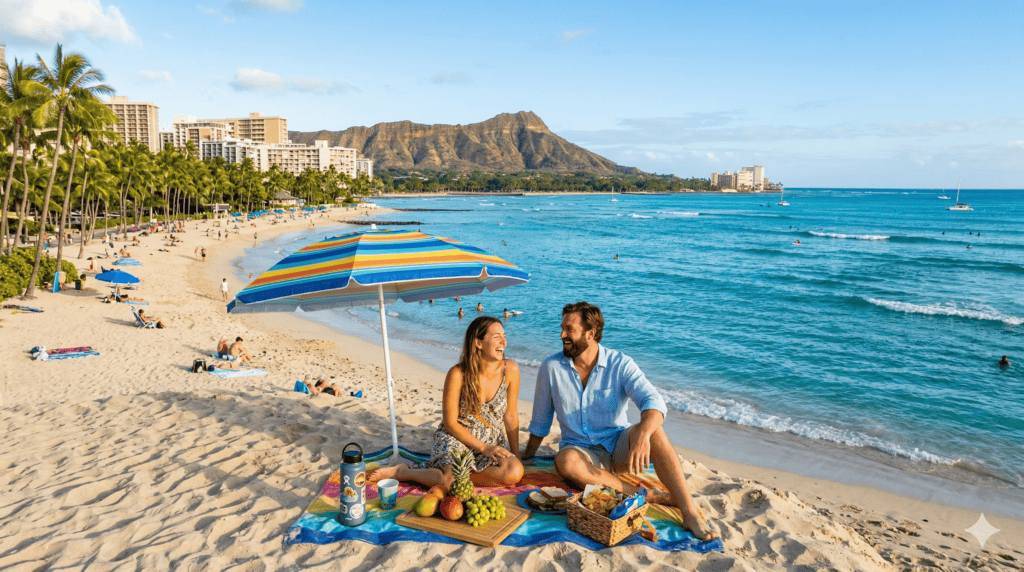
Waikiki has a reputation. Oceanfront hotels, $18 mai tais, and shopping bags that seem to multiply on their own. And honestly? That vibe is real. But here’s what the brochures don’t tell you: Waikiki rewards smart travelers more than almost any other beach destination. The beach is free. The sunsets are free. The cultural shows are free. And with a little planning, your biggest expenses—flights, lodging, food—can be trimmed significantly without sacrificing the trip you actually came for.
Most visitors overspend in Waikiki not because it’s unavoidably expensive, but because they don’t plan far enough ahead. Resort fees catch them off guard. Rental cars sit unused in hotel parking lots. Every meal ends up at a tourist-facing restaurant on Kalākaua Avenue. The good news: every one of those traps is avoidable.
Here’s a 2026-updated, Waikiki-specific breakdown of how to save money on every major category—flights, hotels, food, transportation, and activities—while still having the trip that made you book Hawaii in the first place.
1. Save the Most Before You Land: Flights and Timing
Your biggest single budget lever isn’t what you do in Waikiki—it’s when you go and how you book your flight. Flights to Honolulu (HNL) can swing by hundreds of dollars based on timing alone, and the savings you lock in before departure can’t be undone by a pricey dinner later.
The most budget-friendly windows to fly are generally late April through May (after spring break, before summer) and September through mid-October (kids are back in school, crowds thin out, hotels drop rates). These shoulder seasons consistently offer better flight and hotel pricing without sacrificing weather—Honolulu averages lows in the mid-70s even in “cooler” months.
- Set fare alerts: Google Flights, Hopper, and Going (formerly Scott’s Cheap Flights) will notify you when prices dip below your target.
- Fly midweek: Tuesday and Wednesday departures are often $50–$150 cheaper than Friday or Sunday.
- Book early once a deal appears: Good fares on Hawaii routes tend to disappear fast—don’t sit on them hoping for better.
- Consider flight + hotel packages: Sometimes bundling saves meaningfully on both, especially through major OTAs. Compare the total, not the individual line items.
Before you finalize any hotel booking, make sure you understand the full nightly cost—not just the advertised rate. Waikiki resort fees and Hawaii’s stacked tax system can add 25–35% to the rate you see on the search results page. For a complete breakdown of what you’ll actually pay, our Waikiki vacation cost guide walks through every fee category with real numbers.
2. Understand Resort Fees—and How to Minimize Them
Resort fees are one of the most common budget surprises in Waikiki. Many hotels charge $35–$55 per night in resort or “destination” fees on top of the base room rate—and these fees are typically mandatory, regardless of whether you use the amenities they cover. At a hotel charging a $45 resort fee, that’s an extra $315 over a 7-night stay.
A few strategies that help:
- Compare total cost, not nightly rate: Always calculate base rate + resort fee + parking + taxes before comparing hotels. A “cheaper” hotel with high fees may cost more in total.
- Look at non-resort hotels: Some boutique properties, condo-style hotels, and vacation rentals don’t charge resort fees. The trade-off may be fewer amenities, but the savings can be significant.
- Stay slightly inland: Hotels a few blocks from the beach are often $40–$80 per night cheaper than beachfront properties—and Waikiki is compact enough that a 5-minute walk is no hardship.
- Use hotel loyalty programs: Status members sometimes have resort fees waived. If you’re close to a status tier, it may be worth consolidating stays.
If you do need a kitchen (a great budget move—more on that below), vacation rentals through platforms like Vrbo or Airbnb can offer more space and a cooking setup for less than a hotel suite. Just verify the listing is legally permitted for short-term rental in that building before you book.
3. Save Money on Waikiki Food Without Eating Badly
Food can either quietly drain a Waikiki budget or become one of your best memories. The secret is a simple daily framework that mixes smart grocery runs with a few well-chosen restaurant experiences.
The strategy that works for most travelers:
- Breakfast: Grab groceries or a quick pastry most mornings. Yogurt, fruit, and coffee from a convenience store or the Mitsuwa Marketplace inside International Market Place costs a fraction of a hotel breakfast.
- Lunch: Plate lunches, poke bowls, and food court meals. Portions are generous, prices are honest, and you’ll eat the way locals actually eat.
- Dinner: Mix casual spots with 1–2 planned splurges over your trip. A memorable dinner at a great Waikiki restaurant hits differently when the other nights were intentional and affordable.
- Happy hour: This is your single biggest food-budget lever. Waikiki has excellent happy hour deals—discounted pupus, drink specials, and full appetizer menus at some surprisingly good restaurants. Our Waikiki happy hour guide covers 15 of the best options with current hours and prices.
For groceries, Waikiki Market is the most convenient full-service option in the neighborhood, with solid prepared food. Mitsuwa Marketplace (International Market Place) is excellent for Japanese pantry items, fresh sushi, and snacks at very reasonable prices. Foodland Farms at Ala Moana is a short ride away and is especially beloved for poke—often considered some of the best on the island at grocery prices. ABC Stores are everywhere and useful for water and snacks, though not the cheapest option for a full meal.
If you want specific restaurant recommendations by budget level, our guide to eating cheaply in Waikiki covers the best affordable spots, food trucks, and hidden gems locals actually use.
4. Use Free and Low-Cost Activities (Waikiki Has Plenty)
One of the best-kept open secrets about Waikiki is how much genuinely great entertainment costs nothing. The beach itself is obviously free—and one of the finest in the world. But there’s a surprising amount of cultural programming, live music, and outdoor activity that’s either free or costs under $10.
Free activities worth scheduling into your days:
- Kūhiō Beach Hula Show: Free outdoor hula and torch-lighting ceremony most evenings. This is a legitimately great night out—plan it as your “evening entertainment” rather than paying for dinner theater.
- Royal Hawaiian Center cultural programming: Free hula classes, ʻukulele demonstrations, and lei-making sessions are offered regularly. Check the schedule on arrival.
- Sunrise beach walk: Start any day with a walk along the Waikiki shoreline at sunrise. It’s free, gorgeous, and sets the tone for everything that follows.
- Sunset watching: The promenade along the beach is lined with great sunset viewing spots. No cover charge required.
For attractions that carry a cost but are worth budgeting for: Diamond Head State Monument (requires advance reservations for non-residents) runs about $5 per person and delivers one of the best panoramic views in all of Hawaii. Pearl Harbor’s visitor center is free, though some programs require reservations. Hanauma Bay Nature Preserve charges an entry fee and requires advance reservations—book as early as possible, as slots fill quickly.
When it comes to tours and activities like snorkeling, surfing lessons, or catamarans, deal sites can offer legitimate savings. Just apply the same logic as any purchase: a discounted thing you didn’t really want is still an expense. If you need help building your days, our 5-day Waikiki itinerary is a good starting framework that balances free and paid experiences.
5. Skip the Rental Car Most Days
This is the transportation tip that saves the most money with the least sacrifice: you almost certainly don’t need a rental car for every day of your trip. A full week of car rental in Waikiki, combined with hotel parking (often $35–$50 per day), can add $400–$700 to your total—often more than you’d spend taking the bus, ridesharing, and renting for only the days you truly need wheels.
Waikiki is compact. A centrally located hotel puts you within walking distance of the beach, most restaurants, shopping, and the main cultural attractions. For longer distances, Oʻahu’s public transit (TheBus) covers most of the island reliably and affordably. Load a HOLO card for easy tap-on/tap-off access and simplified fare.
The smarter approach for most visitors:
- Walk for in-Waikiki days: Beach, Kalākaua Avenue, Ala Moana, Diamond Head—all walkable or a short bus ride.
- Use rideshare for occasional trips: Lyft and Uber are available and often cheaper than a full day’s rental + parking for a single outing.
- Rent a car for 1–2 “big island days”: The North Shore loop, the Windward Coast, Hanauma Bay, multiple stops in one day—these are where a rental car earns its cost. Rent for just those days.
If you’re planning a full day trip out of Waikiki—North Shore, Ko Olina, or the east side—our guide to the best day trips from Waikiki includes transportation tips for each destination so you can decide whether a rental makes sense for each one.
6. Build a Budget Before You Go (Not After)
Most Waikiki overspending isn’t impulsive—it’s the result of not deciding in advance what you actually care about. Without a framework, you end up saying yes to everything moderately interesting, eating at whatever’s convenient, and renting a car because it felt easier.
A simple three-bucket approach works well:
- Bucket 1 – Must-do: The experiences you came to Hawaii specifically for. Spend what it takes here. Don’t negotiate yourself out of the thing you actually wanted.
- Bucket 2 – Nice-to-do: Things you’d enjoy if the deal is good. Hold these loosely—skip them if the price isn’t right or you’re already full and happy.
- Bucket 3 – Free filler: Beach days, sunset walks, cultural shows, market browsing. Load your itinerary with these and you’ll never feel like you’re missing out on a slow afternoon.
This framework also helps with restaurant decisions. Instead of eating out every meal at whatever is nearest, decide in advance which 2–3 dinners are your “splurge” restaurants and keep everything else casual. For ideas on where those splurge dinners should be, our guide to the best restaurants in Waikiki covers every budget tier from beachfront fine dining to legendary plate lunch spots.
7. Grocery Shop Like a Local—Even Without a Kitchen
You don’t need a full kitchen to save serious money on food. Even a mini-fridge (which most Waikiki hotel rooms have) opens up daily savings with a little pre-planning.
Useful grocery items for any Waikiki room:
- Bottled water and drinks (ABC Store or grocery markup vs. resort minibar is significant)
- Yogurt, fruit, and granola for quick breakfasts
- Sandwich supplies or instant noodles for late-night eating
- Snacks for beach days and day trips
- A bottle of wine or beer for in-room sundowners before going out
If you have a kitchenette—common in condo-style hotels and vacation rentals—the savings multiply quickly. Cooking even 2–3 meals over a week can easily save $150–$300 for a family of four. Our Waikiki breakfast guide includes a mix of sit-down spots and grab-and-go options, which is exactly the kind of flexibility that keeps the food budget balanced.
8. Shop with Intention (Not on Impulse)
Waikiki shopping is genuinely fun—and genuinely dangerous for budgets. The concentration of luxury retail on Kalākaua Avenue, combined with vacation-brain decision-making, creates the perfect conditions for purchases you’ll question on the flight home.
One rule that helps: before you browse, decide your categories. One local food gift (Kona coffee, macadamia nuts, local chocolate). One wearable souvenir if something truly catches your eye. One “treat yourself” item that you’ve thought about for more than five minutes. Everything else is window shopping.
Ala Moana Center is the best comparison-shopping destination near Waikiki—a massive open-air mall with hundreds of stores, including mid-range options alongside the luxury brands. If you’re going to spend, this is the best place to compare prices and find variety in one spot.
9. Know the True Cost of “Convenience” in Waikiki
A lot of Waikiki overspending doesn’t come from big decisions—it comes from small convenience purchases that accumulate over a week. A $6 bottle of water from the hotel gift shop. A $14 cocktail by the pool because it was right there. An impulse tour booked through the hotel concierge at full price instead of online.
A few habits that help:
- Always carry a reusable water bottle and refill it—Waikiki tap water is excellent.
- Book tours and activities online before your trip, not through the hotel concierge desk (where prices are typically higher).
- Have a snack in your bag on beach days so “I’m hungry” doesn’t become a $20 decision.
- Check hotel happy hour pricing before defaulting to the minibar.
None of these are major sacrifices. Together, they can easily save $100–$200 over a week’s trip—which is a nice dinner, a surf lesson, or just money that stays in your pocket.
Frequently Asked Questions
Is it possible to do Waikiki on a tight budget?
Yes—more so than most beach destinations at the same quality level. The beach is free. The weather is free. Cultural shows and morning walks cost nothing. The biggest expenses (flights, hotels) can be managed with timing and planning, and Waikiki has enough affordable food options that you don’t have to eat badly to eat cheaply. A realistic budget for a modest but enjoyable Waikiki trip runs about $150–$200 per person per day (excluding flights), though many travelers do it for less.
What is the cheapest time of year to visit Waikiki?
Late April through May and September through mid-October are generally the most affordable periods. These shoulder windows fall outside major school breaks and holidays, so flights and hotel rates tend to drop noticeably. Honolulu weather in these months is still excellent—warm, sunny, and slightly less humid than peak summer.
How do I avoid resort fee surprises in Waikiki?
Always search for total cost, not just the base rate. Most booking platforms now display resort fees during checkout, but some don’t show them until the final screen. Add the resort fee and parking cost to every hotel you’re comparing, then do the math at the nightly and per-trip level. Some boutique and condo-style hotels don’t charge resort fees at all, which can shift the math significantly even if their base rates seem similar.
Do I need a rental car for Waikiki?
Not for most of your trip. Waikiki is walkable, TheBus covers Oʻahu well, and rideshare is readily available. Where a rental car earns its cost is on 1–2 “big day trip” days—the North Shore, the Windward Coast, or any itinerary with multiple stops spread across the island. Renting for just those specific days, rather than the full trip, typically saves $200–$400 compared to keeping a car all week.
What are the best free things to do in Waikiki?
More than most people expect. The Kūhiō Beach Hula Show is a legitimately great free evening out. Royal Hawaiian Center offers regular free cultural classes. Diamond Head’s sunrise views and the Waikiki Promenade sunset walk are both free. The beach itself—one of the world’s most famous—costs nothing to enjoy. If you load your itinerary with free activities and treat paid experiences as deliberate choices, Waikiki can feel genuinely abundant on a modest daily spend.
How much should I budget for food in Waikiki?
Budget travelers who mix grocery meals with casual dining can manage on $40–$60 per person per day on food. Mid-range travelers who eat out most meals but choose casual spots and use happy hours typically spend $70–$100 per person per day. If you’re planning a couple of nicer dinners, add $50–$80 per person for each of those. Building a food plan in advance—rather than deciding each meal spontaneously—is the single biggest lever for keeping food costs in check.
Final Thoughts
The most expensive version of a Waikiki vacation happens by default—when you let convenience make every decision. The affordable version happens by design: booking flights during shoulder season, comparing total hotel costs (not just rates), eating where locals eat, skipping the daily rental car, and loading your days with Waikiki’s genuinely excellent free entertainment. Waikiki is only as expensive as your defaults.