
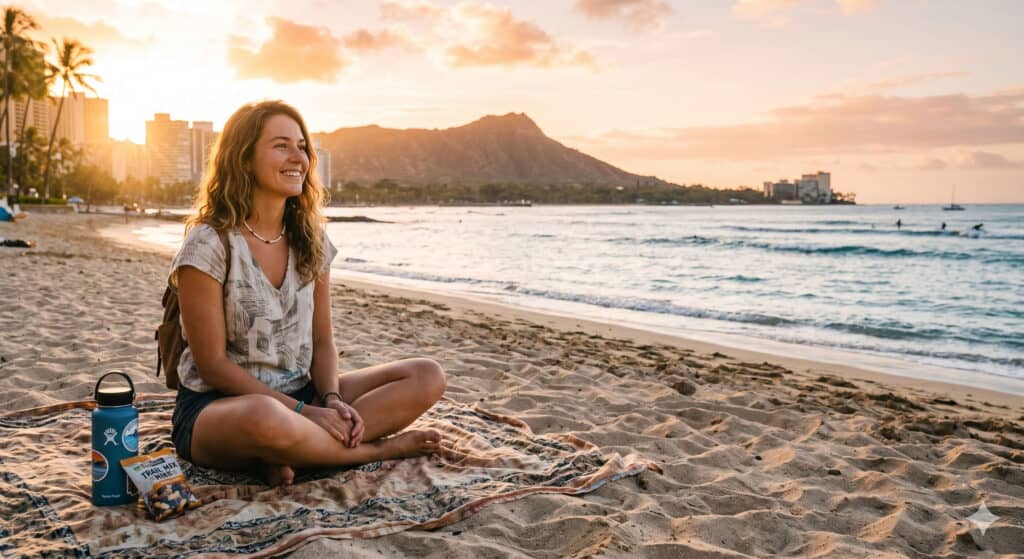
Waikiki has a reputation. Oceanfront hotels, $18 mai tais, and shopping bags that seem to multiply on their own. All of that is real. What the brochures skip: Waikiki rewards smart travelers more than almost any other beach destination in the Pacific. The beach costs nothing. The sunsets cost nothing. Two of the best cultural shows on the island are free. And with some planning upfront, your biggest line items—flights, lodging, food—can drop significantly without sacrificing anything you actually came for.
Most visitors overspend not because Waikiki is unavoidably expensive, but because they don’t plan far enough ahead. Resort fees catch them off guard. A rental car sits in a hotel garage for five days at $40 per night in parking. Every meal ends up at a tourist-facing restaurant on Kalākaua Avenue. Every one of those traps is avoidable. Here’s how to dodge them, category by category.
1. Start Saving Before You Land: Flights and Timing
Your single biggest budget lever isn’t anything you do once you’re in Waikiki — it’s when you go and how you book the flight. Fares to Honolulu (HNL) can swing by hundreds of dollars depending on timing, and savings locked in before departure can’t be undone by a splurge dinner later.
The most affordable windows to fly are generally late April through May (after spring break, before the summer rush) and September through mid-October (kids back in school, crowds thin, hotel rates drop). Honolulu weather in these months is still excellent — warm, sunny, and slightly less humid than peak August. The difference in airfare between a shoulder week and peak summer can easily run $300–$500 round-trip per person.
- Set fare alerts: Google Flights, Hopper, and Going (formerly Scott’s Cheap Flights) will notify you when prices dip toward your target. Let the deals come to you instead of checking manually every few days.
- Fly midweek: Tuesday and Wednesday departures often run $50–$150 cheaper than Friday or Sunday on popular Hawaii routes.
- Move fast on a good fare: Hawaii deals on good routes don’t linger. If you see something solid, book it — rates rarely recover.
- Check flight + hotel packages: Sometimes bundling saves more than booking each leg separately, especially through major OTAs. Compare the total cost, not the individual line items.
Before you finalize any hotel, make sure you understand what you’re actually paying — not just the advertised nightly rate. Our Waikiki vacation cost guide breaks down every fee category — resort fees, Hawaii taxes, parking — with real numbers so nothing catches you off guard at checkout.
2. Understand Resort Fees Before You Book
Resort fees are the most common sticker shock in Waikiki. Many hotels charge $35–$55 per night in mandatory “destination” or “resort” fees on top of the advertised room rate — regardless of whether you touch the pool, the beach chairs, or the fitness center those fees supposedly cover. At $45 a night over a 7-night trip, that’s $315 added to a stay you thought you’d priced accurately.
A few strategies that help:
- Calculate total nightly cost: Base rate + resort fee + parking + taxes, before comparing hotels. The “cheaper” room usually isn’t once you run the actual math.
- Look at non-resort hotels: Boutique properties, condo-style hotels, and legally permitted vacation rentals often carry no resort fees at all, which can flip the comparison even when the base rates look similar.
- Stay a couple blocks inland: Waikiki is compact. A 5-minute walk from the beach often means rooms $40–$80 per night cheaper — with no real sacrifice except the walk.
- Check loyalty status: Elite members of some hotel programs occasionally have resort fees waived. If you’re near a status tier, it may be worth consolidating stays to hit it.
If you want a kitchen — a genuine budget multiplier — condo-style rentals through Vrbo or Airbnb often deliver more space and a cooking setup for less than a comparable hotel suite. Just verify that the listing is legally permitted for short-term rental in that building before committing.
3. Save Money on Food Without Eating Badly
Food in Waikiki can quietly drain a budget — or become some of the trip’s best memories. The difference is usually a daily framework instead of defaulting to whatever’s convenient and nearby.
The approach that works for most travelers: keep breakfast cheap (yogurt and fruit from a grocery store or a quick pastry runs $5–$8, not $25 from the hotel restaurant), eat plate lunches and poke bowls for lunch at the prices locals actually pay ($12–$16 for a full meal at most spots), then mix casual dinners with 1–2 intentional splurges over the full trip. A great dinner lands differently when it’s a real choice, not a default.
Happy hour is your biggest food-budget lever. Waikiki has excellent happy hour deals — discounted pupus, drinks, and full appetizer menus at some genuinely good restaurants. Our Waikiki happy hour guide covers 15 of the best options with current hours and what’s worth ordering.
For groceries, Waikiki Market is the most convenient full-service option in the neighborhood, with solid prepared food. Mitsuwa Marketplace inside International Market Place is excellent for Japanese pantry staples, fresh sushi, and snacks at honest prices. Foodland Farms at Ala Moana — a short rideshare or bus ride — is locally loved for poke at grocery prices, often some of the best on the island. ABC Stores are useful for water and snacks but aren’t your best move for building a day’s worth of meals. For a full breakdown of where to eat affordably, our guide to eating cheaply in Waikiki covers the best spots, food trucks, and local gems worth knowing.
4. Take Advantage of Waikiki’s Free Entertainment
One of the best open secrets about Waikiki is how much genuinely great entertainment costs nothing. The beach is obviously free — and it’s one of the finest in the world. But there’s a real calendar of cultural programming, live music, and outdoor activity that’s either free or well under $10.
Free activities worth building into your schedule:
- Kūhiō Beach Hula Show: Free outdoor hula and torch-lighting ceremony, held Tuesdays and Saturdays at 6:30 PM. This is a legitimately great evening out — plan it as your entertainment instead of paying for dinner theater.
- Royal Hawaiian Center cultural programming: Free hula classes, ʻukulele demonstrations, and lei-making sessions offered throughout the week. Check the current schedule when you arrive.
- Sunrise beach walk: Any morning, free, and hard to beat for starting a day right.
- Sunset from the Waikiki Promenade: The seawall walk at dusk is one of the best things you can do here, and it costs absolutely nothing.
For paid activities worth budgeting: Diamond Head State Monument requires advance reservations for non-residents and runs about $5 per person — one of the best-value hikes in Hawaii. Pearl Harbor’s visitor center is free, though some programs require tickets. Hanauma Bay charges an entry fee and requires advance reservations that fill quickly — book early. When you need help mapping your days, our 5-day Waikiki itinerary balances free and paid experiences across a full trip without padding the schedule with things you don’t actually want to do.
5. Skip the Rental Car Most Days
This is the tip that saves the most money with the least real sacrifice: you almost certainly don’t need a rental car for every day of your trip. A full week with a car in Waikiki — combined with hotel parking that commonly runs $35–$50 per night — can add $500–$700 to your total. That’s a significant number for a vehicle that sits idle while you’re at the beach.
Waikiki is compact. A centrally located hotel puts you within easy walking distance of the beach, most restaurants, shopping, and the main cultural sites. Oʻahu’s public transit — TheBus — covers the island reliably for about $3 per ride with a HOLO card (the reloadable tap-on/tap-off transit card, available at stores across Waikiki).
The smarter approach for most visitors: walk for in-Waikiki days, use rideshare for occasional longer outings where the math beats a full rental, and book a car for only the 1–2 days when you genuinely need the flexibility — North Shore loops, Windward Coast, multiple stops spread across the island. Those are the days a rental earns back its cost.
If you’re planning a big day outside Waikiki, our guide to the best day trips from Waikiki includes transportation notes for each destination so you can decide whether a rental is worth it for that specific outing.
6. Build Your Budget in Three Buckets Before You Land
Most Waikiki overspending isn’t impulsive — it’s what happens when you arrive without a framework and let convenience make every decision. A simple three-bucket approach helps before you book a single restaurant or tour.
Bucket 1 — Must-do: The experiences you came to Hawaii specifically for. Spend fully here. Don’t negotiate yourself out of the thing that made you book the trip in the first place.
Bucket 2 — Nice-to-do: Things you’d enjoy if the deal is right. Hold these loosely — skip them if the price isn’t right or you’re already full and happy with what you’ve done.
Bucket 3 — Free filler: Beach days, sunset walks, cultural shows, market browsing. Load your schedule with these and slow afternoons never feel like you’re missing out on something.
This framework applies especially to restaurants. Rather than eating out every meal at whatever’s nearest, decide in advance which 2–3 dinners are real splurges and keep everything else casual and intentional. For those nights, our guide to the best restaurants in Waikiki covers every budget tier from beachfront fine dining to the plate lunch spots locals actually go back to.
7. Stock Your Room on Day One (Even Without a Kitchen)
You don’t need a kitchenette to save real money on food. Even a standard mini-fridge — included in most Waikiki hotel rooms — opens up meaningful daily savings with a quick grocery run on arrival day.
Items worth grabbing early: bottled water or a refillable bottle (Waikiki tap water is excellent — buy a reusable bottle once and refill it all week rather than buying single-use every day), yogurt and fruit for weekday mornings, snacks for beach days and day trips, and something light for late-night hunger that doesn’t become a $20 room service decision. A bottle of wine or a couple of beers for lanai sundowners before heading out is also a classic budget move — hotel bar prices in Waikiki are not modest.
If you’re in a condo-style rental with a full kitchenette, the math gets much better. Cooking even 2–3 meals over a week can save a family of four $150–$300 compared to eating out every meal. It also shifts your relationship with dining out — it starts to feel like a real choice rather than the only option.
8. Shop with Intention, Not on Impulse
Waikiki shopping is genuinely fun — and genuinely dangerous for budgets. The concentration of luxury retail along Kalākaua Avenue, combined with vacation-brain, is designed to separate you from money you didn’t plan to spend. One rule that helps: before you browse, decide your categories. One local food gift (Kona coffee, macadamia nuts, local chocolate). One wearable souvenir if something actually catches your eye for more than ten seconds. One “treat yourself” item you’ve thought about for more than five minutes. Everything else is window shopping.
Ala Moana Center is the best comparison-shopping destination within easy reach of Waikiki — a massive open-air mall with mid-range stores alongside the luxury brands, where you can actually compare prices before committing. If you’re going to spend on something, this is the right place to do it deliberately rather than impulse-buying on the main strip.
9. Stop Paying the Convenience Tax
A lot of Waikiki overspending doesn’t come from big decisions. It comes from a string of small convenience purchases across the week that add up quietly in the background. A $7 bottle of water from the hotel gift shop. A $15 poolside cocktail because it was right there. A snorkeling tour booked through the hotel concierge at a 30% premium because nobody thought to look online before arriving.
Habits that chip away at this without requiring any sacrifice: carry a reusable water bottle and refill it everywhere (tap water in Waikiki is excellent), book tours and activities online before your trip rather than through the concierge desk, keep a snack in your beach bag so midday hunger doesn’t turn into a $20 decision, and check hotel happy hour pricing before defaulting to the minibar. None of these feel like budget travel. Together, they can easily save $100–$200 over a week — which is a surf lesson, a great dinner, or just money that stays in your pocket on the flight home.
Frequently Asked Questions About Saving Money in Waikiki
Is it possible to do Waikiki on a tight budget?
Yes — more so than most beach destinations at the same quality level. The beach is free, the weather is free, and Waikiki has enough affordable food (plate lunches, poke bowls, grocery runs) that you don’t have to eat badly to eat cheaply. The biggest expenses — flights and hotels — can be managed with timing and planning. A realistic budget for a modest but genuinely enjoyable Waikiki trip runs about $150–$200 per person per day excluding flights, though many travelers do it for less with some planning.
What is the cheapest time of year to visit Waikiki?
Late April through May and September through mid-October are consistently the most affordable windows. These shoulder periods fall outside major school breaks and holidays, so both flight and hotel rates tend to drop noticeably. Honolulu weather in these months is still excellent — warm, sunny, and slightly less humid than peak summer — so you’re not giving up much by going then.
How do I avoid resort fee surprises in Waikiki?
Always look at total cost, not just the nightly rate. Most booking platforms now display resort fees at checkout, but some hold them until the final screen. Add the resort fee and parking cost to every hotel you’re comparing and do the math at the per-trip level. Some boutique and condo-style hotels charge no resort fees at all — which can completely flip the comparison even when the base rates look similar on the search results page.
Do I really need a rental car in Waikiki?
Not for most of your trip. Waikiki is walkable, TheBus covers Oʻahu reliably for about $3 a ride, and rideshare is readily available. Where a rental car earns its cost is on 1–2 full day-trip days — the North Shore, Windward Coast, or any itinerary with multiple stops spread across the island. Renting only for those specific days rather than the full trip typically saves $200–$400 compared to keeping a car all week.
What are the best free things to do in Waikiki?
More than most people expect. The Kūhiō Beach Hula Show (Tuesdays and Saturdays at 6:30 PM) is a legitimately great free evening out — plan it like an event, not an afterthought. Royal Hawaiian Center offers free hula, ʻukulele, and lei-making classes throughout the week. The Waikiki Promenade at sunset and any sunrise beach walk are both free and genuinely worth putting on the schedule. And the beach itself — one of the world’s most famous — costs nothing to enjoy for as long as you want.
How much should I budget for food in Waikiki?
Budget travelers who mix grocery meals with casual dining can manage on $40–$60 per person per day. Mid-range travelers eating out most meals but choosing casual spots and leaning into happy hours typically spend $70–$100 per person per day. If you’re planning a couple of nicer dinners, add $50–$80 per person for each of those. Building a loose food plan in advance rather than deciding each meal spontaneously is the single biggest lever for keeping the food budget in check without feeling like you’re on a budget.
The expensive version of a Waikiki vacation happens by default — when you let convenience make every call. The affordable version happens by design: shoulder season flights, total-cost hotel comparisons, eating where locals eat, skipping the daily rental car, and filling your days with Waikiki’s genuinely excellent free entertainment. Grab a HOLO card when you land, hit a grocery store on day one, and give yourself permission to slow down on the beach between paid experiences. The beach is free. The sunsets are free. Everything else is a choice.