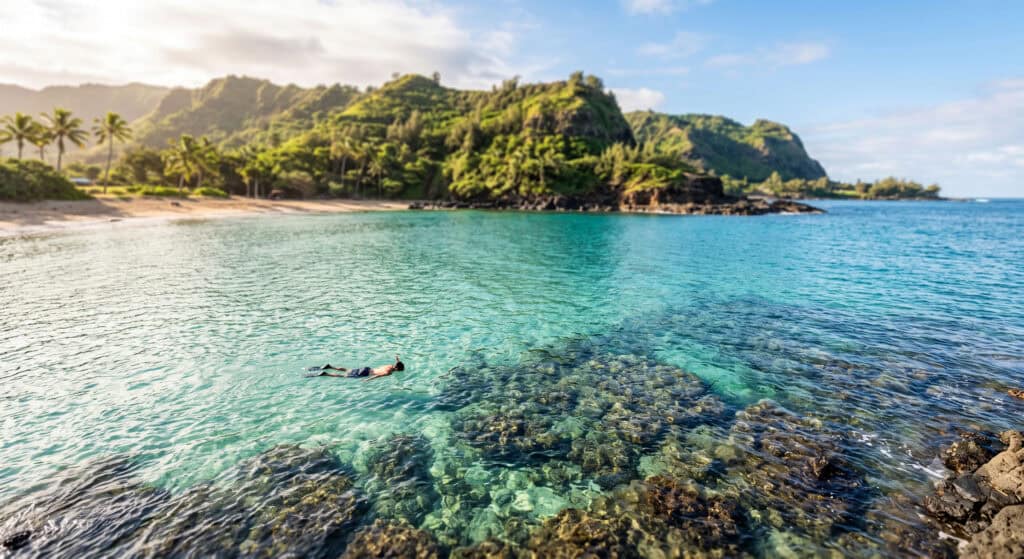
Most people picture the North Shore as a winter show — thirty-foot waves, packed lookout points, professional surfers dropping into barrels that would end an amateur’s day fast. That part’s true from November through April. But flip the calendar to May, and North Shore Oahu snorkeling becomes the real story. The same breaks that terrify beginners in January go flat and clear by summer, turning Shark’s Cove, Three Tables, and a handful of nearby coves into some of the best reef snorkeling on the island — with a fraction of the crowd you’ll find at Hanauma Bay.
If you’re in Oahu between May and September 2026, this stretch of coastline deserves a full day on your itinerary, not just a scenic drive-by. Here’s what the beaches are actually like in summer, which ones fit your group’s skill level, and how to string together a day trip from Waikiki that covers snorkeling, food trucks, and a sunset worth the drive home.
Why Summer Flips the Script on North Shore Oahu
The North Shore’s reputation runs entirely on winter. Between November and April, North Pacific storms push swells up to 30 feet at Waimea Bay and Banzai Pipeline, drawing the world’s best surfers and enormous crowds of spectators. It’s genuinely incredible to watch in person, and genuinely off-limits for casual swimmers.
Come May, the storm track shifts north and swells drop to 1–3 feet. Water temperature settles around 80–82°F, and visibility on calm mornings can stretch 50–80 feet — more than enough to watch a sea turtle cruise past 20 feet below you. Shark’s Cove, the best of the bunch, is genuinely dangerous in winter thanks to rip currents and surge, so the seasonal flip isn’t a marketing angle, it’s a real safety line. Summer also happens to be Oahu’s shoulder season, meaning lighter crowds and easier parking on weekday mornings.
Thinking about working a full North Shore day into your trip? Our guide to the 20 best day trips from Waikiki covers how to fit it around everything else on your list.
Shark’s Cove: The Best North Shore Oahu Summer Snorkeling Spot
Shark’s Cove earns its reputation as the top shore snorkel site on the North Shore, and one of the best on the island. The name has nothing to do with actual sharks — it comes from the aerial silhouette of the outer reef, said to resemble a shark’s fin. What you’ll actually find underwater is far friendlier: butterflyfish, parrotfish, green sea turtles, octopus, and moray eels moving through lava caves and coral heads.
The cove sits inside the Pūpūkea Marine Life Conservation District, a roughly 100-acre protected zone (expanded in 2002 to include Waimea Bay) where fishing and removing marine life are banned. That protection shows underwater — the fish here are noticeably less skittish than at unprotected reefs, and the coral is healthier.
The snorkeling area splits into two zones. The shallow southern section has tide pools behind a natural lava wall — a gentler entry that works for families with kids who aren’t strong swimmers yet. The deeper northern section opens into 15–20 feet of water with lava caves and arches, and noticeably more marine life, better suited to intermediate and experienced snorkelers.
- Entry: rocky lava, steep dirt path from parking — water shoes aren’t optional
- No lifeguards; free entry, no reservation required
- Parking: roughly 40–50 spots at Pupukea Beach Park, plus street parking on Kamehameha Highway
- Pro tip: arrive before 9 AM on weekdays for the calmest water and easiest parking
Food trucks sit right across the street, and a Foodland is a two-minute walk away if you forgot sunscreen or water.
Three Tables and Kuilima Cove: The Easier Alternatives
Three Tables sits at the southern end of the same beach park, a short walk from Shark’s Cove, and it’s the better call for beginners or anyone traveling with small kids. Sandy entry beats Shark’s Cove’s rocky one, and the namesake flat reef sections sit around 15 feet down near shore. Farther out, depth drops to 30–45 feet with ledges and lava tubes for stronger swimmers. Marine life overlaps heavily with Shark’s Cove since it’s the same conservation district — expect reef fish, the occasional turtle, and if you’re lucky, a moray tucked into a ledge.
Farther northeast, Kuilima Cove sits on the grounds of the Ritz-Carlton Oahu, Turtle Bay — Turtle Bay Resort’s flag since its 2024 rebrand. A natural break in the reef keeps this cove calm even when everything else on the coast is a little choppy, making it the most beginner-friendly snorkel spot on this stretch. It’s public beach access, so you don’t need to be a hotel guest, and it’s a reliable backup on days when the surf report has Shark’s Cove looking rougher than you’d like. Restrooms and food service are available through the resort.
Waimea Bay: Great for Swimming, Skip It for Snorkeling
Waimea Bay is the most famous beach on the North Shore and worth the stop, but in summer it’s a swimming beach, not a snorkeling one. Hawaii’s Division of Aquatic Resources classifies it as primarily a swimming and surfing destination, and the sandy bottom doesn’t offer the reef structure that makes snorkeling worthwhile.
What it does offer is one of the best summer swim beaches on the island: calm, clear water, a large uncrowded bay on weekday mornings, and the rock jump on the north end that’s become a rite of passage for adventurous visitors. Lifeguards are on duty during the summer season — a nice contrast to the other North Shore spots. Waimea Valley, just inland, adds a botanical garden and waterfall trail that makes a good 45-minute add-on before or after the beach.
Building the Perfect North Shore Day Trip from Waikiki
The North Shore is about 50–65 minutes from Waikiki via H1 West to H2 North, then Kamehameha Highway. A rental car is worth it here — rideshare works but limits how freely you can move between stops. Our guide on whether you need a rental car in Waikiki walks through the tradeoffs.
Leave by 7:30 AM and you’ll beat the parking crunch at Shark’s Cove. Spend 60–90 minutes there while the water’s calmest, then walk south to Three Tables for a second, easier swim. Head into Hale’iwa around noon for lunch — Giovanni’s White Shrimp Truck is the North Shore’s most famous stop, garlic butter shrimp plates run about $15–20, and it’s cash only, so budget accordingly. Shave ice from Matsumoto’s or Aoki’s afterward is close to mandatory.
If anyone in your group has wanted to try surfing, Hale’iwa in summer is the place — gentle, consistent swell makes it one of the best beginner conditions on the island. Group lessons typically run $65–90 per person for about 90 minutes. Afterward, swing back toward Pupukea and stop at Laniakea Beach, where green sea turtles regularly haul out to rest on the sand. Volunteers from Malama na Honu are usually on hand, and their guidance is to stay at least 10 feet back and let the turtles rest undisturbed. Round out the afternoon at Kuilima Cove or Sunset Beach before budgeting 60–75 minutes for the drive back to Waikiki.
What to Pack, and Whether to Book a Tour
Gear rentals don’t exist at the beaches themselves, so plan ahead. Water shoes are non-negotiable at Shark’s Cove — cheap neoprene pairs run $15–25 at any Waikiki surf shop. Rent snorkel gear in Waikiki the night before for $10–15 a day, or bring your own. Hawaii law requires reef-safe sunscreen (no oxybenzone or octinoxate); bring it from Waikiki since convenience-store prices at Pupukea run high. Pack cash — several food trucks along this stretch still don’t take cards — plus a dry bag for your phone and a liter of water per person beyond what you plan to buy.
Most visitors comfortable driving in Hawaii will get more out of going it alone — you control timing, and arriving early matters more than almost anything else for parking. Guided snorkel tours still make sense if you’d rather skip the gear logistics or want someone else handling the driving; expect to pay in the neighborhood of $85–130 per adult for a half-day tour from Waikiki. If you’re also planning a Hanauma Bay morning on the same trip, our full Hanauma Bay reservation and fee guide covers that separately — it’s a more structured experience that pairs well with a looser North Shore day. Families juggling logistics for the whole trip might also find our Waikiki family guide useful for packing and pacing beyond just this one day.
Frequently Asked Questions
When is the best time to snorkel North Shore Oahu?
May through September is the window. Swells drop to 1–3 feet, water warms to 80–82°F, and visibility can reach 50–80 feet on calm days. Outside that window, don’t attempt Shark’s Cove or Three Tables without checking current surf reports first.
Is Shark’s Cove safe for beginners?
It’s best suited to intermediate snorkelers or confident adult beginners — the rocky entry takes some coordination, and there are no lifeguards. True beginners and young kids do better at Three Tables’ sandy entry, just south in the same park, or at Kuilima Cove at Turtle Bay.
Do you need a reservation for Shark’s Cove?
No. It’s a public beach with free parking and no entry fee — a real difference from Hanauma Bay, which requires an advance reservation and charges admission. Parking can still get tight on summer weekends, so arriving before 9 AM on weekdays is your best bet.
Are there actually sharks at Shark’s Cove?
No — the name refers to the shape of the outer reef seen from above, not the presence of sharks. Shark encounters here are no more common than at any other Oahu snorkel spot.
How do you get from Waikiki to the North Shore?
Take H1 West to H2 North, then Kamehameha Highway (Hwy 83) through Hale’iwa to Pupukea — about 50–65 minutes without traffic. A rental car gives you the most flexibility for hitting multiple beaches; guided tours and shuttles from Waikiki are available if you’d rather not drive.
The North Shore’s summer window is still one of Oahu’s more underrated stretches of coast — most of the attention stays fixed on winter’s wave show, which means summer snorkelers get some of the island’s best reef access without Hanauma Bay’s crowds. If you’re mapping out the rest of your trip alongside this one, our 5-day Waikiki itinerary shows how to fit a North Shore day in without crowding out everything else.