
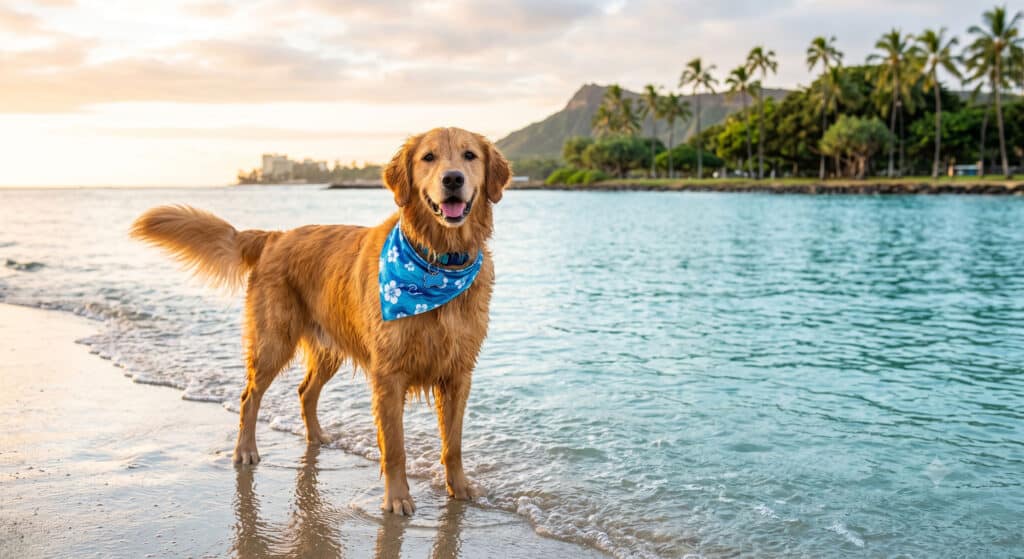
Most mainland travelers planning a Hawaii trip have never really thought about the “can I bring my dog?” question until they start Googling it — and then the reading gets alarming fast. A 120-day quarantine? Really? The good news: that worst-case scenario is entirely avoidable with the right preparation started early enough. Thousands of dogs land at Honolulu International Airport every year and walk out with their owners the same day, no quarantine at all.
This guide covers everything you need to navigate pet-friendly Oahu with your dog: the exact paperwork and timeline for making it through Hawaii’s import process without a hitch, the best dog-friendly beaches on the island (including the one stretch within the Waikiki hotel corridor where dogs are actually welcome), pet-friendly hotels with verified 2026 policies, activities for both of you, what to pack, and straight answers to the questions we hear most. Let’s get into it.
Before You Fly: Hawaii’s Pet Import Rules Explained
Hawaii is the only U.S. state with a rabies-free status — and the state protects it with a level of seriousness that surprises first-timers. Every dog arriving in Hawaii is subject to inspection, and if your paperwork isn’t in order, your dog faces up to 120 days of quarantine. That’s not a scare tactic. It’s the actual rule. The upside: with thorough preparation started early enough, most dogs qualify for Direct Airport Release — meaning your dog comes home with you the same day you land, with no quarantine period at all.
Here’s exactly what’s required for Direct Airport Release at Honolulu (HNL):
- ISO-compliant microchip — must be implanted before any rabies vaccinations are given. If the chip was placed after the first shot, that vaccination doesn’t count and you restart the entire clock.
- Two rabies vaccinations — both documented and meeting state timing requirements; they must be given at least 30 days apart, with the most recent meeting the state’s validity window.
- OIE-FAVN blood titer test — done at a USDA-approved lab. The test must pass at 0.5 IU/ml or greater, and yyou must wait at least 30 days from when the lab receives the blood sample before your dog can enter Hawaii under Direct Airport Release (the test result stays valid for up to 36 months, so testing early gives you a wide window). This is the step that sets the whole timeline.
- Health certificate from your vet — issued within 14 days of travel, on official letterhead.
- Direct Airport Release fee — currently $185 per pet at HNL. Submit your full document package to the Animal Quarantine Station at least 10 days before arrival, or the fee increases to $244.
If your FAVN timing doesn’t leave 120 days before your travel dates, there’s still a path forward: the 5-Day-Or-Less program, which allows a short quarantine of up to five days at the state facility ($244 per pet). Not the ideal outcome, but workable if your prep started a bit late.
The bottom line: start this process at least four to six months before your trip. The real minimum is just a 30-day wait after your dog’s FAVN blood sample is received by the lab, but the two rabies vaccinations 30 days apart, 6-to-8-week lab processing times, and document lead times add up fast — you cannot rush it. For official, current requirements, check the Hawaii Department of Agriculture’s animal quarantine page at dab.hawaii.gov. Rules can change, and the state does update them.
A note on airline travel: Most major carriers allow small dogs (typically under 20 lbs including carrier) in the cabin on Hawaii routes. Larger dogs travel as checked cargo. Several airlines have tightened their in-cabin weight limits on Hawaii routes specifically — contact your airline directly, well before booking, and confirm their current Hawaii pet policy.
The Best Dog-Friendly Beaches on Oahu
The first question most Waikiki visitors with a dog want answered: most of Waikiki Beach does not allow dogs. There is one exception worth knowing about.
Duke Kahanamoku Beach — also called Fort DeRussy Beach — is the only stretch within the Waikiki hotel corridor where leashed dogs are permitted, specifically below the high-tide line. It’s a wide, calm beach with good sand, adjacent to Fort DeRussy Park’s grassy areas, which are perfect for a post-swim shakeoff. Early mornings before the crowds arrive are the sweet spot. One important note: Ala Moana Beach Park does not allow dogs, which catches a lot of visitors off guard given how close it is.
Venture beyond Waikiki and Oahu opens up considerably for dog owners.
Kailua Beach Park — Most locals will tell you this is the best beach on the island, full stop. Two miles of powdery white sand, calm turquoise water, and a laid-back windward-side vibe that feels completely different from the Waikiki buzz. It’s roughly 45 minutes from Waikiki, but it’s a straightforward drive. If you’re planning a full day in Kailua, our guide to the best day trips from Waikiki has a full Kailua route with other stops worth combining.
Kalama Beach Park — Kailua’s quieter neighbor to the south, with less foot traffic and more breathing room. A great option for shy or reactive dogs. Weekday mornings are ideal.
Waimānalo Bay Beach Park — The longest sandy stretch on Oahu, backed by the dramatic Koʻolau Mountains and far fewer crowds than Kailua. Leashes required; waste stations available on-site.
Lanikai Beach — Arguably the most photogenic beach on the island, with turquoise water and the twin Mokulua Islands in the frame. Parking is limited to residential streets and there are no restrooms; arrive early and be prepared to walk.
Kuliʻouʻou Beach Park — A gentle, shallow local favorite on the southeast shore. The calm water makes it perfect for small breeds or dogs new to the ocean. Low-key crowd, shaded picnic tables, and a parking lot that actually has room.
At all Oahu beaches: leashes are required at all times, dogs must stay below the high-tide line, and waste disposal is actively enforced. Hot sand can burn paw pads by mid-morning — plan beach visits for early morning or late afternoon.
Pet-Friendly Hotels in Waikiki: 2026 Verified Policies
Hotel pet policies in Waikiki vary more than you’d expect — weight limits, breed restrictions, and fee structures differ significantly by property. Here are the verified options with real 2026 policies, so you’re not discovering surprises at check-in.
| Hotel | Pet Policy Highlights |
|---|---|
| Hyatt Place Waikiki Beach | One dog or cat up to 50 lbs, or two pets up to 75 lbs combined; $100/pet non-refundable fee (1–6 nights); housekeeping won’t enter if pet is left alone; grassy relief area on property |
| Hyatt Centric Waikiki Beach | Pets welcome; complimentary dog beds and water bowls; notify hotel 3 days before arrival |
| Outrigger Waikiki Beach Resort | Pet-friendly; additional fee applies; dogs and cats welcome |
| Alohilani Resort Waikiki Beach | Pets of any size; $100/pet per stay |
| Queen Kapiolani Hotel | Up to 2 pets, combined max 100 lbs; $300/stay |
| Twin Fin Hotel | 2 pets up to 75 lbs; $100/pet per stay |
| Hilton Garden Inn Waikiki Beach | 2 pets up to 75 lbs; $75 (1–4 nights), $125 for longer stays |
| White Sands Hotel | Known for welcoming larger dogs; confirm current policy directly before booking |
Fort DeRussy Beach — the only dog-friendly beach within the Waikiki hotel corridor — sits at the western end of the hotel strip, directly adjacent to the Hale Koa Hotel. If you’re eligible for the Hale Koa (it’s an Armed Forces Recreation Center property), our Hale Koa insider tips guide covers the property layout, its proximity to Fort DeRussy Beach, and what to know before you book.
For more space or lower pet fees, vacation rentals through VRBO and Airbnb are worth serious consideration. Filter for “pets allowed” and read the house rules carefully — weight limits and breed restrictions vary by owner, and some Honolulu condos welcome large dogs at no extra charge. Pet fees layer on top of regular resort fees, so it’s worth understanding the full cost before you commit to a hotel. Our breakdown of Waikiki resort fees explains what hotels charge, what’s worth it, and which properties skip the fee altogether.
Always call ahead to confirm current policies before booking. Pet fees and weight limits change, and hotel websites don’t always reflect recent updates.
Things to Do in Oahu with Your Dog
Morning walks along the Ala Wai Canal are a Waikiki ritual worth adopting. The flat, paved path runs along the canal just inland from the hotel strip — shaded in stretches, popular with local joggers and dog walkers, and a genuinely pleasant way to start the day before the heat takes over. Your dog will almost certainly make friends before the walk is over.
Kapiʻolani Park at the Diamond Head end of Waikiki welcomes leashed dogs on its wide lawns and winding paths. Weekday mornings are close to serene. Weekends bring out hula troupes, kite fliers, families, and a lot of other dogs, which has its own appeal. For a full picture of what’s around the park and throughout Waikiki, our guide to things to do in Waikiki lays out the neighborhood activity by activity.
Off-leash dog parks on Oahu:
- Diamond Head Bark Park — spacious and well-maintained, with water fountains and a separate fenced area for small dogs.
- Hawaii Kai Dog Park — large and small dog zones on the East side of the island. If you’re driving out to Hawaii Kai anyway, pairing this with the Koko Head trail makes for a full East Oahu day — hike in the morning, dog park in the afternoon.
- Mother Waldron Dog Park — in Kakaʻako, a short drive from Waikiki. Convenient for an afternoon off-leash session without committing to a long drive.
Dog-friendly dining: Aloha Beer Co. in Kakaʻako has an actual dog menu — food made specifically for dogs — which makes it one of the more memorable stops for pet-owning visitors to Oahu. Worth the short drive from Waikiki.
What to Pack for Your Dog in Hawaii
Packing for a dog on a Hawaii trip takes a bit more thought than a standard weekend away. Here’s what consistently proves worth the luggage space.
Non-negotiable items: collapsible water bowl and a dedicated water bottle (airport pet relief areas don’t reliably have working water fountains), leash and collar with current ID tags listing your mobile number, waste bags in quantity, all regular medications plus a day’s extra supply, and your vaccination records and import documentation — keep these in your carry-on, not checked luggage.
Worth the bag space: pet-safe sunscreen for light-coated dogs (nose, ears, and belly take real sun on open beach days), a waterproof towel for post-beach car rides, a life jacket if your dog is a strong swimmer who tends to push their limits — shore breaks on some Oahu beaches can catch dogs off guard — and a portable shade tent for long mornings on open sand.
A few heat rules worth taking seriously: visit beaches in early morning or late afternoon (sand can get hot enough to burn paw pads by mid-morning), never leave your dog in a parked car (temperatures spike within minutes, and it’s illegal in Hawaii), and bring more fresh water than you think you’ll need. Dogs dehydrate faster in Hawaii’s heat and humidity than most owners expect. For the full human packing side of your trip, our Waikiki packing guide has the complete list.
Frequently Asked Questions About Traveling to Oahu with Your Dog
Are dogs allowed on Waikiki Beach?
Most of Waikiki Beach does not allow dogs. The exception is Duke Kahanamoku Beach (also known as Fort DeRussy Beach), where leashed dogs are permitted below the high-tide line. It’s the only dog-friendly beach within the Waikiki hotel corridor. Ala Moana Beach Park, just west of Waikiki, does not permit dogs — a common tourist mistake.
What is Hawaii’s dog quarantine rule?
Every dog entering Hawaii must meet strict import requirements because Hawaii is the only rabies-free state in the U.S. Dogs that don’t qualify for Direct Airport Release can be held in quarantine for up to 120 days. With proper preparation started four to six months before travel — microchip, two rabies vaccinations, passing OIE-FAVN blood test, and health certificate — most dogs qualify for Direct Airport Release and come home with their owners the same day they arrive. Visit dab.hawaii.gov for current official requirements.
What is the difference between Direct Airport Release and the 5-Day-Or-Less program?
Direct Airport Release (DAR) means your dog is cleared at the airport and leaves with you the same day — zero quarantine. It requires completing all import steps, including at least a 30-day wait after the FAVN blood test is received by the lab (the test itself stays valid for up to 36 months). The 5-Day-Or-Less program is a fallback option where the dog stays at the state quarantine facility for up to five days ($244 per pet) before being released. DAR costs $185 at Honolulu International and is the goal most pet owners should be working toward.
Which Waikiki hotels allow large dogs?
Several Waikiki hotels welcome larger dogs: the Alohilani Resort accepts pets of any size ($100 per stay), Queen Kapiolani Hotel allows up to 100 lbs combined ($300 per stay), and the Twin Fin Hotel accepts two pets up to 75 lbs ($100 each). Always confirm current policies directly with the hotel before booking, as weight limits and fees are subject to change.
Are there off-leash areas for dogs on Oahu?
Yes. Oahu has several fenced, off-leash dog parks: Diamond Head Bark Park (with a separate small-dog area), Hawaii Kai Dog Park (large and small dog zones on the East side of the island), and Mother Waldron Dog Park in Kakaʻako, a short drive from most Waikiki hotels. Dogs must be leashed on all public beaches and in most parks.
What should I pack for my dog on a Hawaii trip?
The essentials: collapsible water bowl, leash and collar with updated ID tags, waste bags, all regular medications with a spare day’s supply, and your pet’s vaccination records and import documentation kept in your carry-on. Worth adding: pet-safe sunscreen for light-coated dogs, a waterproof towel, a life jacket for water-loving dogs, and a portable shade tent for long beach mornings. Fresh water is the most important item on the list — bring more than you think you’ll need.
A pet-friendly Oahu trip takes more preparation than most vacations. But start the paperwork early, book a hotel that fits your dog’s size, and get to Fort DeRussy Beach before 7 a.m. on your first morning — there’s really nothing quite like watching a dog hit Hawaiian sand for the very first time. It’s entirely worth the effort.