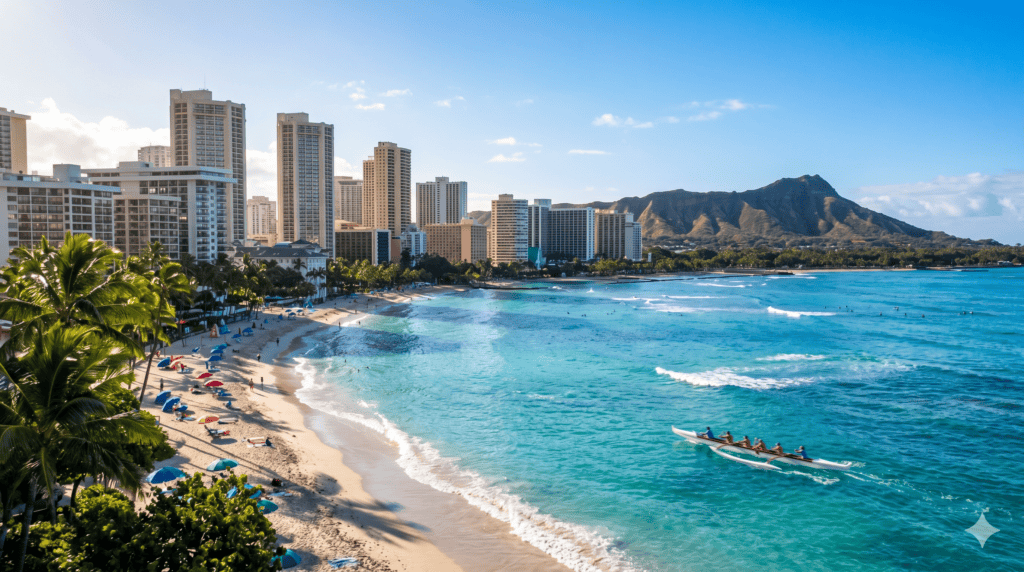
Most people arrive in Waikiki with one goal: beach. Then they look up and realize there’s a volcanic crater hike right there, surf instructors waving them in from the water, a free hula show starting in twenty minutes, and a rooftop bar glowing orange at golden hour. The problem isn’t finding things to do in Waikiki — it’s narrowing the list down before the trip is over.
This guide pulls from two of our most-used activity posts and merges them into one comprehensive, 2026-updated resource. Whether you’re a first-timer trying to figure out the non-negotiables or a repeat visitor looking to do something new, these are the best Waikiki activities worth your time — with real tips on timing, cost, beach section, and what to actually skip.
Know Your Beach Section Before You Lay Down a Towel
Most visitors say “Waikiki Beach” like it’s one stretch of sand. It’s actually a collection of named sections, each with its own character. Knowing which one matches your mood saves you a sweaty half-hour of walking with a bag full of gear — so before you set up camp, here’s a quick orientation.
- Kahanamoku Beach (west end): Calmest water on the strip. The man-made lagoon near the Hilton Hawaiian Village creates a gentle swimming zone ideal for younger kids or anyone who wants a mellower entry point.
- Fort DeRussy Beach: The widest and least crowded section, with a grassy park behind it. Good for families who want space to spread out and actual room to breathe between beach chairs.
- Royal Hawaiian Beach: The most active zone — surf instructors, outrigger canoes, rental outfitters, and the classic Waikiki energy that ends up in every postcard. If you want easy access to water sports, this is your section.
- Kūhiō Beach: Central, lively, and close to the Duke Kahanamoku statue and Hula Mound. Best for people-watching, soaking up the classic scene, and staying close to the free hula show (more on that below).
- Queen’s Beach (east end): Quieter, popular with locals, and right at the edge of Kapiʻolani Park. A genuine escape from the thicker tourist zone without requiring a car.
No choice is wrong — you’re still getting that warm water, those canoes, and Diamond Head rising in the distance. But picking intentionally means you start the day right. One universal rule: reef-safe sunscreen is required at all Hawaii state beaches and parks. Standard chemical sunscreens containing oxybenzone and octinoxate are banned statewide. Pack mineral-based SPF (zinc oxide or titanium dioxide) or a UV-protective rash guard before you leave home — hotel gift shops carry compliant options, but you’ll pay a premium for them.
Hike Diamond Head — The Activity That Belongs on Every Waikiki Trip
Diamond Head — officially Lēʻahi, the volcanic tuff cone whose Hawaiian name means “brow of the tuna” — is the hike that belongs on every Waikiki itinerary, full stop. The trail climbs the rim of an ancient volcanic crater, and the payoff at the top is one of the most photographed views in Hawaii: Waikiki’s curved coastline laid out below you, the Pacific stretching to the horizon. It’s not a brutal hike (about 1.6 miles round-trip with roughly 560 feet of elevation gain), but it does involve a steady incline, staircases, and a few dark tunnel sections that require your phone flashlight.
2026 update: Non-residents must book advance reservations through the Hawaii DLNR online reservation system. Current entry fees are $5 per person and $10 per vehicle (Hawaii residents enter free with valid ID). Slots — especially early-morning weekend times — sell out days in advance, so lock yours in before you arrive. Aim for the first or second reservation window of the day for cooler temperatures, better photos, and fewer people making the tunnels feel narrower than they are. Wear closed-toe shoes, bring at least one liter of water per person, and leave the flip-flops at the hotel. The path is dusty and fully exposed. For full trail logistics, parking details, and exactly what to expect on the way up, our Diamond Head guide has everything you need.
Get in the Water: Surf, Paddle, Snorkel, and More
Waikiki is one of the best places on earth to learn to surf — and that’s not tourism copy, it’s geography. The breaks near shore are long, rolling, and forgiving, which is why Hawaiian royalty used this very stretch of coastline as their playground. You don’t need experience. You just need to show up, laugh a lot, and be ready for the best nap of your life afterward.
Group surf lessons typically run $50–$90 per person for a 60–90 minute session; private instruction runs $120–$175. Board and rash guard rentals are included. Outfitters work directly from Royal Hawaiian Beach — no need to book far ahead for weekday sessions, but weekend morning slots fill by mid-morning. Go before 10 a.m. for calmer water and smaller crowds. If wiping out doesn’t appeal to you, stand-up paddleboarding (SUP) is the calmer alternative — easier to balance on flat water, a great core workout, and a fantastic way to cruise the coastline and spot reef fish below without ever getting your hair wet. Rentals run around $25/hour.
For something uniquely Hawaiian, try an outrigger canoe ride. You paddle out with a crew in a traditional six-person outrigger, then the canoe surfs the incoming swells back to shore — louder, faster, and more communal than anything you’ll do on a solo board. Sessions run around $30–$40 per person and include multiple rides. No experience needed; the steerer handles navigation. Waikiki Beach Services operates these from the Royal Hawaiian section.
Snorkeling off Waikiki is possible on calm days, especially near Queen’s Beach and the edge of the Waikīkī Marine Life Conservation District — parrotfish, wrasse, and the occasional sea turtle show up when the visibility cooperates. For serious snorkeling, Hanauma Bay (about 20 minutes east) is the clear upgrade: a protected marine sanctuary with exceptional fish density and clarity. It requires advance reservations for non-residents and is closed Mondays and Tuesdays. Our Oahu day trips guide covers the logistics for getting there without the usual headaches. For aerial views of the coastline with zero physical effort, parasailing remains the go-to “postcard moment” — launching from Kewalo Basin harbor and delivering Diamond Head views from a few hundred feet up that you simply can’t replicate from the shore.
Free Things to Do in Waikiki That Actually Deliver
Waikiki has a reputation for expensive everything, but some of the best experiences here cost nothing. The Kūhiō Beach Hula Show is one of those Waikiki moments that doesn’t cost a dime and somehow becomes a trip highlight. It’s a free, open-air performance right on the beach — live music, hula, traditional Hawaiian chanting, torch lighting, and the ocean breeze doing its thing in the background. In 2026, it runs Saturdays from 6:30–7:30 p.m. at the Kūhiō Beach Hula Mound near the Duke Kahanamoku statue — it skips July 4, Sept 19, Oct 17, and Oct 31 for other scheduled events, and Tuesday shows were discontinued after June 2026. Arrive 15–20 minutes early to snag a good viewing spot. Bring a beach mat or low chair, and a light layer if you cool off when the sun drops. Skip the paid shows at least once and do this instead — it’s the real thing.
Kapiʻolani Regional Park, on Waikiki’s eastern edge, is another free highlight that most visitors discover by accident and wish they’d planned around. One of the oldest public parks in Hawaii, it’s a wide-open green space where joggers, kite flyers, families, and occasional live performers share the same generous lawn. It connects naturally to the Waikīkī Aquarium and the Diamond Head trailhead, making it a logical hub for the east-end part of your day.
Then there’s the slow morning — the activity that sounds too simple to list but that virtually every repeat visitor mentions when you ask what they’d do differently. Wake up before the beach gets busy, grab coffee from a nearby café, and walk the Waikiki shoreline in the early morning light. The beach looks completely different at 6:30 a.m. Quieter, softer, still golden from sunrise. The waves are calmer. You’ll have the sand nearly to yourself before the 9 a.m. rush, and Diamond Head at that hour looks like something from a painting. It costs nothing and takes maybe an hour. Build it in on at least one morning.
Eat, Drink, Shop, and Catch a Sunset
Waikiki’s food scene is significantly better than its reputation suggests, and the best bites often come from the least assuming spots. The local flavors worth trying at least once: fresh poke (simple prep, local fish, minimal fuss), loco moco (rice, hamburger patty, fried egg, brown gravy — absurd in the best way), spam musubi, and shaved ice on a hot afternoon. Duke’s Waikiki on the beach remains the iconic casual choice — beachfront, open-air, named after Duke Kahanamoku, and perpetually full of people who are clearly having a great time. For where locals actually eat, the Kapahulu Avenue corridor just east of Waikiki is worth a detour. Our best restaurants in Waikiki guide covers everything from beachfront splurges to honest plate lunch favorites across all price ranges.
For the evening scene: Duke’s happy hour hits differently when you’re sitting feet from the sand with a tropical drink in hand — arrive early if you want a railing spot. For a more elevated option, SKY Waikiki runs a daily happy hour from 4–5 p.m., with sweeping views of Diamond Head and the coast before the city lights come up. It’s a completely different vibe from the beachside bars — a bit more dressed up, good for anyone celebrating something. Our best happy hours in Waikiki guide covers 15 solid picks across the neighborhood if you want to compare options before committing.
For shopping, Waikiki Beach Walk (western end of the strip) is the best wander-and-see-what-happens zone — boutiques, restaurants, and regular live performances in an open-air layout that feels like a neighborhood instead of a mall. Luxury Row on Kalākaua Avenue (Chanel, Gucci, Tiffany) is worth a window-shopping stroll even if you’re not buying. The Royal Hawaiian Center is the main central hub and also hosts free cultural programming throughout the week — lei making, ukulele lessons, and hula demonstrations. Check the schedule when you arrive; these programs are consistently underrated. Our best shopping in Waikiki guide breaks everything down by vibe if you want the full rundown before heading out.
Book a Luau (But Pick the Right One)
Luaus are not all the same, and that distinction matters more than most travel guides will tell you. A well-matched luau — the right format, the right scale, the right night — can be one of the best evenings of your trip. A mismatched one feels like a dinner theater production you didn’t audition for. The basics: big productions (like the Waikiki Starlight Luau at Hilton Hawaiian Village) are festive and easy; intimate options (like Experience Nutridge on Mount Tantalus) feel more personal and culturally rich; North Shore luaus like Toa Lūʻau at Waimea Valley are a beautiful day-trip combo. Pricing typically runs $100–$200+ per adult depending on the show and seating tier. Popular nights sell out weeks in advance during summer and holidays — don’t wait until you land to book. We broke down all nine best options in the best luaus near Waikiki guide, including which ones work best for families, couples, and first-timers.
Day Trips Worth Pulling Out of Waikiki For
Waikiki makes a great base for exploring the rest of Oahu, and a few of the island’s most meaningful destinations are close enough to do in a single day. Pearl Harbor isn’t a “fun” attraction — it’s a significant one. The USS Arizona Memorial is still the most-visited site in all of Hawaii, and standing above the sunken ship, reading the names on the marble wall, watching the oil that still surfaces from the hull — it stays with you. Admission to the Memorial program is free, but timed reservations are required (a $1 non-refundable booking fee applies through Recreation.gov) and fill weeks in advance. The Pearl Harbor Aviation Museum and USS Missouri are excellent paid add-ons for a full day. Go on a weekday and arrive early. Pearl Harbor is about 30 minutes west of Waikiki by car, or roughly 40 minutes on TheBus.
Hanauma Bay — a protected marine sanctuary about 20 minutes east — is the best snorkeling on Oahu by a significant margin. Cleaner water, exceptional fish density, and sea turtles on good days. Non-residents need advance reservations and it’s closed Mondays and Tuesdays, so plan accordingly. The North Shore is 45–60 minutes north and offers legendary surf breaks, sea turtles resting on beaches, and one of the best shave ice in the state in Haleʻiwa. Combine Hanauma Bay, Koko Head Crater, Makapuʻu Lighthouse, and the Windward Coast into a single southeast Oahu loop, and you’ve got a full day that feels like a completely different island. Our guide to the 20 best day trips from Waikiki maps every worthwhile destination with driving times, reservation requirements, and honest recommendations for who each trip suits best.
Rainy Day Plans and How to Think About Pacing
Waikiki rain is usually a short burst — often followed by a rainbow — not an all-day event. But it happens, especially November through March, and having a backup plan ready means you don’t lose the day. Best indoor options: the Waikīkī Aquarium (compact, walkable, underrated — around $12 for adults), ʻIolani Palace (the only royal palace on U.S. soil, genuinely fascinating), the Bishop Museum for Hawaiian and Pacific cultural history, or a spa afternoon at one of the resort spas along the strip. If you’re with kids, Breakout Waikiki escape rooms are a consistently popular pick. Our rainy day activities in Waikiki guide has 25 options organized by vibe — family fun, history, shopping, wellness, and easy day trips — with practical notes on each.
One more thought on pacing: Waikiki rewards people who plan slightly more than they think they need to. Not because the experience is complicated, but because the best things — Diamond Head reservations, Hanauma Bay snorkeling slots, luau seats, popular restaurant tables — book up. Lock in the time-sensitive stuff before you land. Keep everything else flexible. If you want a pre-built template, our 5-day Waikiki itinerary lays out a day-by-day plan that balances the bucket-list activities with actual breathing room.
Frequently Asked Questions About Things to Do in Waikiki
What are the best free things to do in Waikiki?
More than people realize. The Kūhiō Beach Hula Show is completely free. Kapiʻolani Park is free. Walking the Waikiki shoreline at sunrise, exploring Waikiki Beach Walk, watching surfers from the seawall, and browsing the Royal Hawaiian Center’s free cultural programming all cost nothing. Diamond Head does require a paid reservation for non-residents, but it’s inexpensive relative to most Waikiki activities — and completely worth it.
Do you need reservations for Diamond Head in 2026?
Yes. Non-residents must book advance reservations through Hawaii’s DLNR online system. Current fees are $5 per person and $10 per vehicle. Weekend early-morning slots sell out days in advance. Hawaii residents enter free with valid ID. Book as early as possible once your travel dates are confirmed — walk-up access for non-residents is not guaranteed.
What is the reef-safe sunscreen rule at Waikiki Beach?
Hawaii law prohibits sunscreens containing oxybenzone and octinoxate at state beaches and parks, including Waikiki. These chemicals damage coral reef ecosystems. Use mineral-based sunscreens (zinc oxide or titanium dioxide) or UV-protective rash guards. Some hotel gift shops carry compliant options — but prices are higher, so pack yours before you leave home.
Is the Kūhiō Beach Hula Show still free in 2026?
Yes — the Kūhiō Beach Hula Show is free and open to the public. In 2026, it typically runs Saturdays from 6:30 to 7:30 p.m. at the Kūhiō Beach Hula Mound near the Duke Kahanamoku statue, weather permitting. Arrive 15–20 minutes early with a beach mat or low chair. Check local event boards at your hotel for any schedule changes during your stay.
How many days do you need to see the best of Waikiki?
Five days is a solid baseline for first-time visitors — enough for Diamond Head, a surf lesson, a beach day, a luau, and at least one day trip without feeling rushed. Seven to ten days lets you add Pearl Harbor, Hanauma Bay, the North Shore, and actual unscheduled beach time. Three to four days is doable, but requires prioritizing sharply and skipping some things you’ll wish you hadn’t.
Do I need to rent a car to enjoy Waikiki activities?
Not for anything within Waikiki itself — the beach sections, Diamond Head, the hula show, shopping, and most restaurants are walkable or a short rideshare away. For day trips to Pearl Harbor, Hanauma Bay, or the North Shore, a rental car gives you significantly more flexibility and is worth considering for at least one or two days. TheBus covers major Oahu routes for around $3 a ride if you prefer not to drive. The Biki bike-share system also covers a lot of Waikiki’s flat terrain cheaply — including a nice cruise along the Ala Wai Canal — for mornings when you want to move without committing to a full car day.
Waikiki earns its reputation not just because of the beach, but because everything you’d want from a Hawaii vacation is packed into one walkable neighborhood. You can surf in the morning, hike a volcanic crater before lunch, catch a free hula show at sunset, and still get back to your hotel before 9 p.m. — without a car, without rushing, within a mile of where you’re sleeping. The one thing worth taking seriously before you land: book Diamond Head, Pearl Harbor, Hanauma Bay, and your luau in advance. Keep everything else flexible, and the rest figures itself out.