
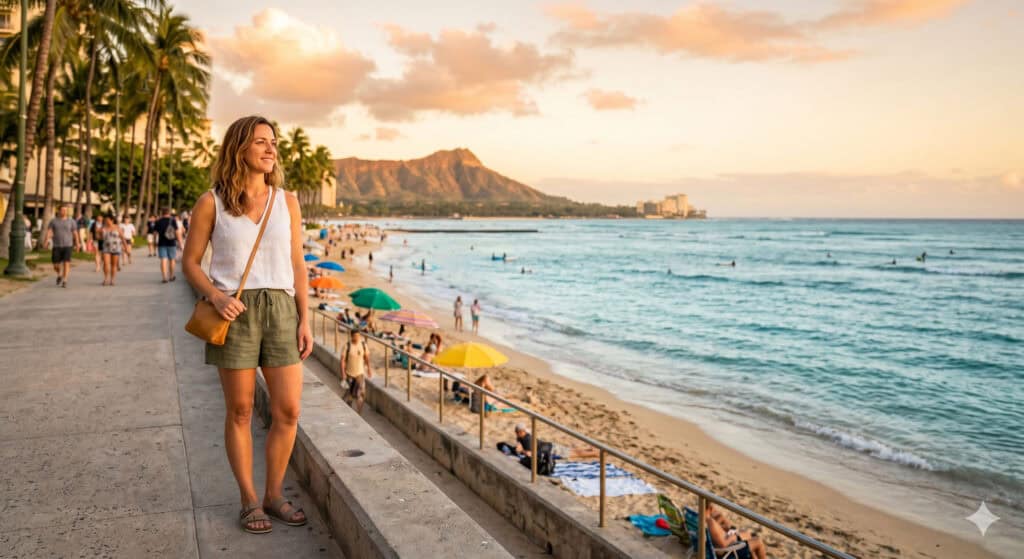
Solo female travel to Oahu is, honest answer, far less intimidating than the internet makes it out to be. Waikiki is one of the most heavily trafficked tourist zones in the Pacific — well-lit, perpetually busy, and very accustomed to visitors who arrive alone, explore on their own schedule, and have a genuinely great time. That said, “generally safe” is not the same as “zero thought required,” and the solo female travel Oahu safety tips that actually matter aren’t the generic ones you’ve already skimmed. They’re about knowing which neighborhoods anchor you best, which transportation options keep you in control, and how to structure your days so water activities and nights out don’t require a travel partner to be worth doing. This guide is practical and specific — built for your first trip.
Is Oahu Actually Safe for Solo Female Travelers?
Short answer: yes, and measurably so. Hawaii consistently ranks among the lower-crime states in the U.S., and Honolulu’s Waikiki neighborhood functions almost like a managed resort district — high foot traffic, hotel security at every corner, and tourists moving in every direction around the clock. The most common issue visitors actually encounter is petty theft: unattended bags at the beach, items left visible in rental cars. Personal safety incidents targeting tourists are rare.
That said, the blocks inland from Kalākaua Avenue — particularly the streets running toward the Ala Wai Canal — get quieter and less active after dark. Not dangerous, but noticeably different from the lit, crowded beachfront corridor. The same common-sense calculus you’d apply walking alone in any unfamiliar city applies here: stick to main streets, stay in populated areas after midnight, and you won’t have a second thought. One thing that surprises most first-timers: Waikiki has a visible homeless population concentrated near the Ala Wai Canal and certain beach park areas. Interactions are almost always neutral, but knowing this in advance means you won’t be caught off guard. Beachfront paths and main commercial streets are consistently fine.
Best Neighborhoods to Stay as a Solo Female Traveler
Waikiki is your best base — especially for a first trip. It’s the only neighborhood on Oahu where you can operate without a car, stay within walking distance of the beach and most dining options, and always have street-level activity around you. The density of hotels, restaurants, and foot traffic means there’s almost always someone nearby, which matters more than most safety guides acknowledge.
Within Waikiki, the stretch between the Royal Hawaiian Hotel and Waikiki Beach Walk puts you in the sweet spot: walkable to the main beach sections, close to Kalākaua Avenue’s restaurant and bar strip, and surrounded by mid-to-upscale hotels with 24-hour front desks. If budget is a priority, properties closer to Kapahulu Avenue on the eastern edge of Waikiki run lower nightly rates while keeping you within a short walk of everything important.
Chinatown and downtown Honolulu are more local and genuinely interesting, but not ideal as a first-trip home base for solo female travelers. They require more navigation, have fewer tourist-facing amenities, and the nightlife scene around Chinatown has a rougher edge than Waikiki. Absolutely worth visiting for a meal or an afternoon — just not ideal for sleeping and centralizing your first Hawaii trip.
Getting Around Oahu Solo: Transportation Options That Keep You in Control
Transportation is where solo female travel Oahu safety tips get genuinely practical. Start with the airport: rideshare (Uber or Lyft) is the smoothest option for solo arrivals. You know the driver’s name, the license plate, and the route before you get in the car, and the app keeps a record of the trip. Our full guide to getting from Honolulu Airport to Waikiki covers all five transport options with current pricing — avoid anyone approaching you in baggage claim offering a ride outside the official rideshare and taxi pickup areas.
Within Waikiki and Honolulu, TheBus is outstanding and genuinely solo-traveler friendly. The $3.00 fare gets you anywhere on the island, the W Line runs directly between the airport and Waikiki, and buses are well-maintained and heavily used by locals. For day trips to Diamond Head, Mānoa Valley, or Kailua, rideshare costs far less than a full daily car rental and puts you door-to-door without navigation stress.
If you do rent a car for a North Shore or Windward Coast day, go for it — but apply one firm rule: leave nothing visible in the car when you park. Break-ins at trailhead lots, particularly the Mānoa Falls trailhead and some North Shore beach parking areas, are the most predictable property crime on Oahu. It affects group and solo travelers equally. Leave valuables locked in your hotel safe, or keep a small waterproof bag on your person.
Solo-Friendly Activities and Group Experiences Worth Booking
One of the underrated advantages of solo travel is that group-format activities become your social infrastructure — and Oahu has excellent ones. Surf lessons on Waikiki Beach are naturally social: you’re in a group with a shared instructor, everyone is a beginner, and nobody cares whether you arrived with someone. Same logic applies to outrigger canoe rides, stand-up paddleboard tours, and snorkeling boat excursions. Browse the full list of top-rated Waikiki activities — the guided options are almost all group-format and welcome solo participants.
Luaus are another excellent solo choice that travelers often overlook because they seem couple- or family-focused. They’re not — luaus are communal dining events where you’re seated with other guests, food and entertainment keep things moving, and you almost always end up talking to the people next to you. Our guide to the best luaus near Waikiki covers options walkable from most Waikiki hotels, which is a genuine perk for solo travelers who don’t want to arrange late-night transportation after dinner and a show.
The free Kūhiō Beach Hula Show — held Tuesdays and Saturdays at 6:30 p.m. right on the beach — is one of the best zero-pressure solo evening activities on Oahu. Show up, find a spot on the sand, and watch traditional hula and torch lighting with the ocean as the backdrop. No reservation, no cover, no obligation to interact with anyone. For solo adventures beyond Waikiki, most organized tours actively welcome solo travelers — our Oahu day trip guide highlights 20 options, many of which are easiest done with a tour operator rather than independently.
Water Activity Safety Tips for Solo Female Travelers
Ocean safety requires more deliberate thought when you’re solo — not because Oahu’s water is uniquely dangerous, but because unexpected conditions are easier to manage when someone is watching out for you. The practical approach for solo female travelers: book guided water experiences rather than going fully independent for the first few days, before you’ve had a chance to read the water and understand local currents.
Snorkeling at Hanauma Bay is an excellent solo choice specifically because of its structure: the bay is protected, relatively shallow, staffed by lifeguards, and every visitor watches a required marine education video before entering the water. Advance reservations are required through the Hawaii DLNR reservation system — the bay books up two days in advance, so plan accordingly. That required infrastructure actually works in a solo traveler’s favor.
For swimming on Waikiki Beach itself, stay between the lifeguard flags and check the posted ocean conditions at beach stations each morning — conditions change fast and the flags are there for a reason. If you’re trying surfing for the first time, book a lesson with a certified beach boy instructor: you’ll be in the water with a professional watching you, not paddling out alone into an unfamiliar break. One more practical note: Hawaii state law bans chemical sunscreens containing oxybenzone and octinoxate, which are harmful to coral reefs. Pack mineral-based SPF or grab it at any Waikiki pharmacy.
Dining Solo, Nighttime Safety, and Making Connections
Dining solo in Waikiki is genuinely pleasant — this isn’t a restaurant culture where a single seat feels conspicuous. Bar seating is standard, staff are accustomed to solo diners, and the scene is social by design. Happy hours are a particularly smart solo strategy: the deals draw a mix of locals and visitors, bar seating is natural and conversation-friendly, and you’re out in the early evening rather than navigating late-night situations alone. Our Waikiki happy hour guide covers the best options daily from around 2 to 7 p.m. — plenty of choice for an early dinner.
At night, the main Kalākaua Avenue strip stays busy and well-lit past midnight, and Waikiki Beach Walk is equally comfortable — more restaurant-focused and slightly calmer than the main drag, but still active. When you’re wrapping up a late evening, rideshare beats walking through unfamiliar blocks, even short distances. Keep your phone charged, share your general itinerary with someone at home, and consider dropping a pin to a trusted contact when you arrive somewhere new. These are basic travel habits that have nothing to do with Oahu being dangerous — they just make solo travel feel more relaxed.
For intentional social connection, several Waikiki hotels host outdoor events and rooftop gatherings, and the Royal Hawaiian Center offers free weekly cultural programming — hula and ukulele lessons open to anyone. Travel apps like Bumble BFF have active Honolulu communities for connecting with other solo female travelers or local women. Solo travel means you choose who shares your time, not that nobody does.
Smart Packing and Emergency Resources Worth Knowing
A few practical items make solo travel meaningfully smoother. A crossbody bag that closes securely is your best street companion on Kalākaua Avenue — keeps your phone and wallet accessible without sitting in a backpack or dangling open. Leave your passport in the hotel safe and carry only what you need for the day. A fully charged portable battery pack is non-negotiable: running low on battery when you need rideshare or navigation is the most preventable annoyance in solo travel. Our Waikiki packing guide covers everything from reef-safe sunscreen to the right shoes for hiking Diamond Head.
Know your emergency resources before you need them. The Honolulu Police Department non-emergency line is 808-529-3111; dial 911 for emergencies. The Queen’s Medical Center is the main hospital in Honolulu. Travel insurance that includes medical coverage and evacuation is genuinely worth the cost for a Hawaii trip — ocean-related mishaps like coral cuts, jellyfish stings, and sprained ankles on hikes are the real risk calculus here, not crime. Many single-trip travel insurance policies run under $50 for a week-long visit and cover the scenarios most likely to come up.
Frequently Asked Questions About Solo Female Travel in Oahu
Is Waikiki safe for solo female travelers at night?
Yes — the main Kalākaua Avenue strip and beachfront areas stay busy and well-lit late into the night. The blocks further inland toward the Ala Wai Canal are quieter, so stick to commercial streets after dark. Use rideshare for late-night returns rather than navigating unfamiliar blocks on foot, and keep your phone charged. Waikiki is one of the more pedestrian-friendly tourist zones in the Pacific, and solo female travelers move through it daily without incident.
What is the safest area to stay in Waikiki for solo female travelers?
The stretch between the Royal Hawaiian Hotel and Waikiki Beach Walk is the sweet spot: high foot traffic, mid-to-upscale hotels with 24-hour security, close to the beach and the main dining corridor. Properties near Fort DeRussy Beach and the central beachfront offer similar advantages. Avoid booking far inland toward the Ala Wai Canal if walkability and ambient activity are priorities for your safety comfort level.
Do I need a car for solo travel on Oahu?
Not for a Waikiki-based trip. TheBus ($3.00 flat fare) covers the island, rideshare works well for most day trips, and most guided tours include transportation. A rental car is worth considering for one or two days if you want to explore the North Shore or Windward Coast independently — but it’s not necessary for the core Waikiki experience. For solo travelers, rideshare actually has some safety advantages over driving: no navigation stress, no parking decisions, and a digital record of every trip.
Is it safe to snorkel alone in Hawaii?
Solo snorkeling in open ocean conditions carries real risk — currents and fatigue can be harder to manage without someone watching. For solo female travelers, Hanauma Bay is the recommended option: it’s a protected bay with lifeguards on duty, a required safety briefing, and a structured entry system that keeps the visitor flow manageable. Booking a guided snorkeling boat tour is another excellent option — you’re in the water with a crew watching the group, and you meet other travelers in the process.
What should solo female travelers avoid in Waikiki?
Avoid walking the quieter residential blocks inland from Kalākaua Avenue alone late at night. Don’t leave valuables visible in rental cars, especially at trailhead parking areas. Skip the unmarked cab offers near baggage claim — use the official rideshare pickup area or metered taxis with dispatchers. Watch your drink at bars the same way you would anywhere unfamiliar. And avoid solo swimming in areas without lifeguard coverage, especially on the North Shore where shore break and currents are significantly stronger than Waikiki’s calm surf zones.
Can I meet other travelers on Oahu as a solo visitor?
Easily. Group surf lessons, snorkeling excursions, luaus, and guided day tours naturally put you alongside other travelers in a shared-experience format. The free Kūhiō Beach Hula Show on Tuesdays and Saturdays draws a friendly mix of locals and visitors. The Royal Hawaiian Center hosts free weekly cultural programming open to anyone. Bumble BFF and Meetup have active Honolulu communities. Solo doesn’t have to mean solitary — Oahu has plenty of on-ramps for connection if you want them.
Ready to Book Your Solo Oahu Trip?
Oahu is one of the more forgiving first solo trips you can take — the infrastructure is solid, the activities are social by design, and Waikiki runs around the clock with enough foot traffic to make you feel grounded even when you’re on your own. Plan your days around what you actually want to do, build a day trip or two into your itinerary, and leave room for the kind of spontaneous afternoon that solo travel makes possible. That’s the real advantage of going alone — you’re fully in charge of the experience.