
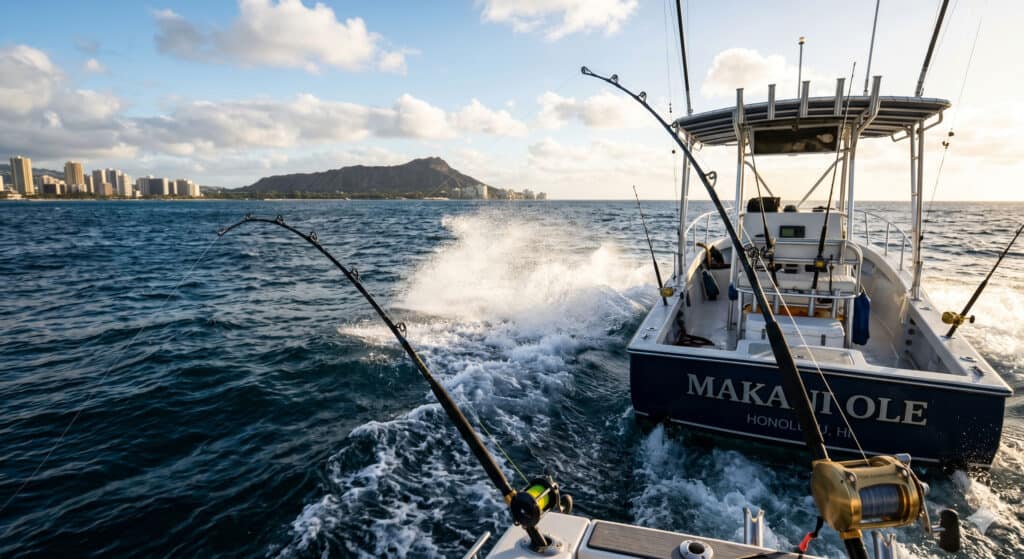
The first time someone told me a deep sea fishing charter is “basically a vacation inside a vacation,” I didn’t really get it. Then I watched a reel scream and a blue marlin clear the water against the Diamond Head skyline, and it all made sense. A sportfishing trip out of Waikiki is one of the highest-reward, lowest-barrier activities you can add to a Hawaii trip — no experience, no gear, and the whole thing slots neatly into a morning or a full day. That said, the details matter. How long should your trip be? What will it actually cost? Do you need a fishing license? This guide covers all of it, so you can stop second-guessing and get to the good part.
Why Waikiki Is a Great Home Base for Deep Sea Fishing
Most Waikiki-area charters depart from Kewalo Basin Harbor at 1025 Ala Moana Blvd — about a mile west of the main hotel strip, roughly eight minutes by rideshare from anywhere in Waikiki. You are not driving 45 minutes to a remote marina before sunrise. You roll out of bed, grab coffee, and show up at the dock.
Oahu’s south shore geography works in your favor too. The ocean floor drops fast off this coastline, so some captains can start trolling for pelagic fish almost as soon as they clear the harbor channel. Less transit time means more actual fishing time — and that’s a real advantage over some other island ports where you spend an hour just getting offshore. If you’re scheduling multiple big activities across your trip, having the marina this central makes the calendar puzzle a lot easier to solve. Our 5-day Waikiki itinerary breaks down how to pace activities like this across a full week, including which morning to leave for the marina.
What a Deep Sea Fishing Day Actually Looks Like
First-timers tend to picture hours of motionless boredom. The reality is more dynamic than that. Check-in is typically 15 minutes before departure — the crew walks you around the boat, covers safety basics, and gets everyone settled. Rods, reels, bait, and tackle are all provided. All you need to bring is sunscreen, snacks, and something to drink.
Once offshore, the primary technique is trolling: the boat moves slowly while multiple lines trail behind, targeting fast-moving pelagic species. It works whether fish are active or playing hard to get, and between bites, you get a rolling ocean cruise with some of the best views Oahu has to offer. Diamond Head from the water looks completely different than it does from the beach — worth the charter price on its own, honestly.
When a reel goes off, everything changes. The crew will coach you through the fight — when to reel, when to let the fish run, how to hold the rod. You don’t need any prior experience. A few other things to sort out before you book:
- Catch-and-release: Most operators in Hawaii release billfish like marlin as a standard conservation practice — don’t plan to bring a marlin home
- Keeping your catch: For edible species like mahi mahi, ono (wahoo), and ahi (yellowfin tuna), many charters let you keep a portion — sometimes half your catch — and some will fillet it dockside
- Confirm the policy before booking: It varies by operator, and it’s worth a quick question during the booking call
How Much Does a Waikiki Deep Sea Fishing Charter Cost?
Charter pricing is almost always per boat, not per person — which is the detail that makes private trips look much more reasonable than they first appear. A group of four to six people splitting a private half-day can land at a very comfortable per-person number. Here’s a general range for 2026, though rates shift seasonally and you should always verify directly with your charter:
- Shared half-day (4–5 hrs, per angler): roughly $100–$200
- Private half-day (4–5 hrs, up to 6 guests): typically $600–$900 total
- Private ¾-day (6 hrs, up to 6 guests): typically $800–$1,100 total
- Private full-day (8+ hrs, up to 6 guests): typically $1,100–$1,500+ total
Summer tends to run at the higher end — peak marlin season means peak demand. Booking platforms like FishingBooker and Viator let you compare operators side by side, which is useful for first-timers who don’t have a captain in mind yet. One more thing: plan to tip your captain and crew 15–20%. On a good day offshore, it’s genuinely earned.
What You’ll Catch — and the Best Time of Year to Go
Oahu doesn’t have an off season for fishing, which is one of its biggest advantages over other destinations. Something is biting year-round. That said, if you’re targeting a specific species, timing matters.
- Blue Marlin: peaks June through September — warmer water pulls trophy fish closer to surface trolling lanes. This is when the serious marlin fishing happens.
- Ahi (Yellowfin Tuna) and Ono (Wahoo): strongest in summer but present year-round. Ono in particular shows up reliably even during slower months.
- Striped Marlin: more active in winter — a different fishery than blue marlin, but still exciting.
- Mahi Mahi (Dorado): consistent year-round, fights hard, and tastes great. An excellent target for first-timers who want an exciting catch they can also eat.
The smartest move regardless of when you’re going: call the charter a few days out and ask what’s been running. Captains track conditions constantly, and a five-minute conversation can help you choose the right trip length and time slot for what’s actually in the water.
Half-Day, ¾-Day, or Full Day — How to Choose the Right Trip
Trip length is the biggest single decision you’ll make when booking. The right answer depends on who’s coming and what you’re after.
Half-day (4–5 hours) is the most popular option for a reason. It covers meaningful water, gives you a genuine shot at a good catch, and has you back at the dock before early afternoon. Perfect for families with kids, first-timers, and anyone who wants a real fishing experience without surrendering the whole day. There’s still time for beach or a long lunch afterward.
¾-day (6 hours) is the middle ground. If you’re a moderately serious angler or just want to push your odds a bit without committing to a full day, this is a good call. Meaningfully more time offshore than the half-day, without the full investment.
Full-day (8+ hours) is for anglers chasing trophy fish — specifically blue marlin — or anyone for whom fishing is the main event of the day rather than part of it. The farther you can run offshore, the more conditions some captains can find. If that’s the goal, book the full day.
For families traveling with younger kids, a morning half-day trip is usually the best fit. Energy stays high, you beat the midday heat, and you’re back before anyone melts down. For ideas on building out the rest of those days, our guide to things to do in Waikiki has plenty of activities that pair well with a morning on the water.
Hawaii Fishing License: What Every Angler Needs to Know
Since May 2024, Hawaii has required a Nonresident Recreational Marine Fishing License for any visitor age 15 or older fishing in ocean waters — including on charter boats. Here’s the part people sometimes miss: every person actively fishing needs their own license. One license doesn’t cover your group.
Current fees through the Hawaii Division of Aquatic Resources (DLNR):
- 1-day license: $20 per person
- 7-day license: $40 per person
- Annual license: $70 per person
Some charters — including Maggie Joe Sport Fishing — include the license in their pricing. Others don’t. Confirm during booking. If your charter doesn’t cover it, purchase through the official Hawaii DLNR site before you leave for the marina. Sorting it out at 5:45 AM on spotty marina Wi-Fi is not how you want to start the day.
Waikiki-Area Charter Operators Worth Checking Out
Several well-regarded outfits run out of Kewalo Basin. Here’s a quick look at the ones that come up most consistently:
Waikiki Sport Fishing (The Renegade): A family-run operation led by brothers Nick and Chris Fidelibus, who’ve been working Oahu’s south shore for years. Known for being genuinely family-friendly — kids 6 and up are typically welcome — with shared and private options. They let you keep half your catch under 100 lbs and will fillet it dockside. They depart from Slip F13.
Maggie Joe Sport Fishing: Honolulu’s oldest charter fishing company, in operation since 1950 when brothers Eddie and John DeRego started with a surplus Navy vessel after WWII. Now a third-generation family operation. Pricing includes fishing tackle, gear, and the fishing license — useful to factor in when comparing costs. Daily 6:00 AM departures from Slip K at Kewalo Basin.
Blue Ocean Hawaii: More accessible price points, with bottom fishing and pelagic trolling options. Their 43-foot Hatteras, the Tortuga, runs bottom fishing charters at competitive per-person rates — a good option for budget-conscious groups or anyone who wants to mix things up beyond standard offshore trolling.
Magic Sport Fishing: Consistently well-reviewed on Viator and other platforms for both shared and private charters. Worth including in your comparison.
When comparing boats, focus on the practical checklist: what’s included (tackle, bait, fishing license, water), whether the boat has a restroom, how much covered shade is available, the cancellation policy, and minimum age if kids are coming. These details matter more than the name on the hull.
What to Bring on Your Fishing Charter
Packing smart makes a real difference on the water. The essentials:
- Reef-safe sunscreen: Hawaii law restricts certain chemical sunscreens, and open-ocean sun is more intense than the beach — water reflects UV constantly. Reapply aggressively.
- Polarized sunglasses: Essential for cutting glare and seeing surface activity. Worth it on any ocean day.
- A light layer: A thin windbreaker is welcome on early morning departures before the sun is fully up and the air is still cool.
- Motion sickness medication: Take it well before boarding — not on the boat. Eat light beforehand, stay hydrated, and keep your eyes on the horizon if things start feeling rough. This is the single factor most likely to turn a great day sideways.
- A camera or GoPro: When someone hooks something big, you’ll want footage. A waterproof or action camera is the right call at sea.
- Snacks and non-alcoholic drinks: Most charters encourage you to bring your own food and drinks. Two things to avoid bringing: glass bottles (safety issue) and bananas. The banana superstition is real, and some captains are serious about it.
For a complete packing rundown covering your whole trip — reef-safe products, hiking essentials, and what to wear for a dinner out — our Waikiki packing guide organizes everything by activity type.
Frequently Asked Questions About Waikiki Deep Sea Fishing Charters
Is deep sea fishing in Waikiki good for beginners?
Absolutely. Charter crews are experienced at coaching people who’ve never held a fishing rod before. They’ll walk you through rod position, when to reel, and what to do when something strikes. Many first-timers have their most exciting fishing moment ever on their first offshore trip — the bar for entry is low, the potential for a great story is very high.
Can kids go on a Waikiki deep sea fishing charter?
Yes, though minimum ages vary by operator — most are comfortable with kids around age 6 and up. Confirm the age requirement when booking. For families, a morning half-day trip tends to work best — exciting enough to hold attention, short enough to end before anyone runs out of steam. Life jackets are available on all reputable boats.
How much does a Waikiki fishing charter cost per person?
On a shared charter, plan for roughly $100–$200 per angler for a half-day trip. Private charters typically run $600–$1,500+ total depending on trip length, split among up to six passengers. Always confirm whether the fishing license is included in the price — it adds $20–$40 per person if not.
What is the best time of year for deep sea fishing in Waikiki?
There’s no truly bad time — Oahu produces fish year-round. Summer (June–September) is peak season for blue marlin and yellowfin tuna. Winter months are better for striped marlin and often bring calmer early morning seas. If you have flexibility, call your charter ahead of time and ask what’s currently running — that’s always the most useful answer.
Does every person need their own Hawaii fishing license?
Yes — and this is a point worth emphasizing. Every person actively fishing must hold their own valid Nonresident Recreational Marine Fishing License. One license per group is not allowed. The license costs $20 for one day or $40 for seven days, purchased through the Hawaii DLNR website. Some charters include it; confirm this before you book.
Where do Waikiki fishing charters depart from?
Most Waikiki-area sportfishing charters depart from Kewalo Basin Harbor at 1025 Ala Moana Blvd in Honolulu — about a mile west of Waikiki’s hotel strip, eight to ten minutes by rideshare from most hotels. Parking is available on-site. It’s a straightforward, central location that makes early morning departures far less painful than they sound.
One More Reason to Just Book the Trip
A deep sea fishing charter works for a surprisingly wide range of people. Serious anglers chasing trophy marlin. Complete first-timers who’ve never touched a rod. Parents watching a kid reel in their first big fish. You don’t need experience, you don’t need to bring gear, and you don’t need to catch a marlin to have a genuinely memorable morning on the Pacific. Book the trip and let the rest happen. If you haven’t sorted out the rest of your Oahu days yet, our guide to the best day trips from Waikiki has plenty of ideas for filling the hours between now and the marina.